Value · Empathy

Stories about empathy

Empathy can't be assigned as homework, because it isn't a fact to learn — it's a muscle: the imaginative work of standing in someone else's shoes and feeling the pinch. Stories happen to be the best gym ever invented for that muscle. For a few minutes a night, your child lives inside another person's head — a lonely new student's, a left-out little brother's, an old dog's — and practises the exact skill empathy runs on. It is also, not incidentally, the value every other one on this site quietly depends on.

The stories in this collection are chosen to make that practice gentle but real: characters whose feelings your child must work out from what they do and say, not from a narrator announcing them. Afterwards, the Talk About It questions turn the practice homeward — asking not "what was the lesson?" but "how do you think she felt?" — which is the question empathy grows on.

Dadu's Winter Coat

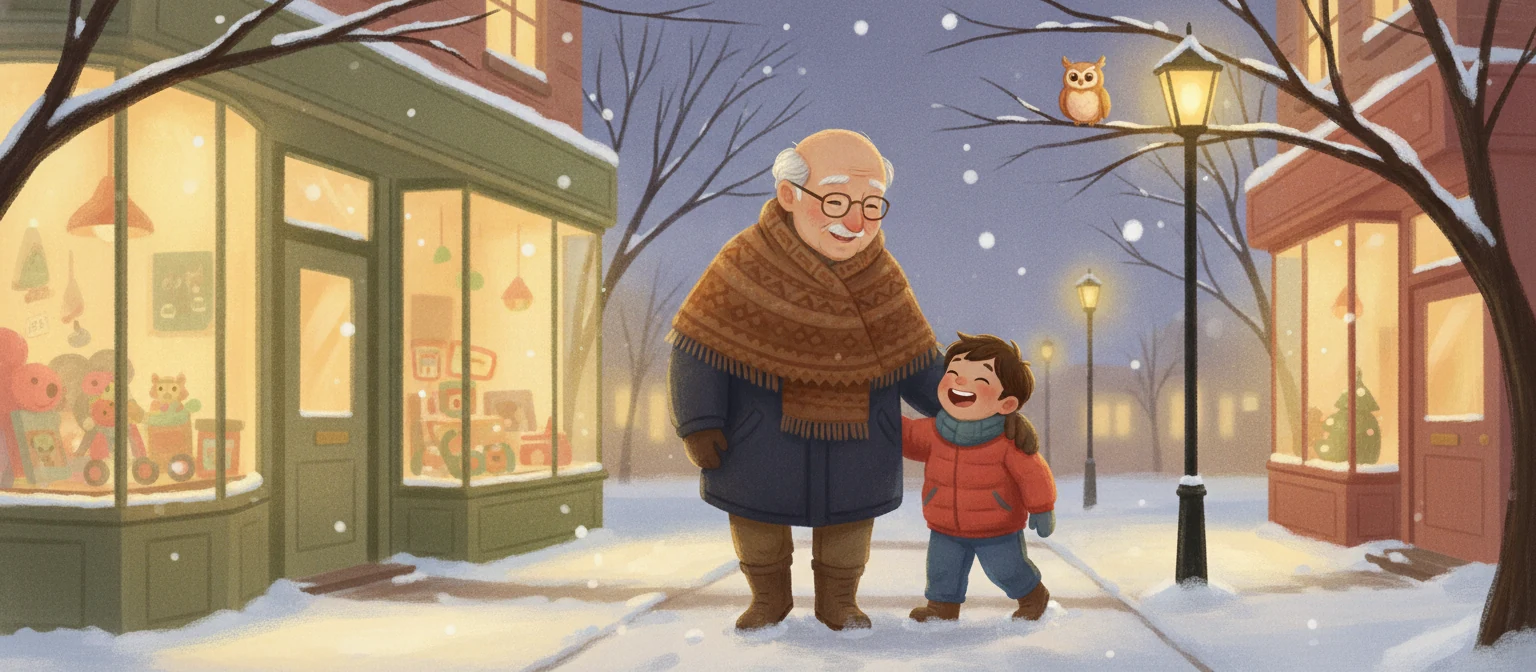
When Dadu moves from Delhi to Toronto to live with them, Aarav mostly notices what his grandfather gets wrong — the shawl in the snow, the loud Hindi at pickup. It takes one hard January evening to see what moving cost the old man.
The Baby on the Bus

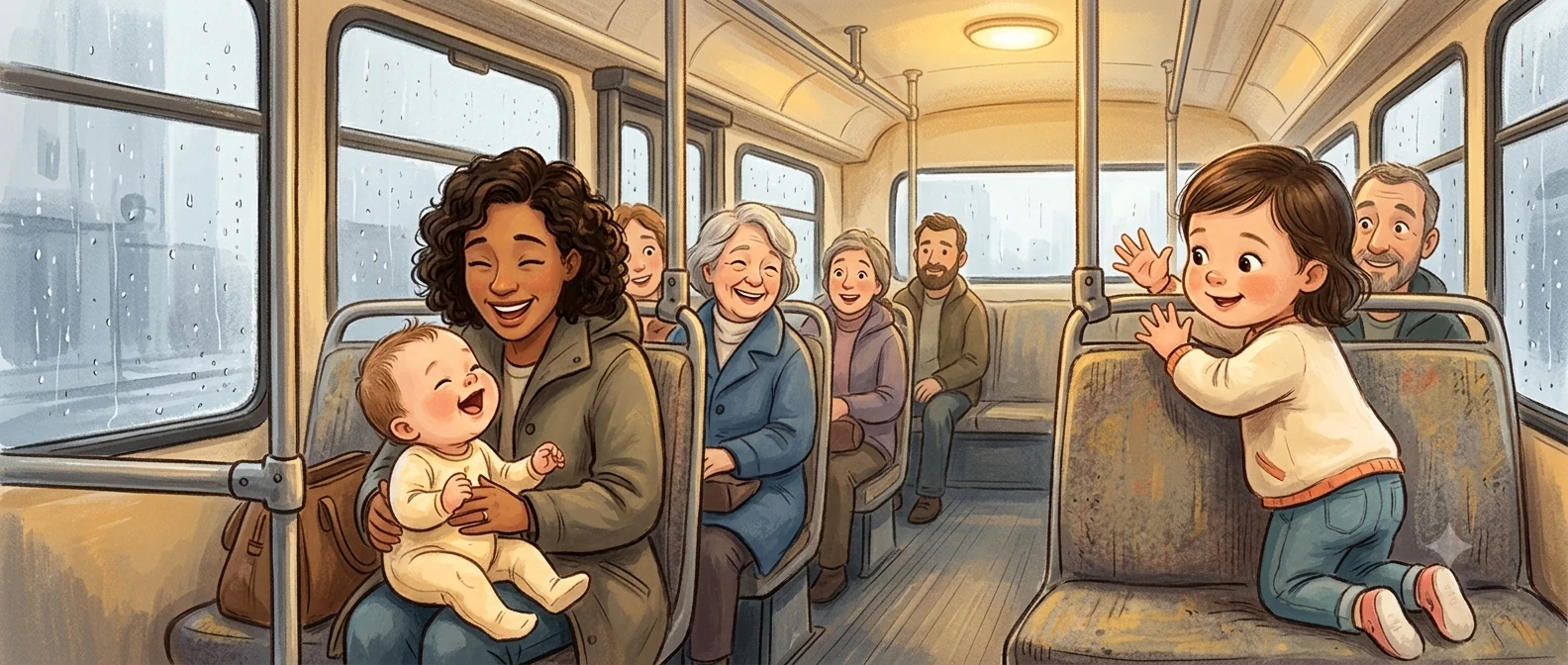
A baby on the bus is crying and crying, and all the big people look away. But Nia is small — and small people know what crying needs.

The Elephant in the Dark

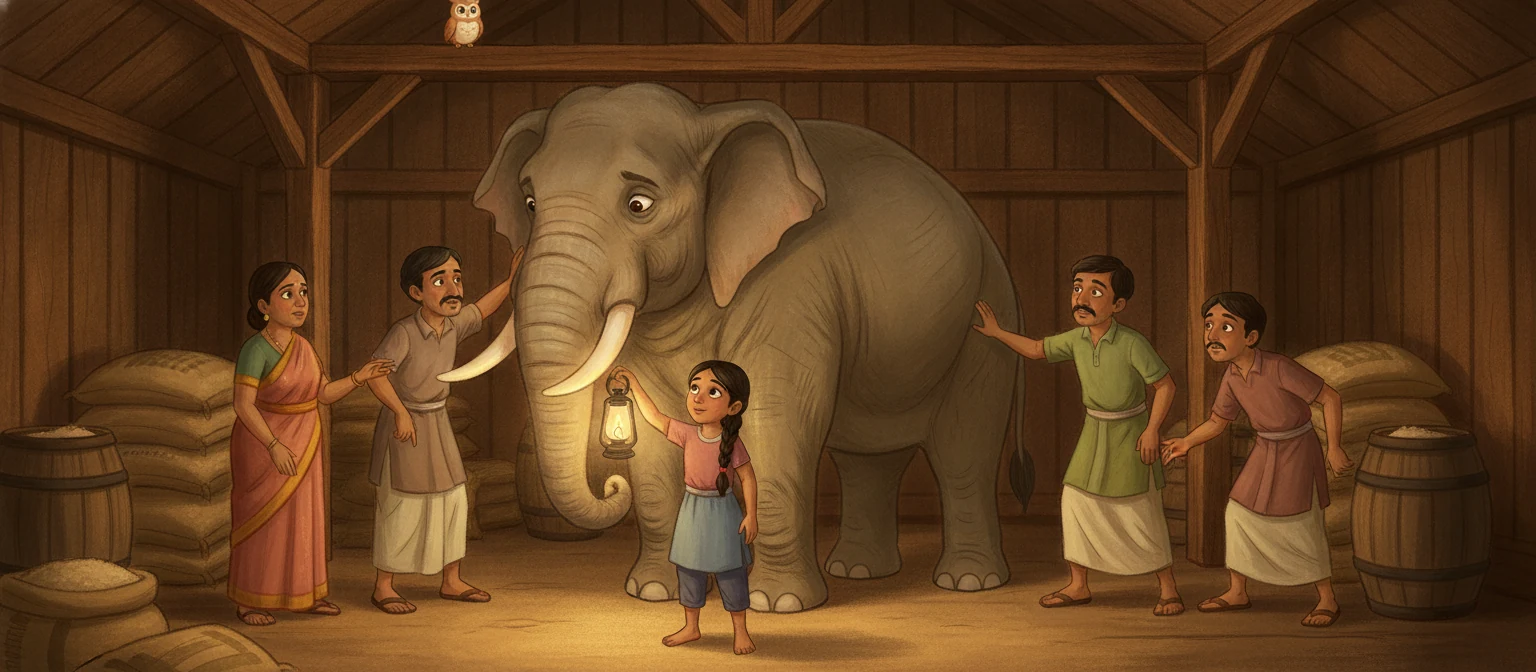
Six villagers feel their way around something enormous in a pitch-dark shed — and each comes out certain of a completely different animal. One of the world's oldest lessons, retold.

The Girl Who Didn't Need Words

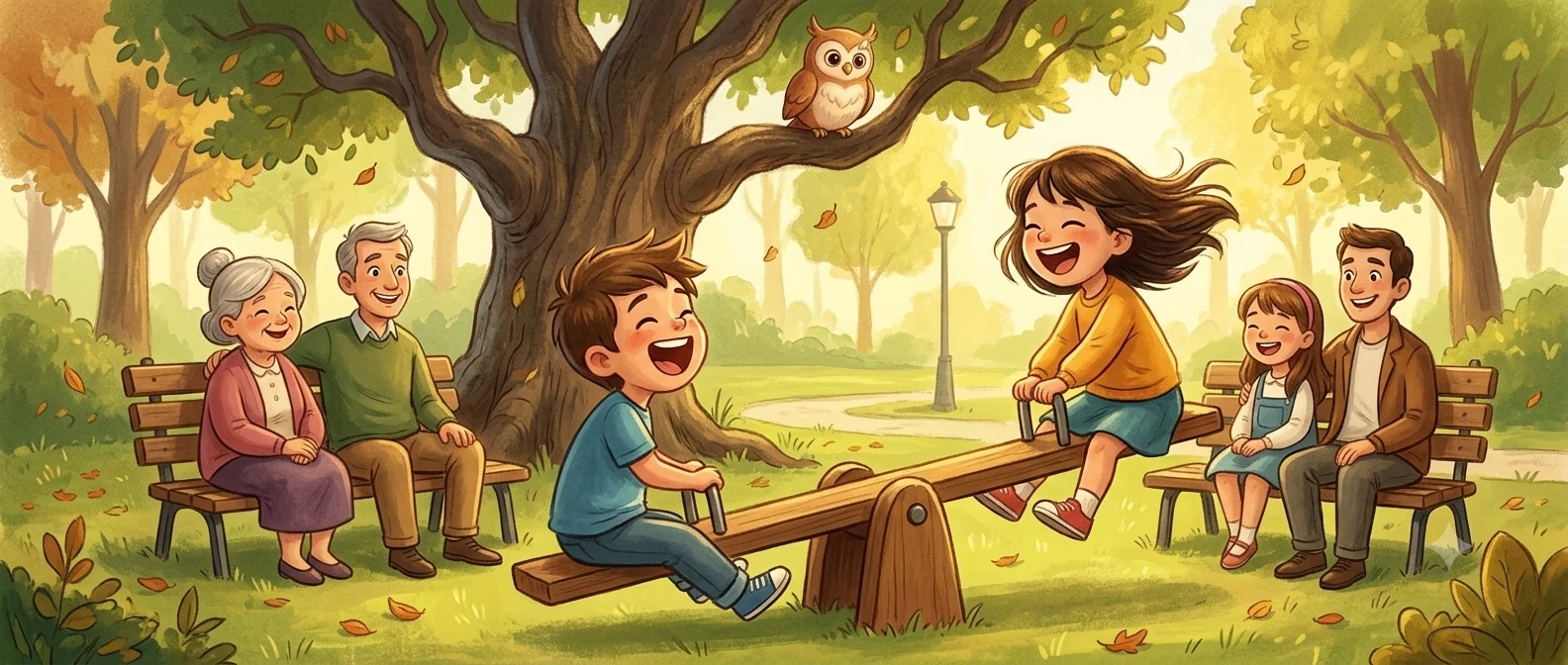
The new girl at the park doesn't speak any words Theo knows. But swings don't need words. Neither does tag. Neither, it turns out, does most of the good stuff.

The Man Who Kept Our Cricket Balls

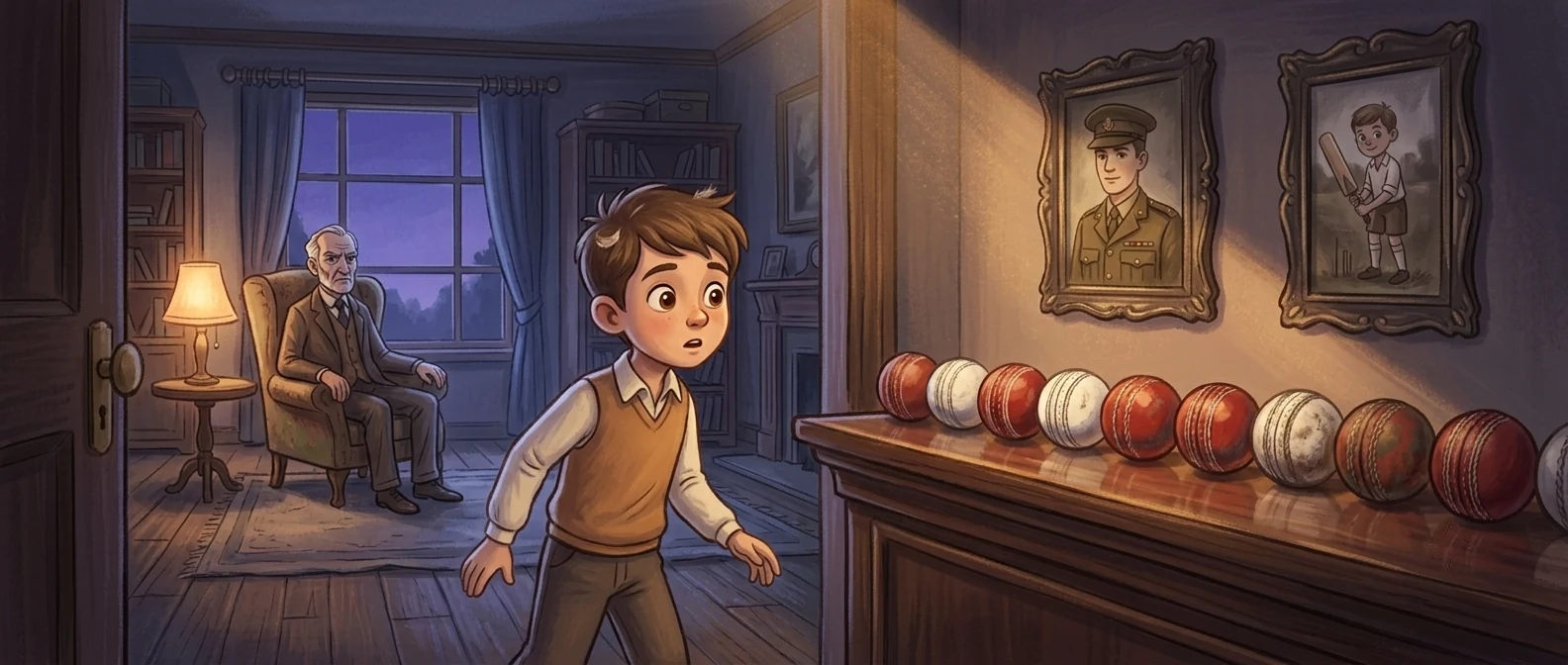
Colonel Uncle confiscated every ball that crossed his wall — eleven this season. Then Dev got sent to his door, and saw the shelf.

The Notebook from Guwahati

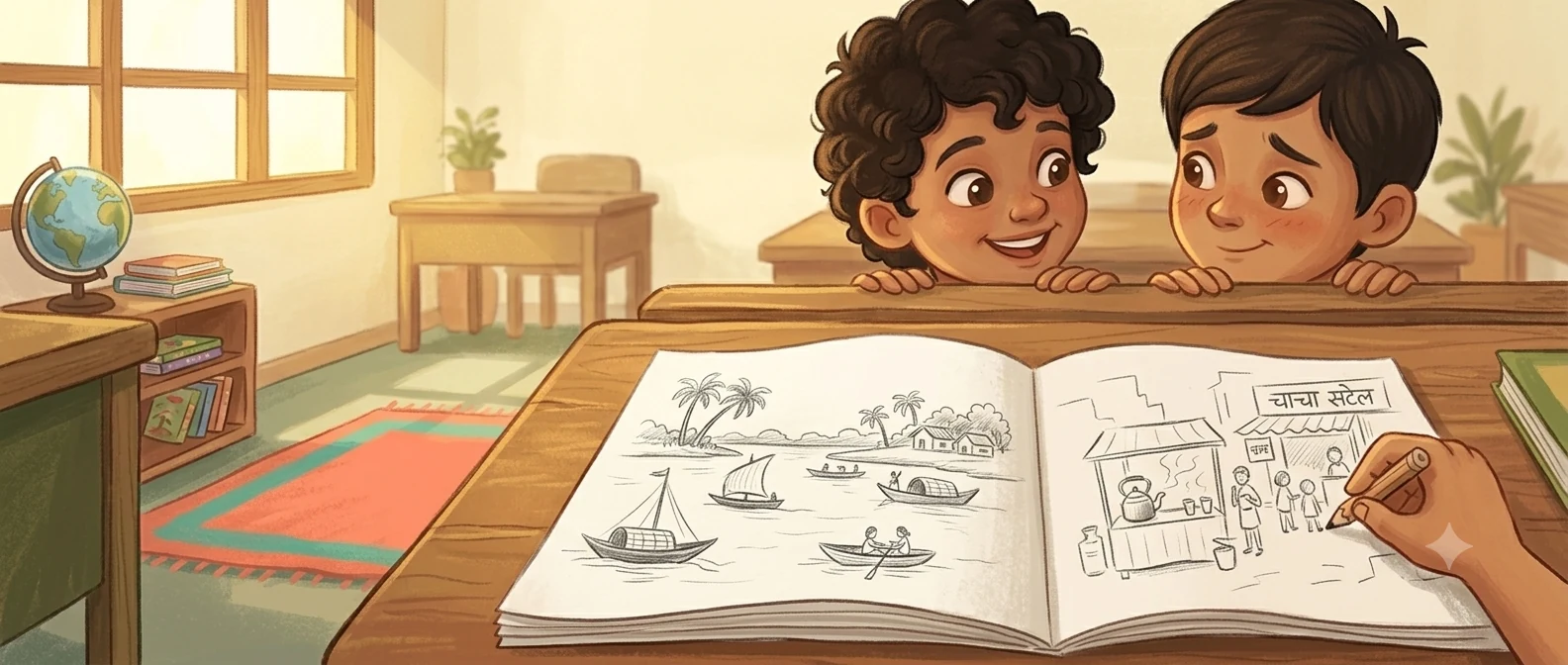
The new girl hasn't said a word in two weeks, and Arjun is stuck sitting next to her. Then her notebook falls open.

The Party Everyone Knew About

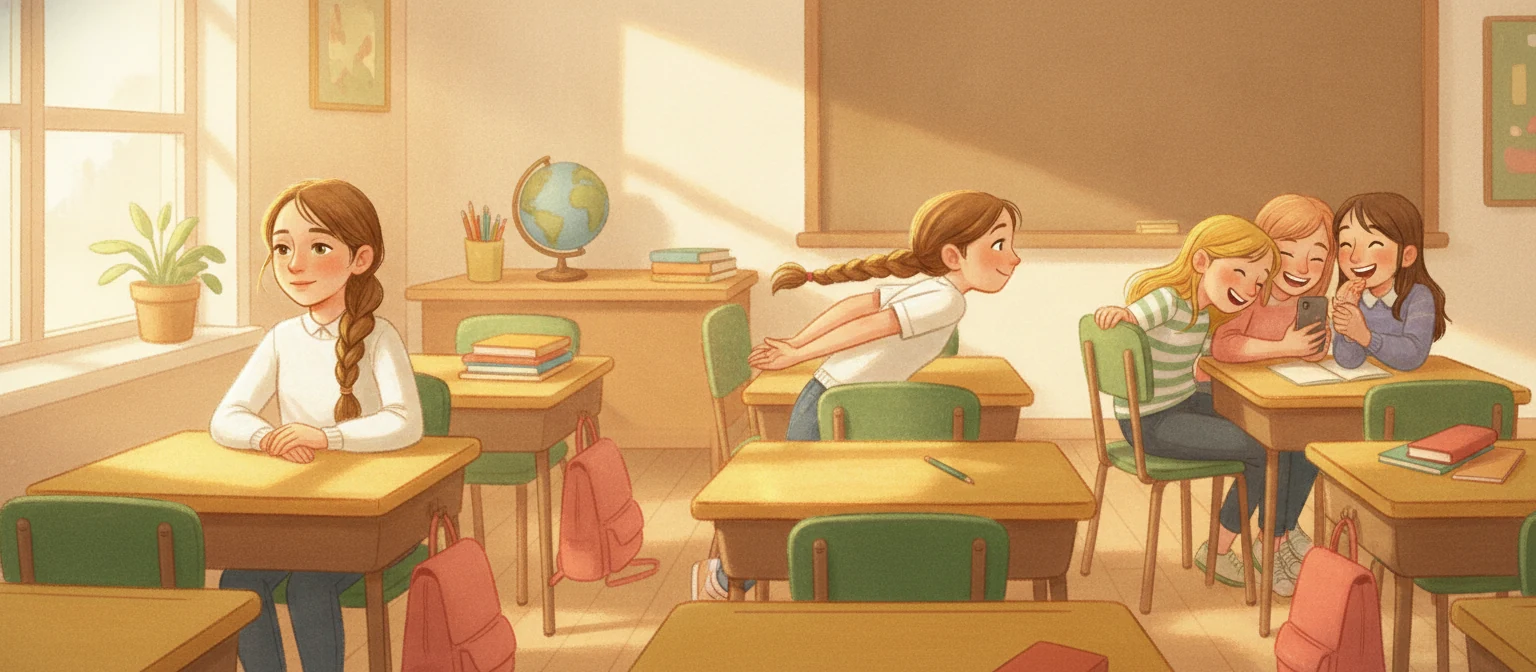
Nobody pushed Sana or took her lunch money. What they did was quieter, deniable, and it worked better: they simply arranged for her to not exist.

The Two-Tiffin Plan

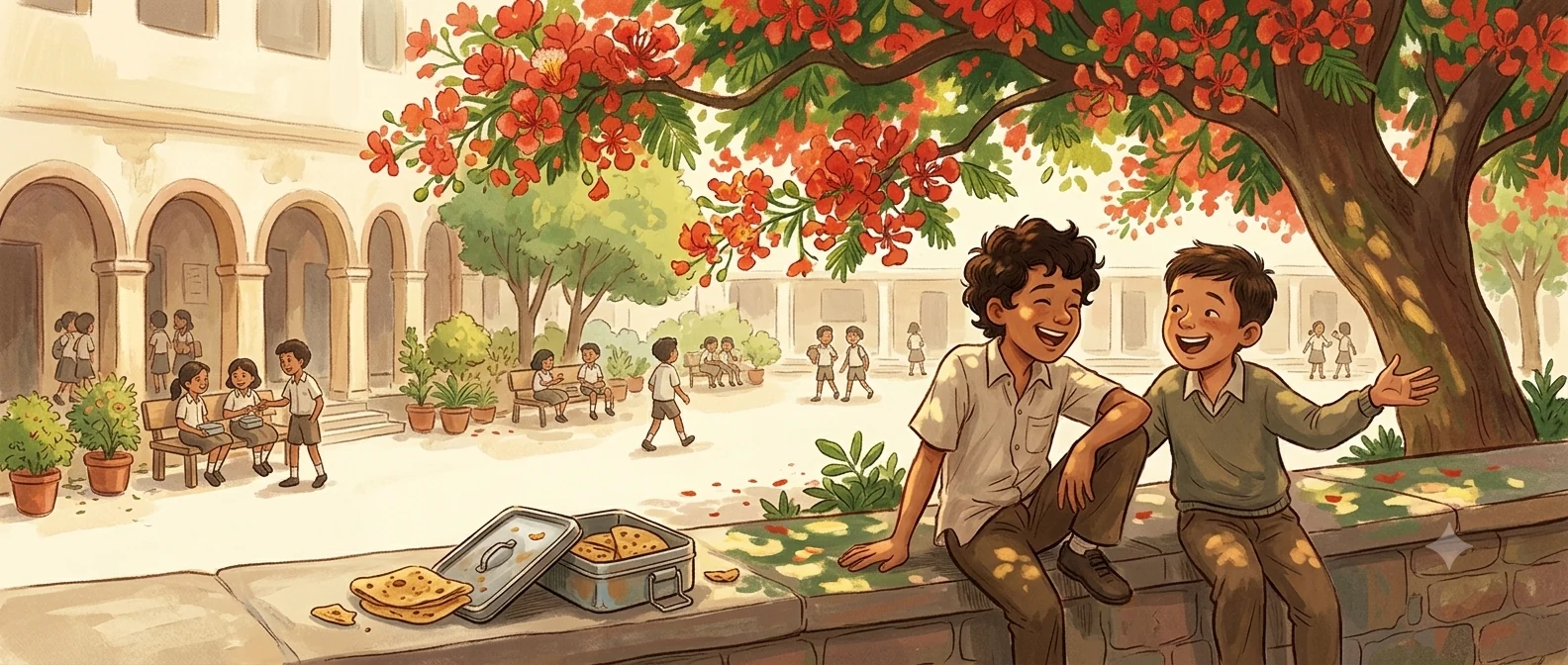
Yash notices that Farhan never eats lunch. His first attempt to help goes so wrong that it takes a week — and his grandmother — to understand why.

Two Weeks in Nani's Village

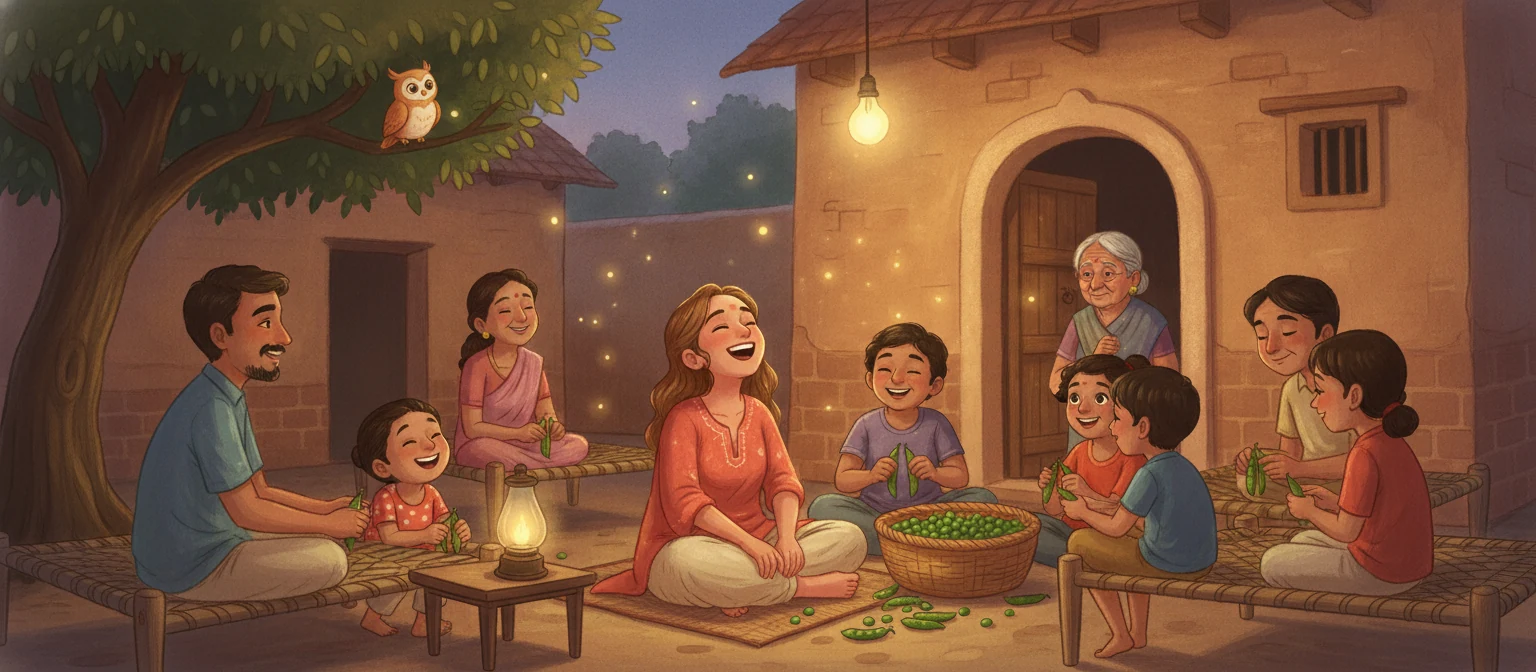
Zara has flown from London to a village with patchy Wi-Fi, bucket baths, and a 5 a.m. rooster. Her review, composed by day two, is scathing. It does not survive the two weeks.

When Teddy Cried

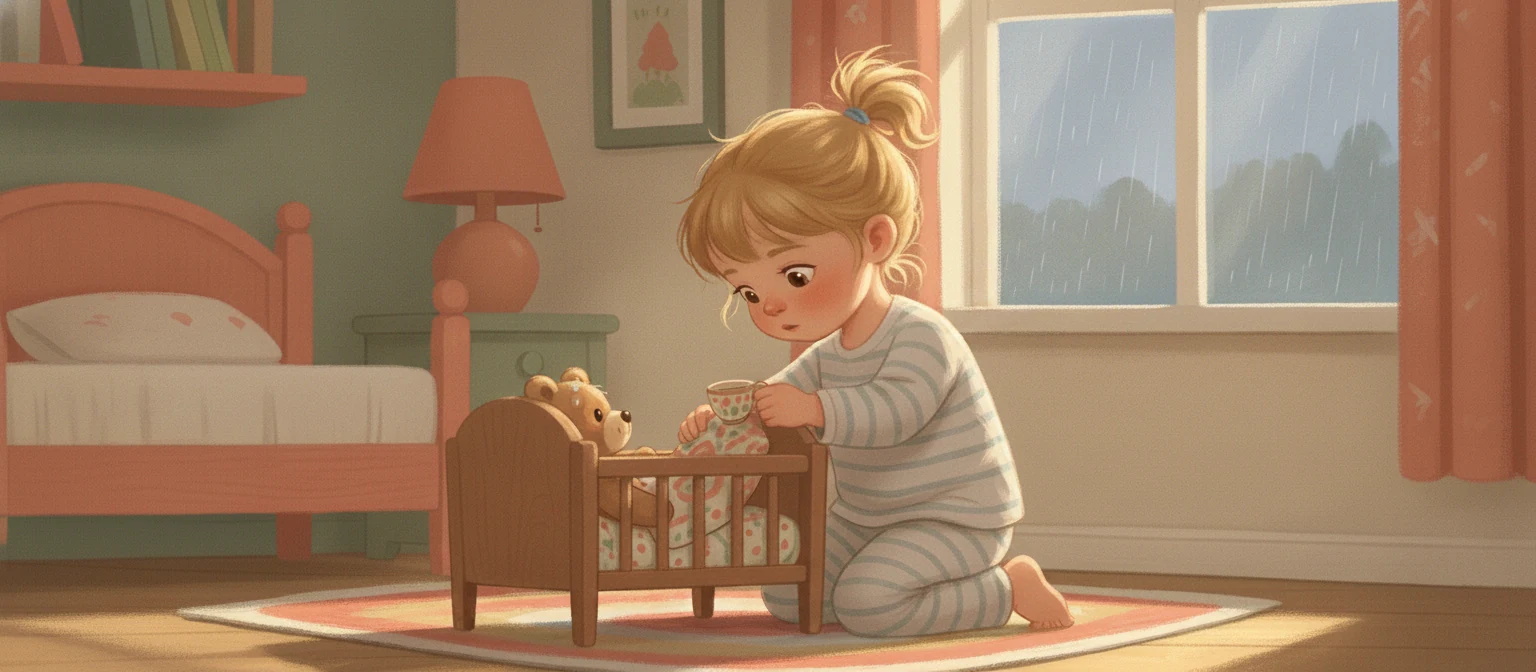
Teddy fell in a puddle and got all wet and cold. Luckily, Pihu knows exactly what a sad, wet someone needs — because it's what Ma does for her.

Questions parents ask

At what age do children develop empathy?

Earlier than most people think, and later than most people hope. Babies catch feelings from others almost from birth; toddlers comfort a crying friend by age two; but genuinely imagining another person's different point of view develops around ages 4–6 and keeps maturing into the teen years. Stories meet children at every one of those stages.

How do stories build empathy better than explanations?

An explanation tells a child that other people have feelings; a story makes them feel those feelings from the inside. Researchers who study reading keep finding the same thing: fiction is perspective-taking practice. A child who has spent a hundred bedtimes inside other characters' heads has done a hundred repetitions of the skill.

What's the difference between empathy and sympathy?

Sympathy is feeling sorry for someone from the outside; empathy is feeling with them from the inside. Children usually learn sympathy first ("poor puppy"). Stories help them take the next step — understanding why the character feels that way, and what might actually help — which is where empathy becomes useful, not just tender.