Big Feelings
The Tower That Fell
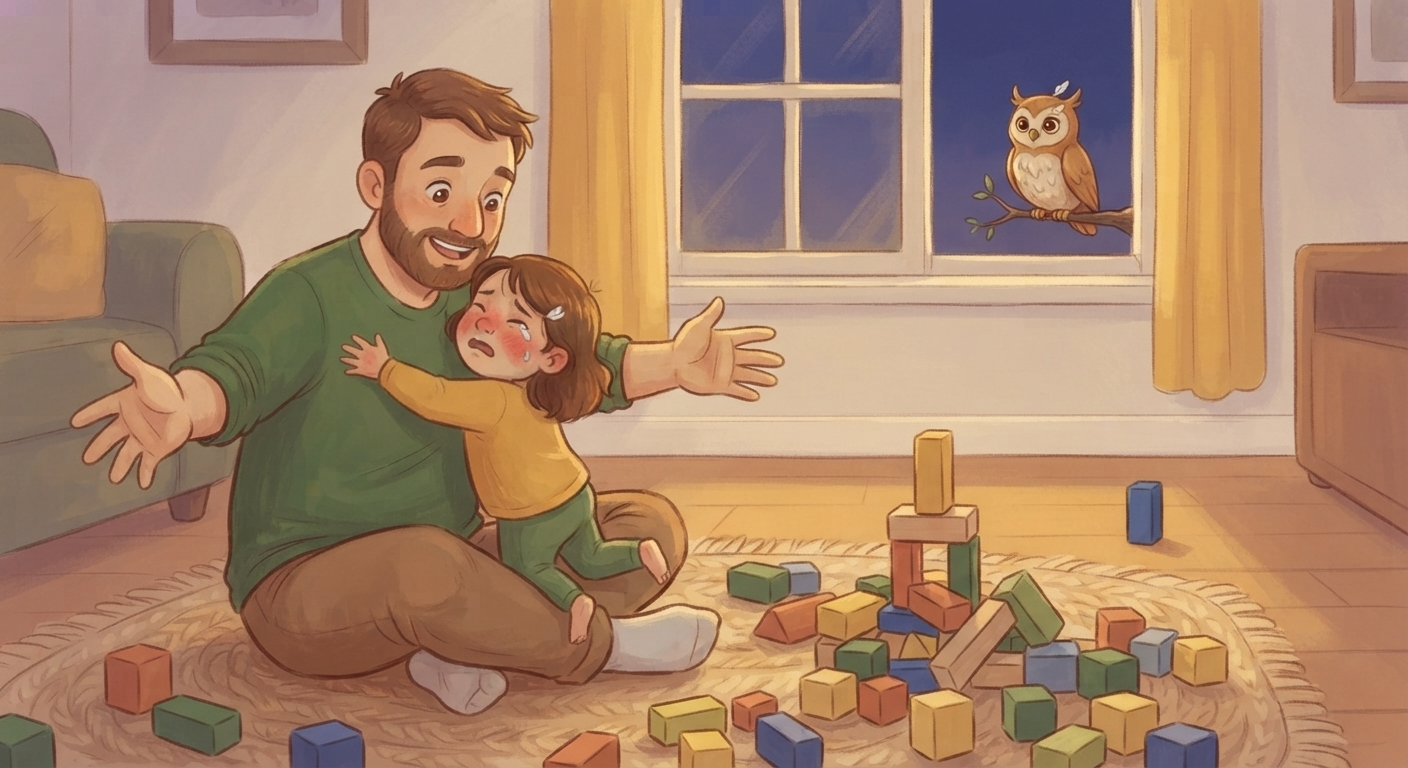
Anaya's tower goes CRASH! And the big feeling comes — fast, and hot, and loud. Squeeze it. Blow it. Then the arms that are always open, whether the tower stands or falls.
Somewhere between the shoe that wouldn't go on and the tenth minute of screaming, most parents have thought the same thing: where is all of this coming from? The answer is that a feeling arrives in a small child at full size, in a body with no shelves to put it on. "Calm down" asks them to do the one thing the feeling has temporarily made impossible — which is why it so rarely works, and why it so often makes the noise louder.
The stories here don't ask anyone to stop feeling. They show characters in the middle of it — furious, frozen, panicking, sulking behind a door — and then show the small physical things that actually shift a flooded body: stamping it out, breathing it out, going somewhere quieter, or simply being sat next to until it passes. Nothing gets solved by being explained. For younger children the stories work as rhythm and repetition, so the moves are already in the muscles before the storm; for older ones they go somewhere harder, including the child everybody praises for never getting angry. Each ends with a short Talk About It prompt — best asked on a good day, not a bad one, because that's when this stuff can actually be learned.
Anaya's tower goes CRASH! And the big feeling comes — fast, and hot, and loud. Squeeze it. Blow it. Then the arms that are always open, whether the tower stands or falls.
Mostly by not teaching during it — a flooded child cannot take in reasoning, and questions tend to add fuel. Lower your voice, get to their eye level, stay near, and offer the body an exit: stamping, squeezing, a big out-breath, water, a quieter room. The conversation comes afterwards, and the stories are for the calm hours in between, when the moves can actually be learned.
The feeling and the behaviour are different things, and it helps to be explicit about which one you're addressing. Anger itself is allowed and always will be; hitting, breaking and hurting are not. Children who are told the feeling is bad learn to hide it rather than handle it — so stories where a likeable character is genuinely furious, and still likeable afterwards, do quiet and useful work.
Not automatically — some children swallow everything because being easy is what gets praised, and that has its own cost later. If your child rarely shows a hard feeling, it's worth making the feelings sayable out loud at home ("that would have annoyed me"), and worth choosing stories where a character finally says the difficult thing. Sudden or lasting changes in mood, sleep or appetite are always worth raising with your paediatrician.