Fear of the Dark
Goodnight, Little Light
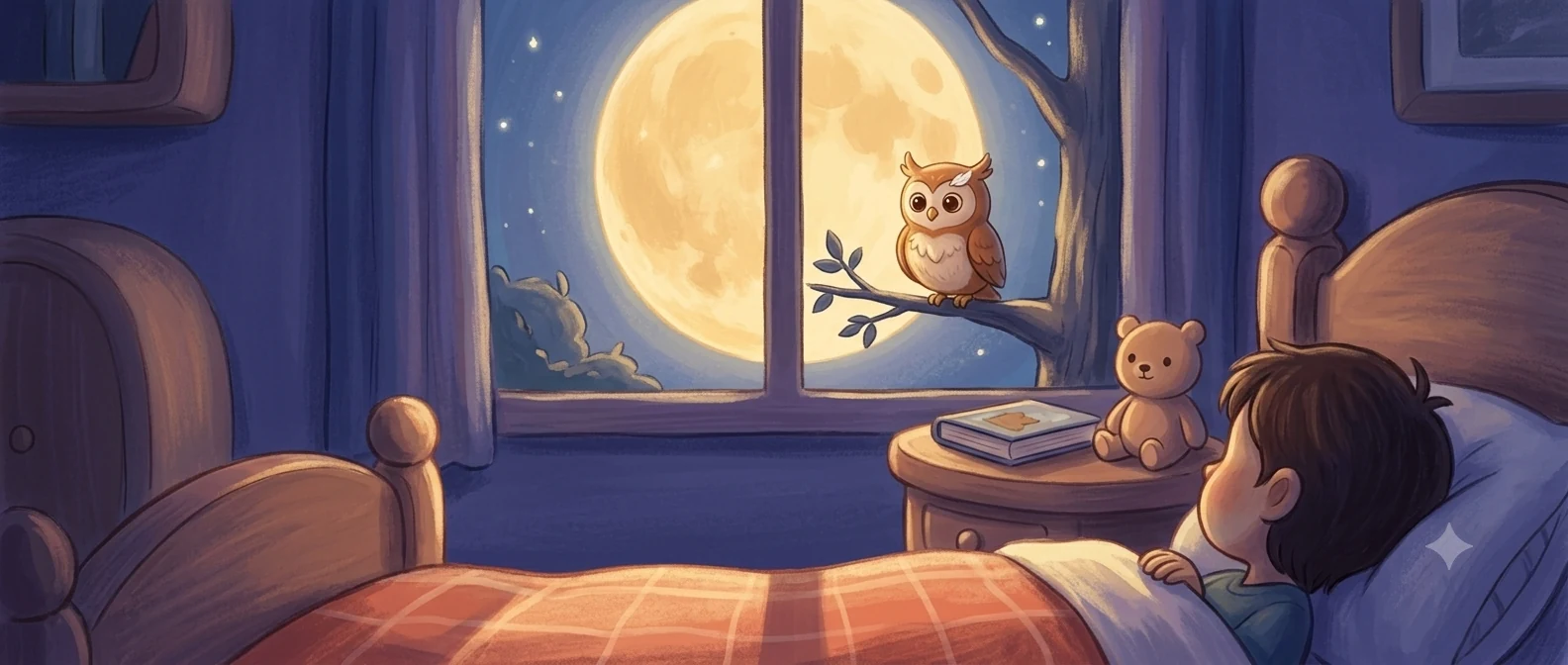
Every light in the house is going to sleep, one by one. The dark, it turns out, is just the soft blanket the lights pull up when they're tired.
Fear of the dark is one of childhood's most universal fears, and one of its most sensible: a small person with a large imagination, in a room where the imagination suddenly has no competition. Reasoning with it rarely works, because the fear doesn't live in the reasoning part. But a bedtime story is uniquely placed to help — it meets the fear at the exact hour it lives, in the exact room, in your voice.
The stories here work by making the night knowable rather than by pretending it isn't dark. Their nights are full of friendly specifics — a stream you can follow by sound, a lamp in a far window, a small owl who learns you can be scared and flying at the same time. Nothing in this collection is scary; that's policy, not luck. Each story ends with a short Talk About It prompt, best asked with the lights already low.
Every light in the house is going to sleep, one by one. The dark, it turns out, is just the soft blanket the lights pull up when they're tired.
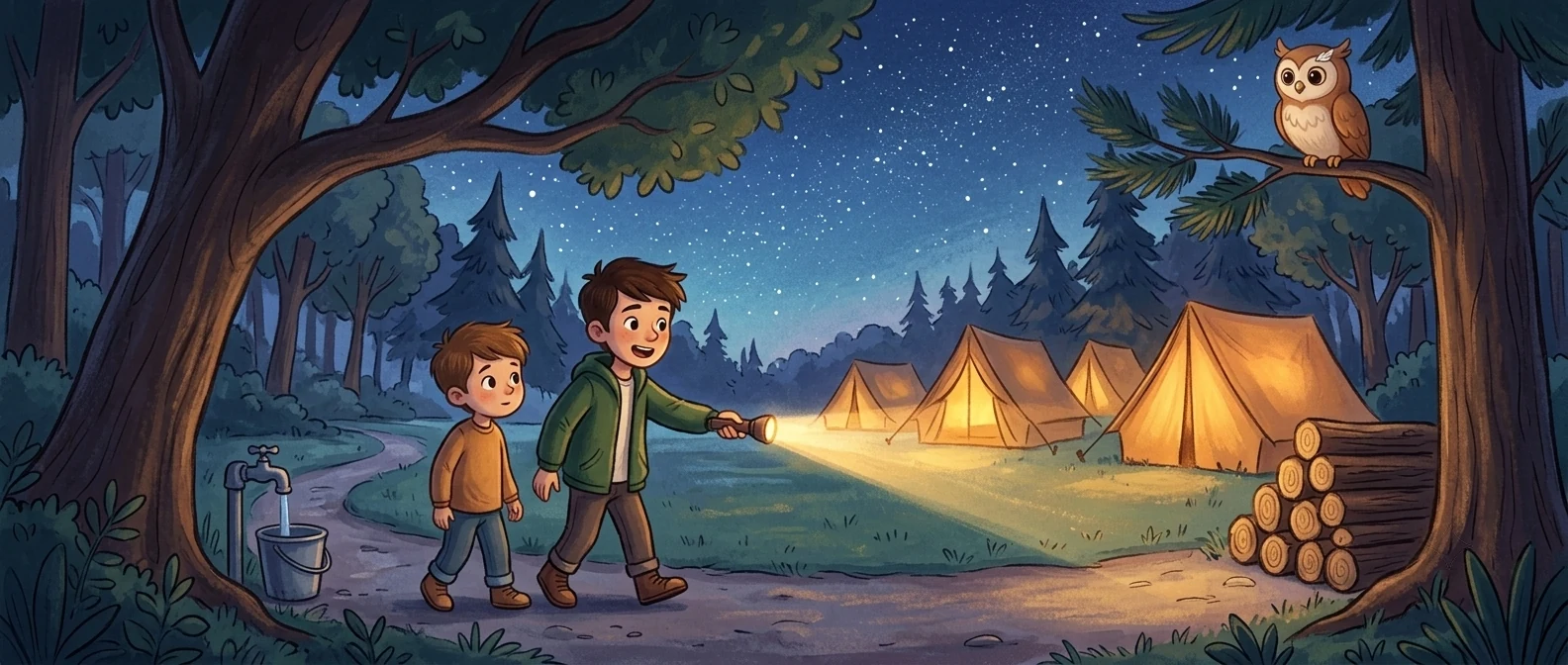
Dhruv is eleven — far too old to be afraid of the dark, which is why absolutely no one can ever find out. Then comes the school camp, and the night duty roster.
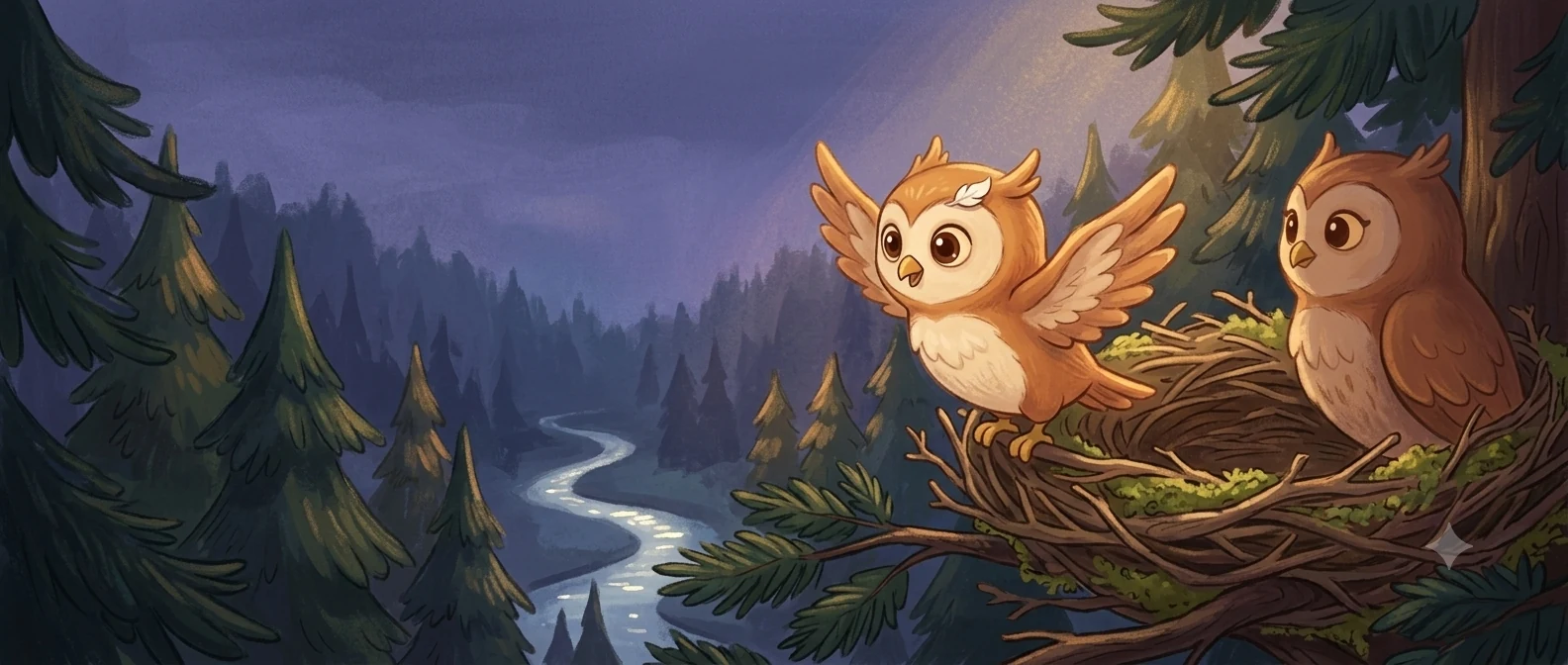
A young owl discovers that being brave doesn't mean the dark stops being dark.
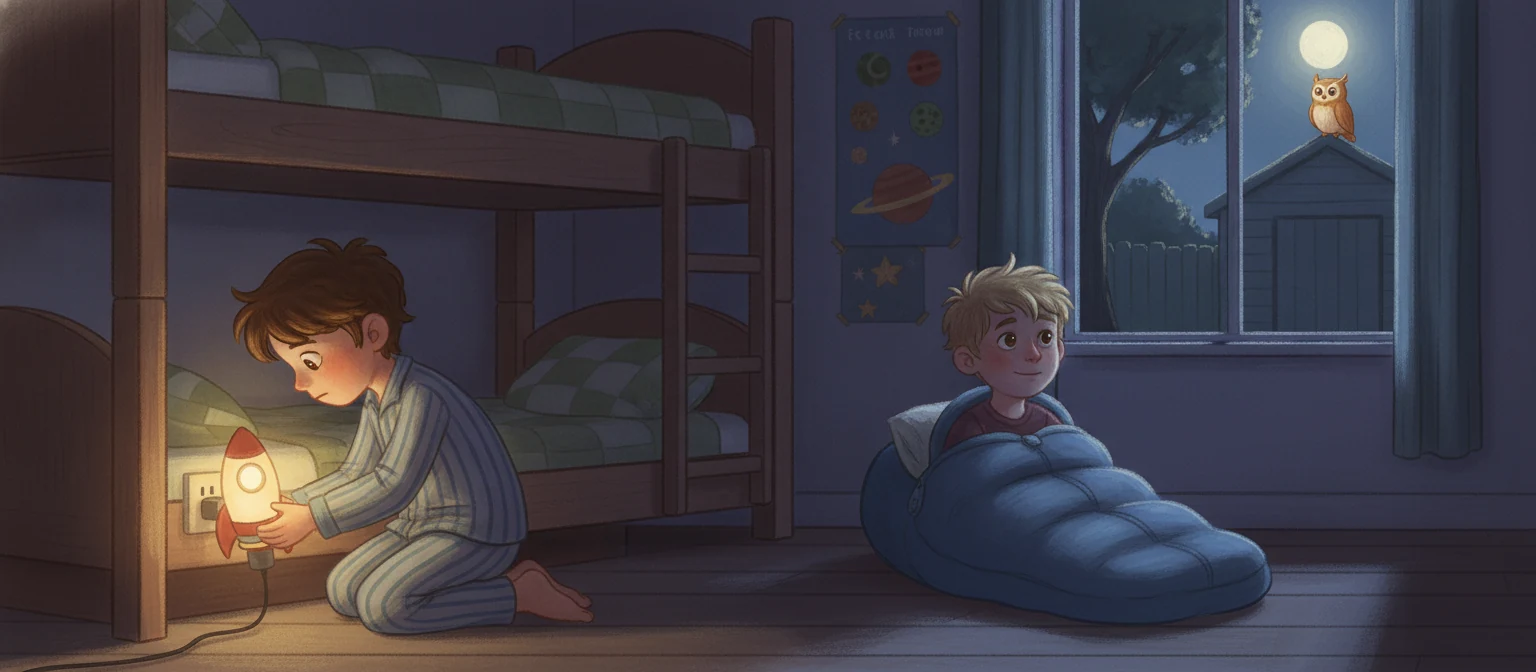
Leo has wanted this sleepover for weeks. He's also been dreading it for weeks — because at home, there's a night-light, and at Finn's house, who knows?
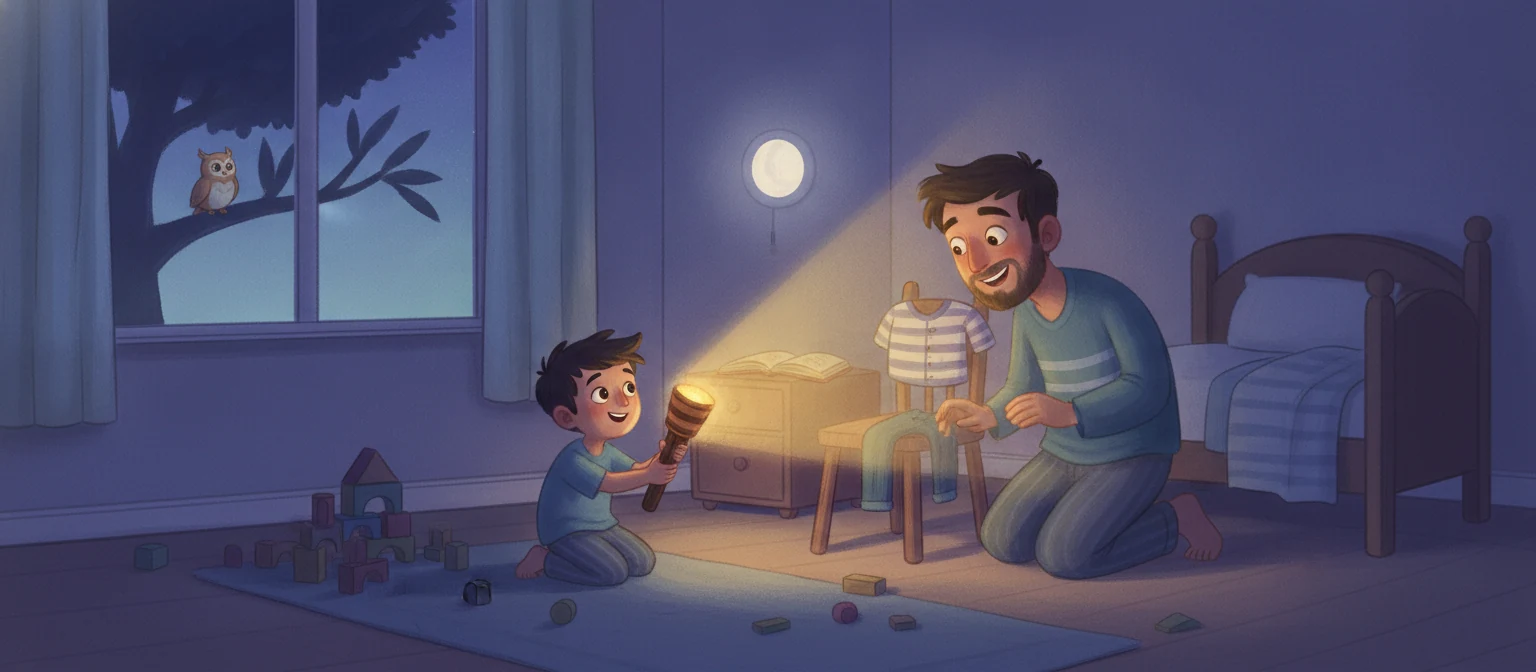
There is something in the corner of Kiaan's dark room. Papa doesn't say 'there's nothing there.' Papa says: 'Let's go find out what it is.'
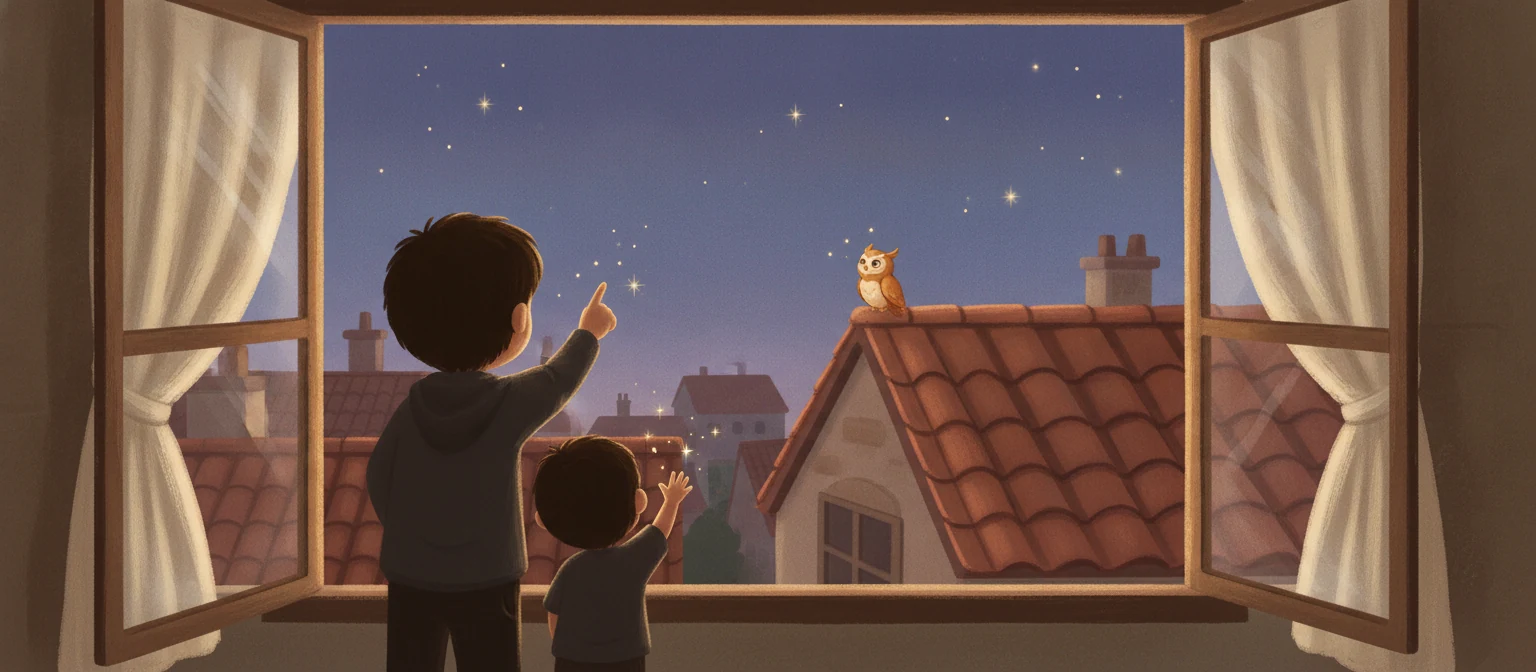
The sun is going home, and the sky is getting dark — but wait. The dark isn't taking the light away. It's making room for the little lights.
Very normal — it typically appears around ages 2–4, peaks in the preschool years, and fades gradually through primary school as imagination and experience come into balance. It needs patience more than fixing. If a fear is intense, sudden or follows something upsetting, it's worth a gentle conversation with your paediatrician.
Scary ones would — which is why there are none here. The helpful kind do the opposite: they fill the dark with warm, specific, friendly detail, so the child's imagination has furniture other than monsters. A child who has flown the Long Night alongside a small owl has new pictures to reach for when the lights go out.
A steady wind-down routine, a night light if they want one (the fear outranks the sleep-hygiene debate), rehearsing "brave checks" together in daylight, and taking the fear seriously without enlarging it — "the dark feels strange, doesn't it" beats both "there's nothing there" and turning on every light. The story is the routine's warmest tool.