Screen Time
Bye-Bye, Tablet
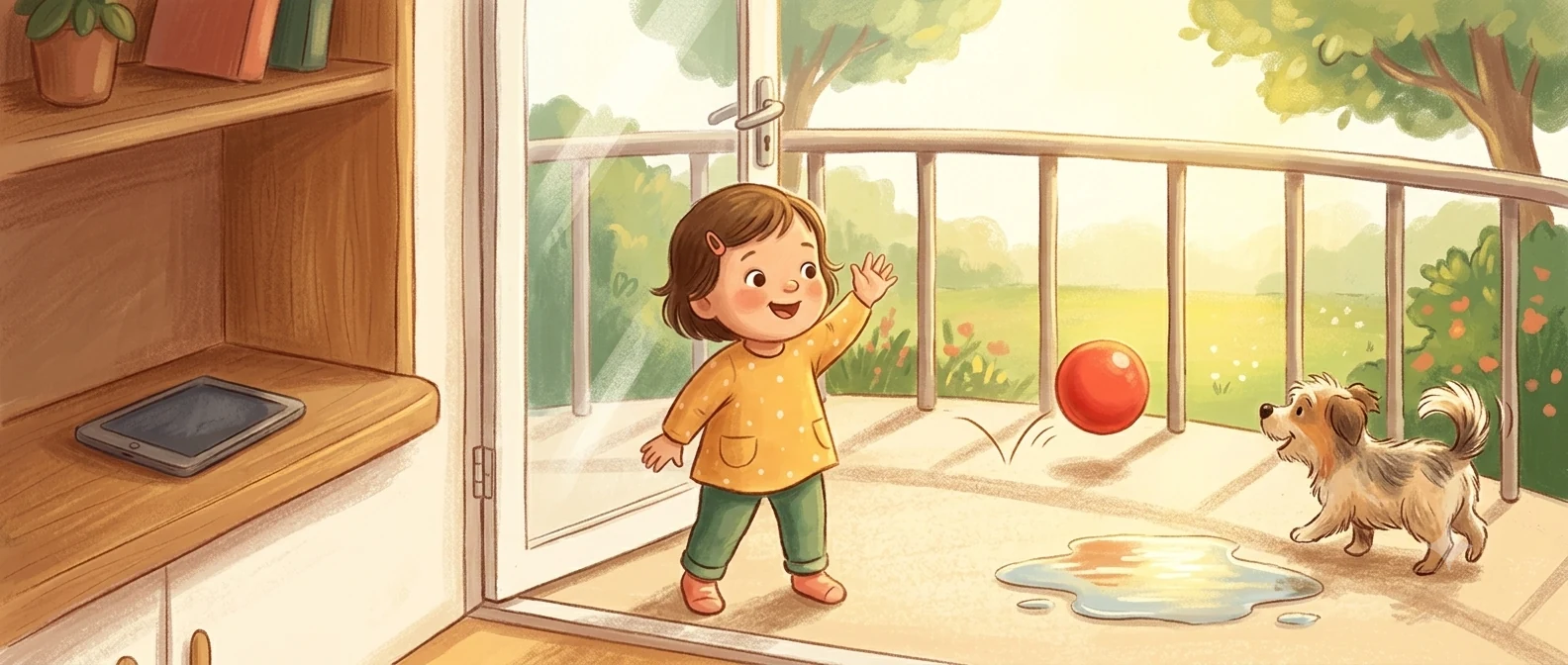
The rhymes are over and the tablet is tired. Time to wave bye-bye — because the world outside the screen has been waiting to play.
No folktale ever had to cover this one — which is exactly why we write new stories for it. And the honest starting point is that lectures about screens tend to be delivered by adults holding phones, and children notice. So these stories don't demonise the screen or the child who loves it. They do something sneakier and kinder: they remember, vividly, everything else — the game that needed a whole courtyard, the boredom that turned into an invention, the afternoon that didn't get photographed and became a legend anyway.
The aim is balance a child chooses, not a ban a child resents; a story can make the off-screen world look like what it is — the original open-world game. These are all original NestOfValues stories, set in homes where devices exist without being villains. Each ends with a short Talk About It prompt, best attempted when nobody is holding anything glowing.
The rhymes are over and the tablet is tired. Time to wave bye-bye — because the world outside the screen has been waiting to play.
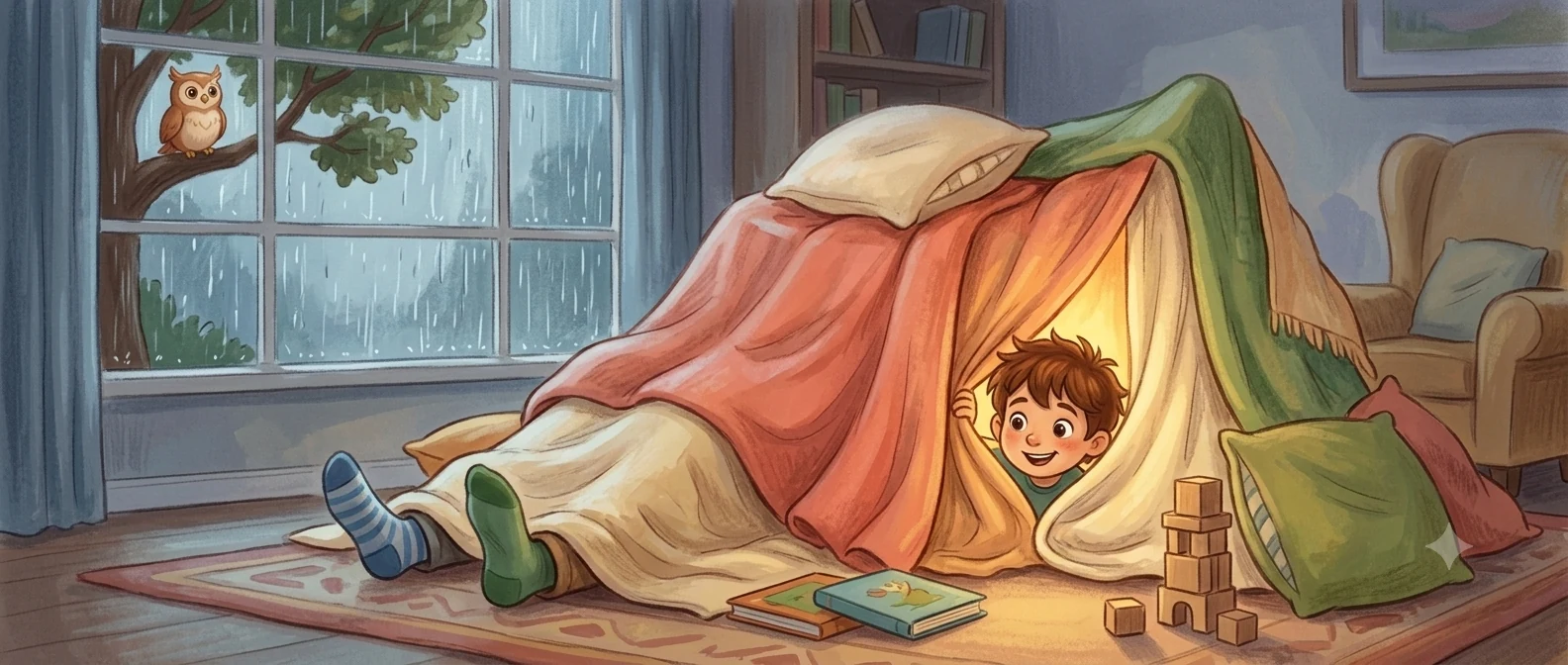
The tablet's battery is done, the rain won't stop, and Sami is SO bored — until Dad says the magic words: 'Fetch every pillow in the house.'
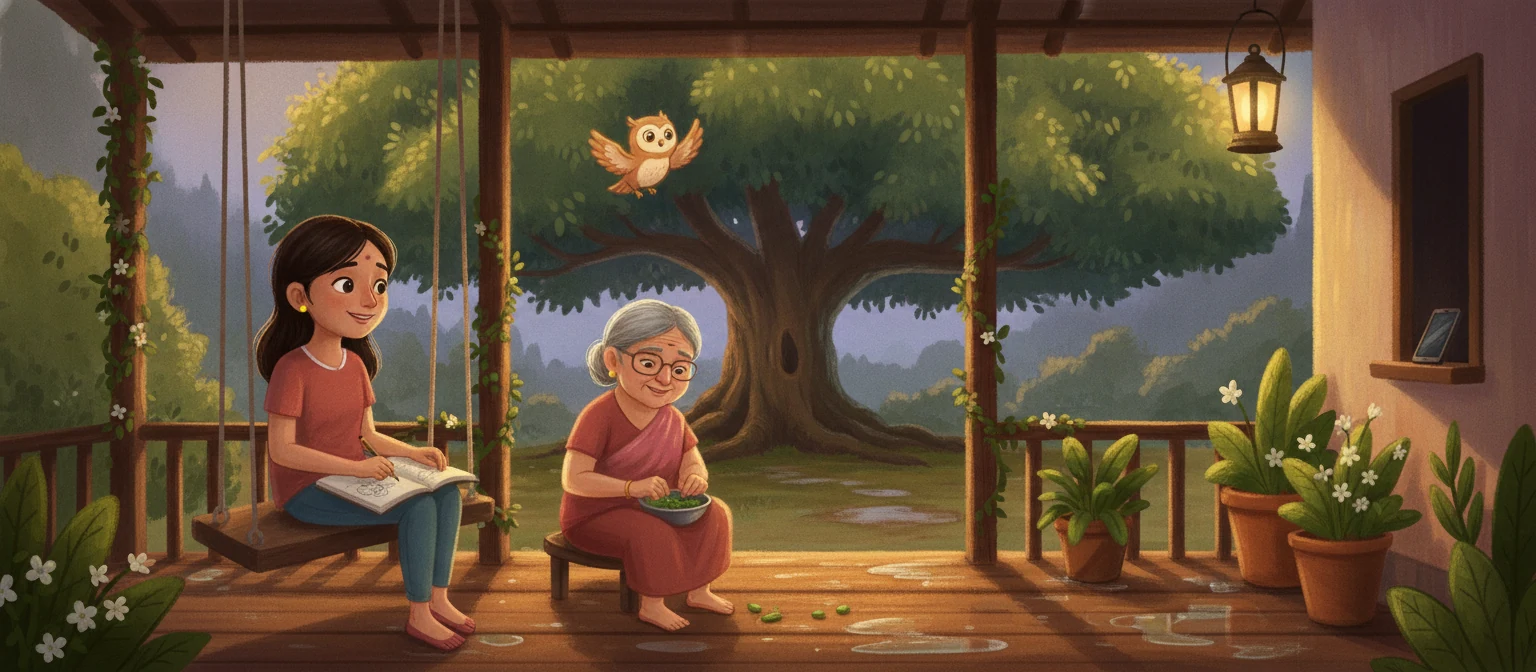
Naina's class group chat never sleeps — 400 messages a day, and falling behind feels like disappearing. Then a week at Ajji's house, where the network barely reaches, runs an experiment she'd never have agreed to.
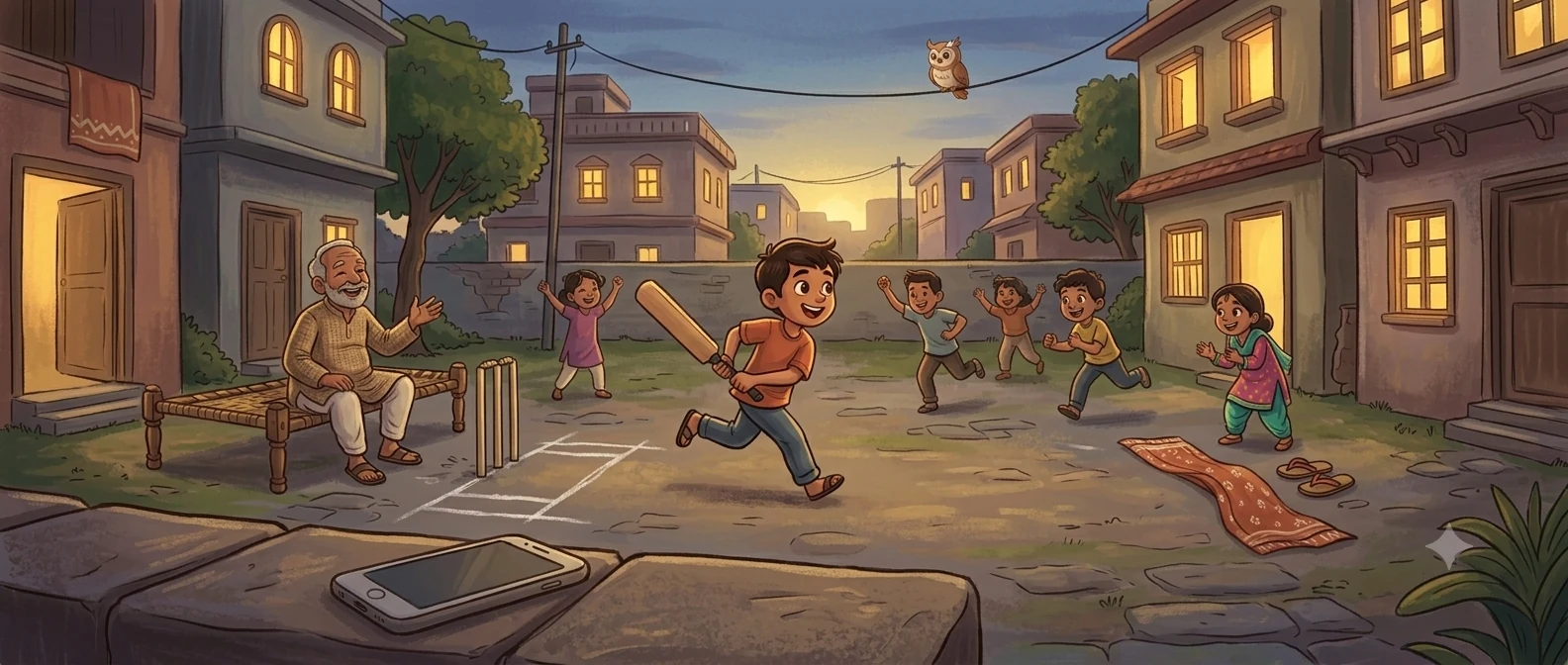
Veer's plan for the summer holidays is simple: finish all hundred levels of Kingdom Quest. The plan does not account for a transformer blowing up in week two.
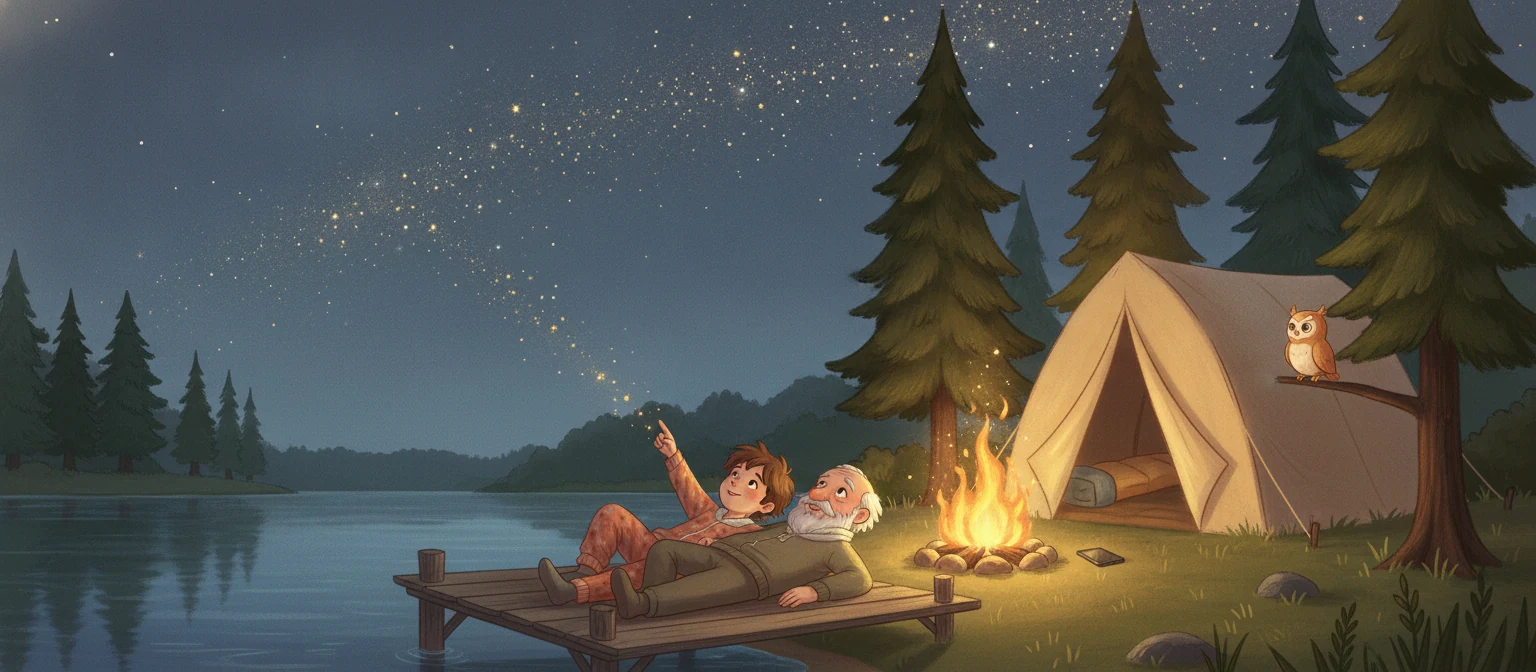
Leo hasn't missed a single day of Blocky Quest in 214 days — the flame icon says so. Then comes the camping weekend, with no signal, and the flame goes out.
The match starts at six. The homework is six sums long. Yuvan has been at it since four, and the video propped against his water bottle keeps doing the funny bit.
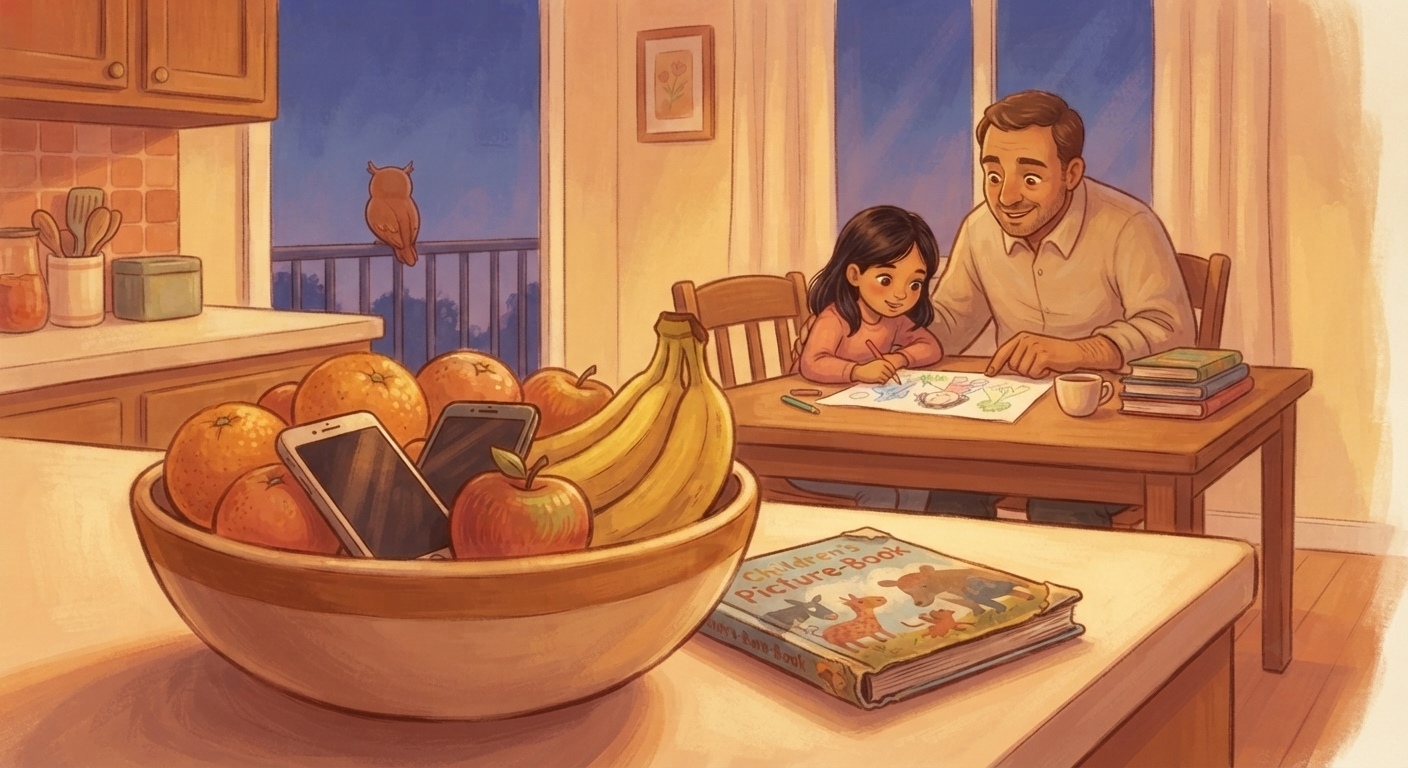
Papa has two faces. There is the one that looks at Noor, and there is the flat one that looks down at his phone. So Noor invents a game about it.
Not as a spectacle — as a relationship, easily. A story read aloud comes bundled with the things no app has: your voice, your lap, your full attention. Children reliably rank that combination higher than adults expect. Protecting a nightly screen-free story slot is less about beating the tablet and more about keeping one daily space it never entered.
Sleep researchers are unusually united here: screens close to bedtime make it harder for children to wind down, both from the light and the stimulation. A practical pattern many families use — screens off before the bedtime routine starts, then bath, story, sleep. The story isn't just the screen's replacement; it's the better off-ramp.
Rules beat negotiations: a consistent when-and-how-much, agreed in daylight, survives better than case-by-case bargaining at 6 pm. Expect protest; boredom on the far side of it is not an emergency — it's usually where play comes from. And children track what we model more than what we say, which these stories quietly acknowledge.