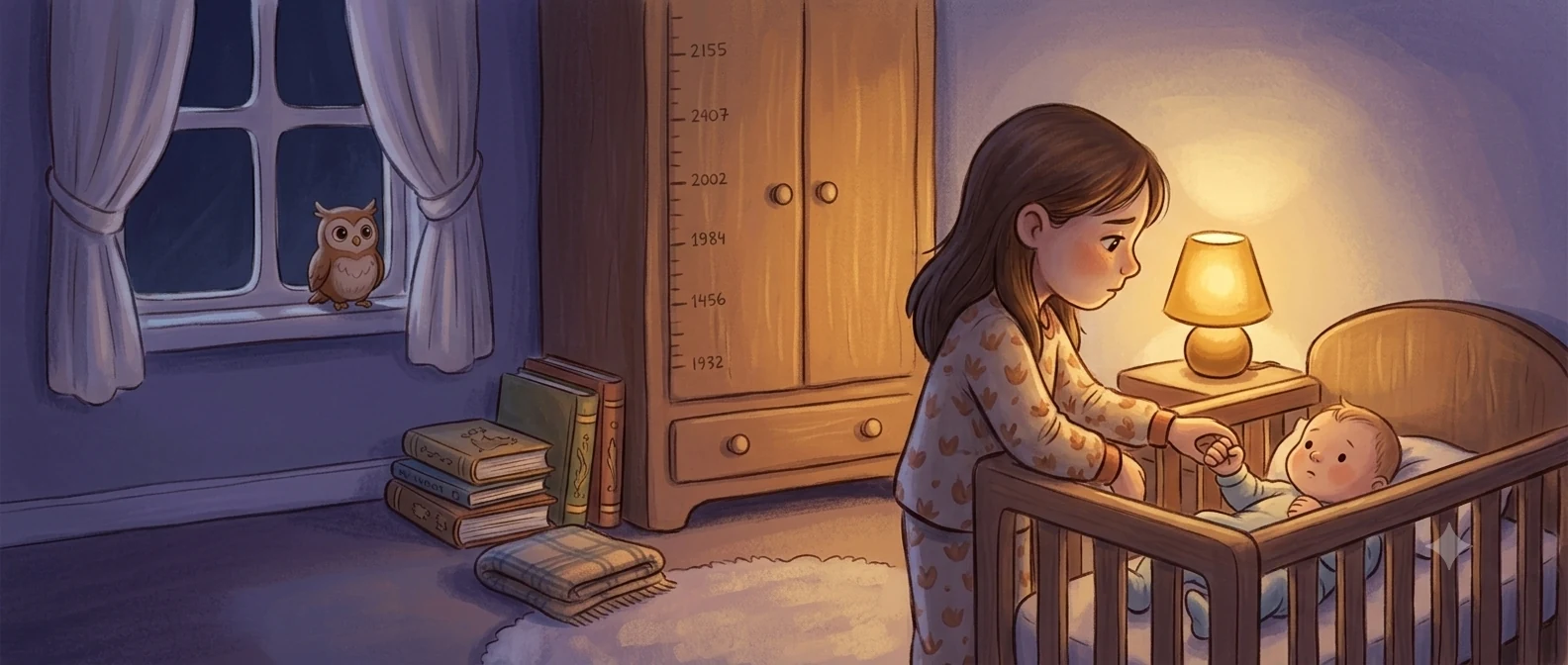
New Sibling
Half My Room
Myra is eleven when the baby arrives — old enough to be told to adjust, and old enough to be furious about it. Both things, it turns out, can live in one person.
A new baby rearranges the entire known universe of the child who was here first. And the feelings that arrive with the rearrangement are genuinely complicated — fierce love and hot jealousy, pride and grief, often within the same hour, in a person too young to name any of it. Being told "you'll be such a good big brother" doesn't give those feelings anywhere to go. A story does.
In these stories, the moon gets a little sister, the eldest cub counts who-got-what, and older siblings of every species discover the strange arithmetic of a family growing: love dividing and somehow multiplying at the same time. The jealousy is allowed to exist — that's the point — and so is the fierce protectiveness that tends to arrive right behind it. The Talk About It prompts are written to let your child say the unsayable parts safely. Love here isn't a cake with only so many slices — but a child has to discover that, not be told it.
Myra is eleven when the baby arrives — old enough to be told to adjust, and old enough to be furious about it. Both things, it turns out, can live in one person.
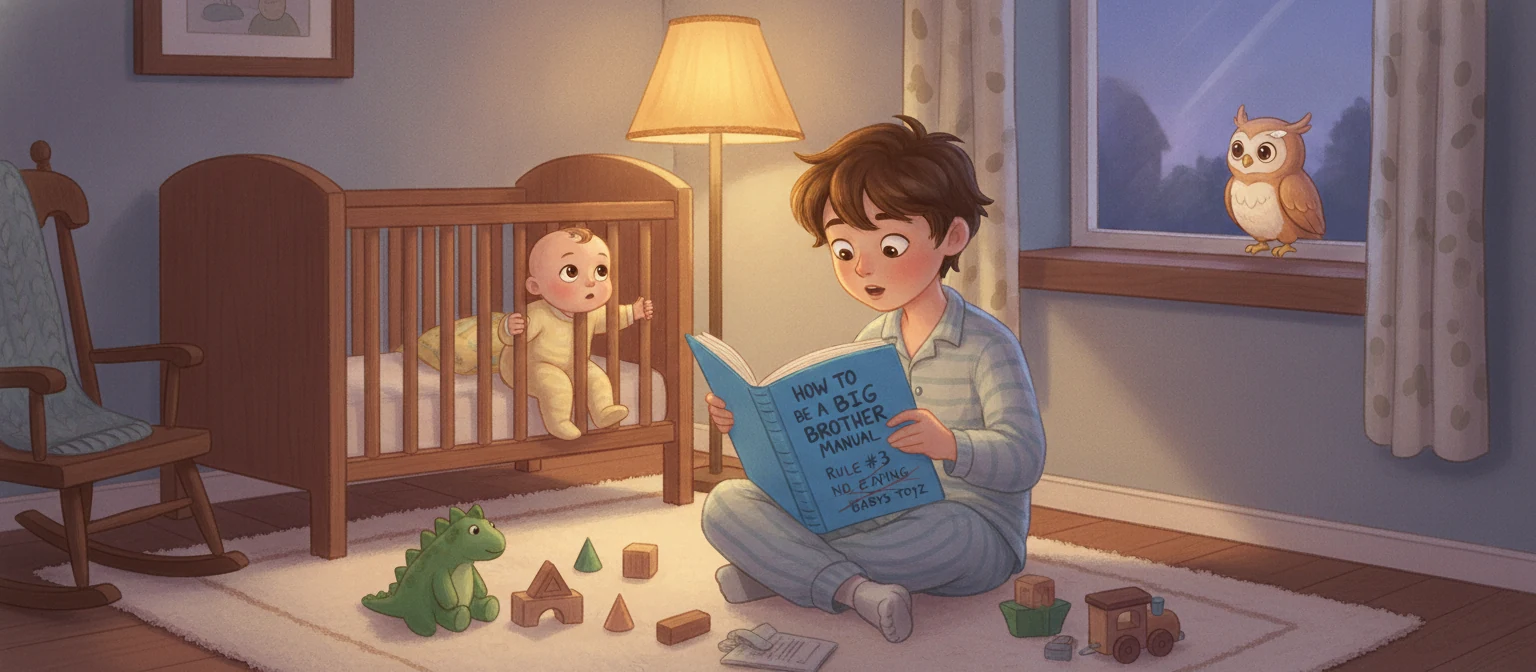
Milo prepares for everything — so before the baby arrives, he writes a complete instruction manual. The baby, on arrival, has clearly not read it.
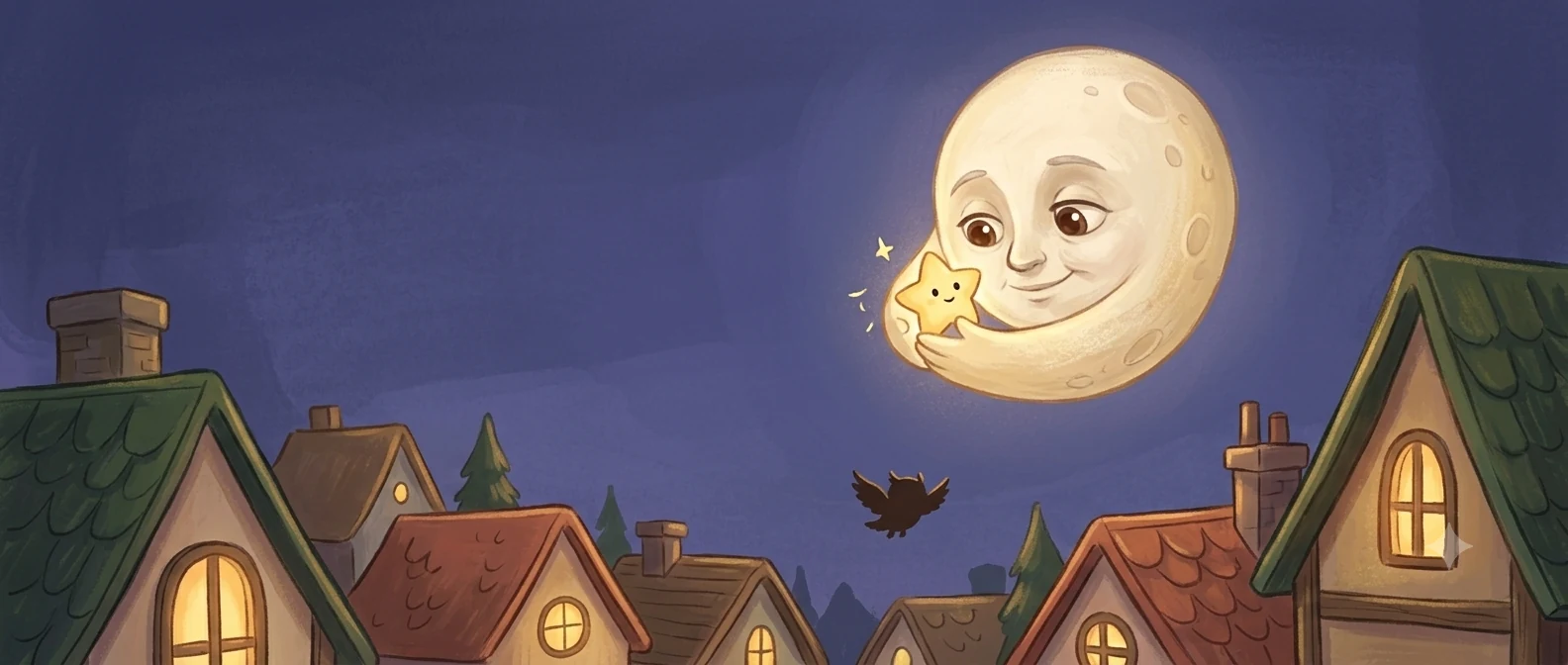
The Moon has always had the night sky to herself. Then one evening, a brand-new little star appears — tiny, bright, and getting all the attention.
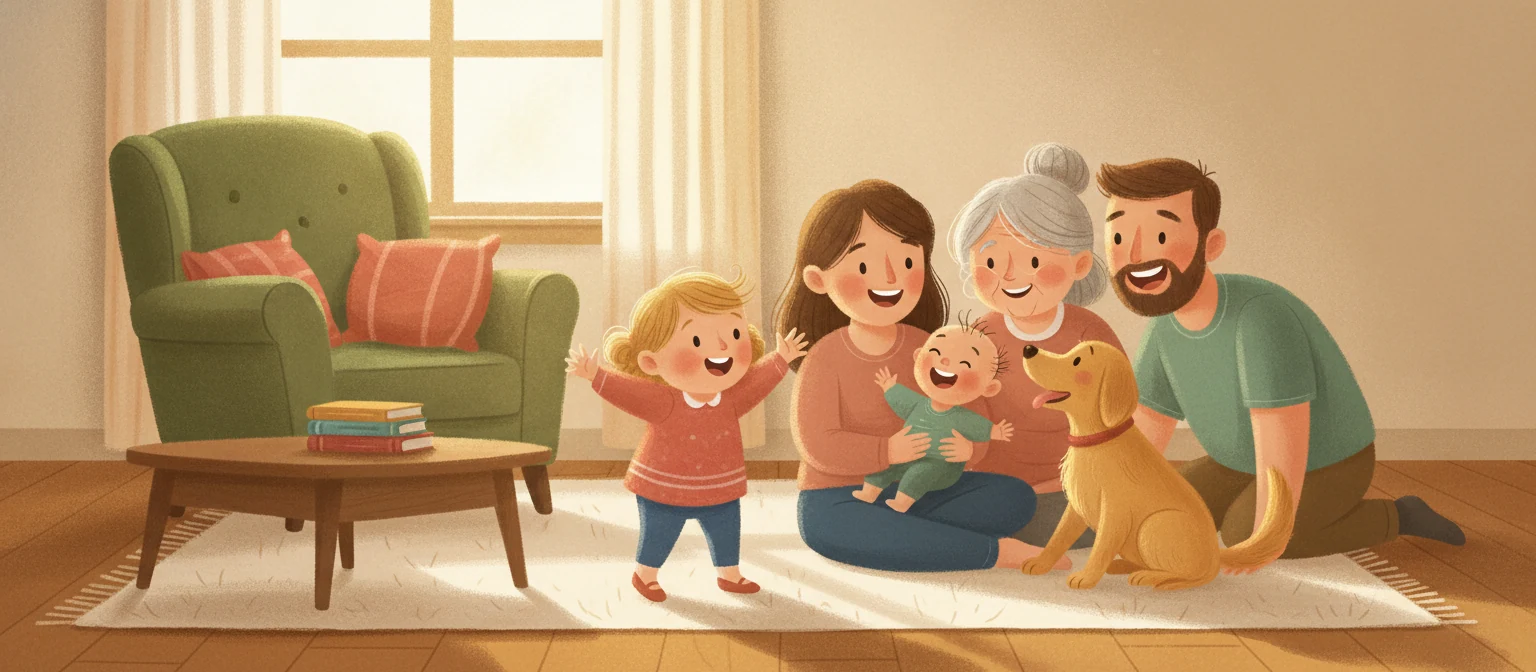
Everyone wants to make the new baby laugh — Papa, Nani, even the dog. But the baby is waiting for someone special.
A couple of months before the baby arrives is a good start — early enough to normalise what's coming, close enough to feel real. But the months after the birth matter just as much; that's when the abstract sibling becomes a noisy, attention-absorbing fact, and when a story that admits the hard feelings helps most.
So normal it's practically part of the package — regression is a child's way of asking "is the baby's way the way to be loved now?" It passes fastest when the question is answered with warmth rather than correction. Stories where a big sibling finds what only the big one can do give your child a better answer to reach for.
They give the jealousy a legal existence. A child who hears a story character whisper "send the baby back" learns two things at once: other people have this feeling, and having it doesn't make you bad. Feelings that are allowed to be spoken shrink; the Talk About It questions open that door gently.