Sharing
One Roti, Two Friends
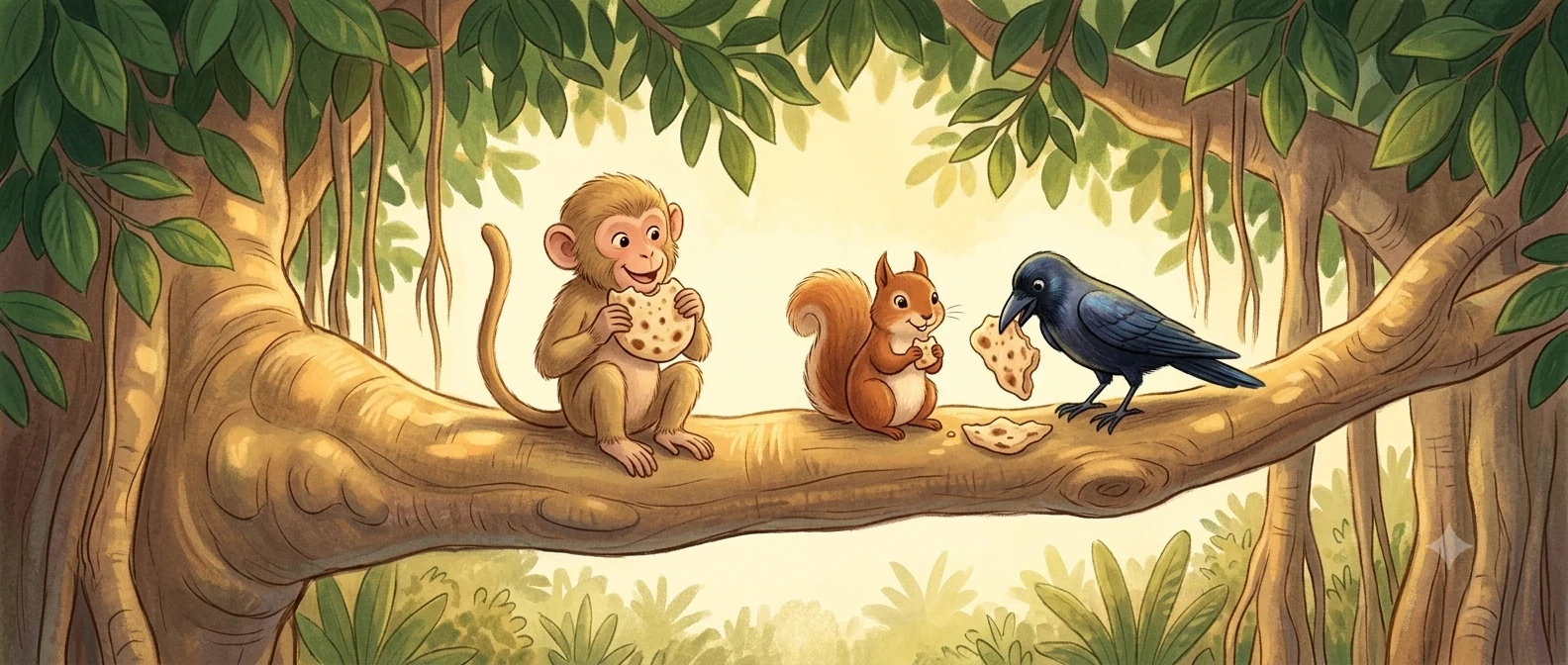
Bunty the monkey has one warm roti and a rumbling tummy. Then a friend arrives. Then another. Somehow, the roti keeps getting sweeter.
"Mine!" is not a character flaw — it's a developmental milestone, a small person's first firm grip on the idea of ownership. Real sharing can only be built on top of that grip, never instead of it, which is why forced sharing so often teaches resentment wearing a polite face. The genuine thing arrives when a child feels secure enough to loosen the grip and discovers the trade secret: some things grow when given away.
That discovery is what these stories stage, over and over, in ways a child can feel — the snack that tasted better split, the game that only worked with two, the village whose one pot of rice somehow fed everyone who added to it. For little ones there are simple turn-taking rhythms; for older children, sharing that costs something real. Each story ends with a short Talk About It prompt instead of a moral. No one is made to hand anything over in these pages — which is exactly why the characters end up wanting to.
Bunty the monkey has one warm roti and a rumbling tummy. Then a friend arrives. Then another. Somehow, the roti keeps getting sweeter.
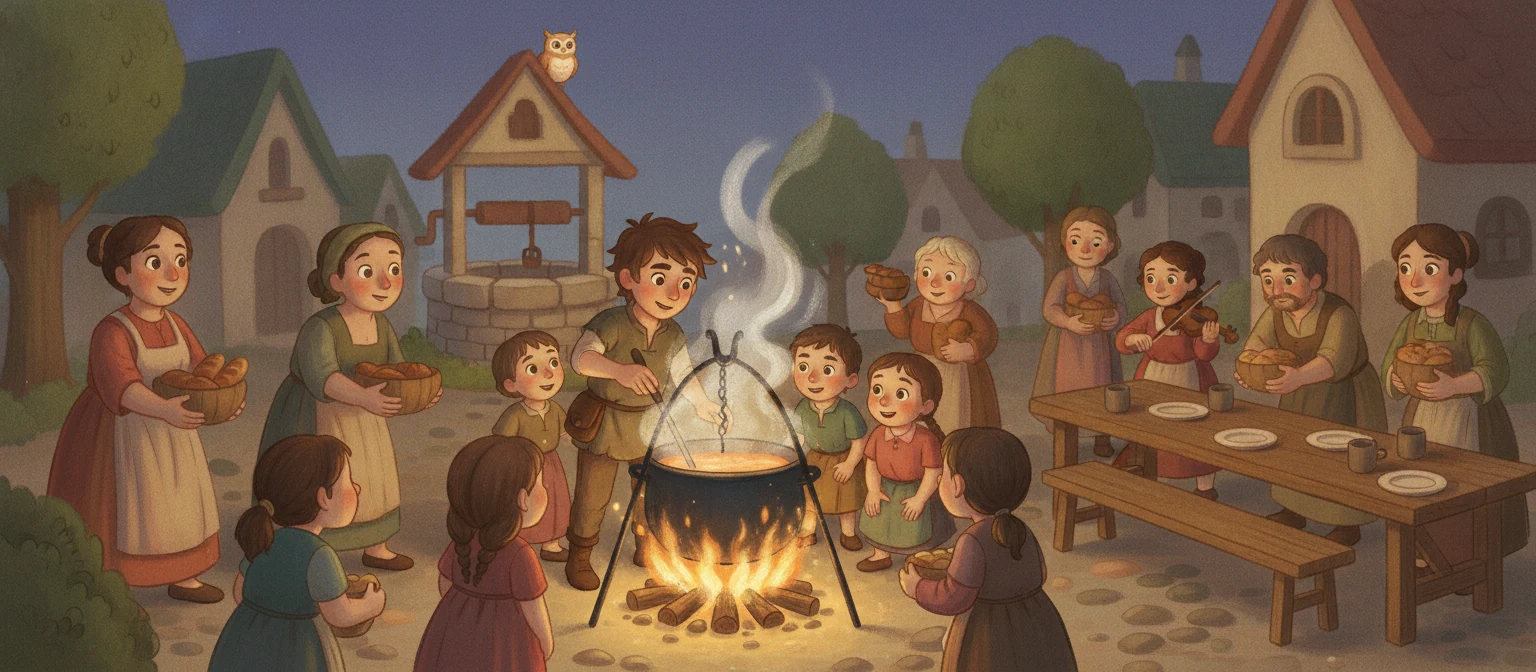
A hungry traveller arrives in a village where every cupboard is 'empty' — and starts making soup from a stone. Our retelling of the world's most delicious trick.
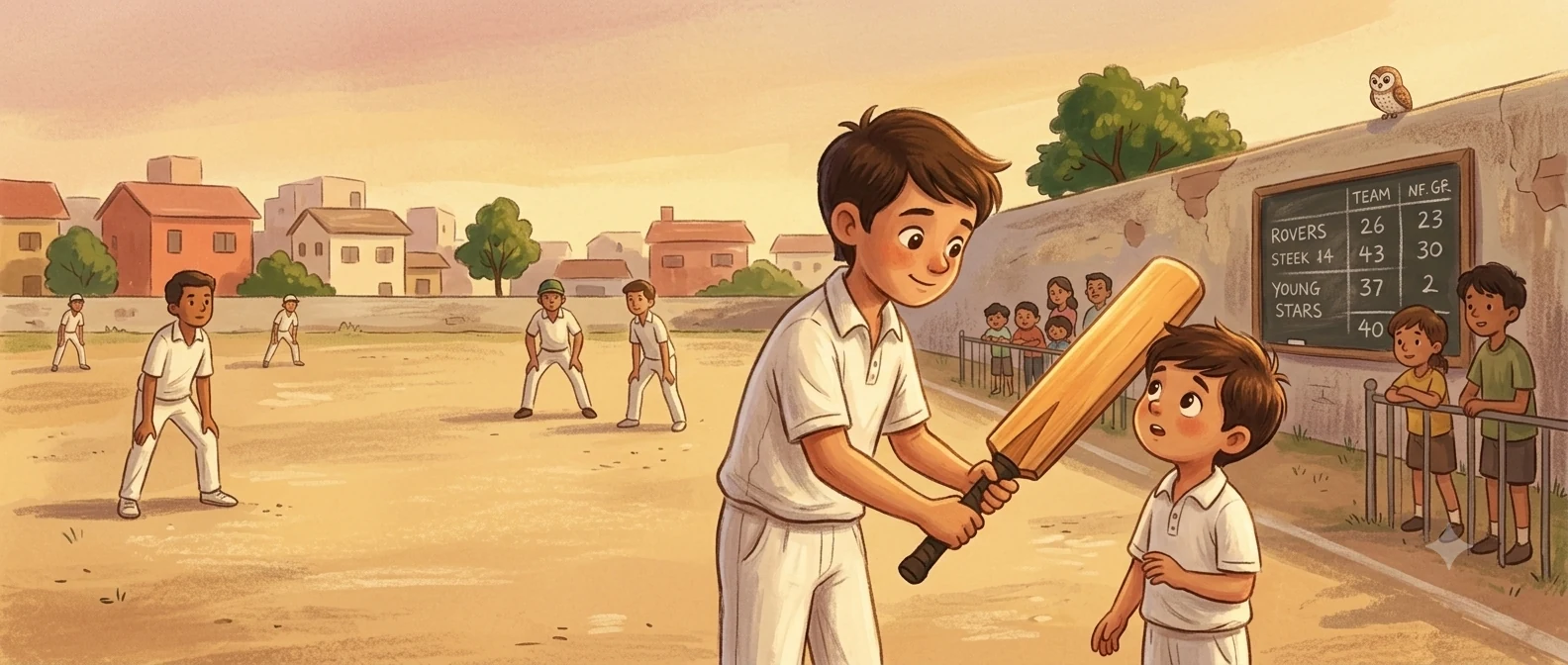
Arun owns the only real bat in the colony — a birthday-new, proper willow bat. Which means Arun now owns a problem no one warned him about.
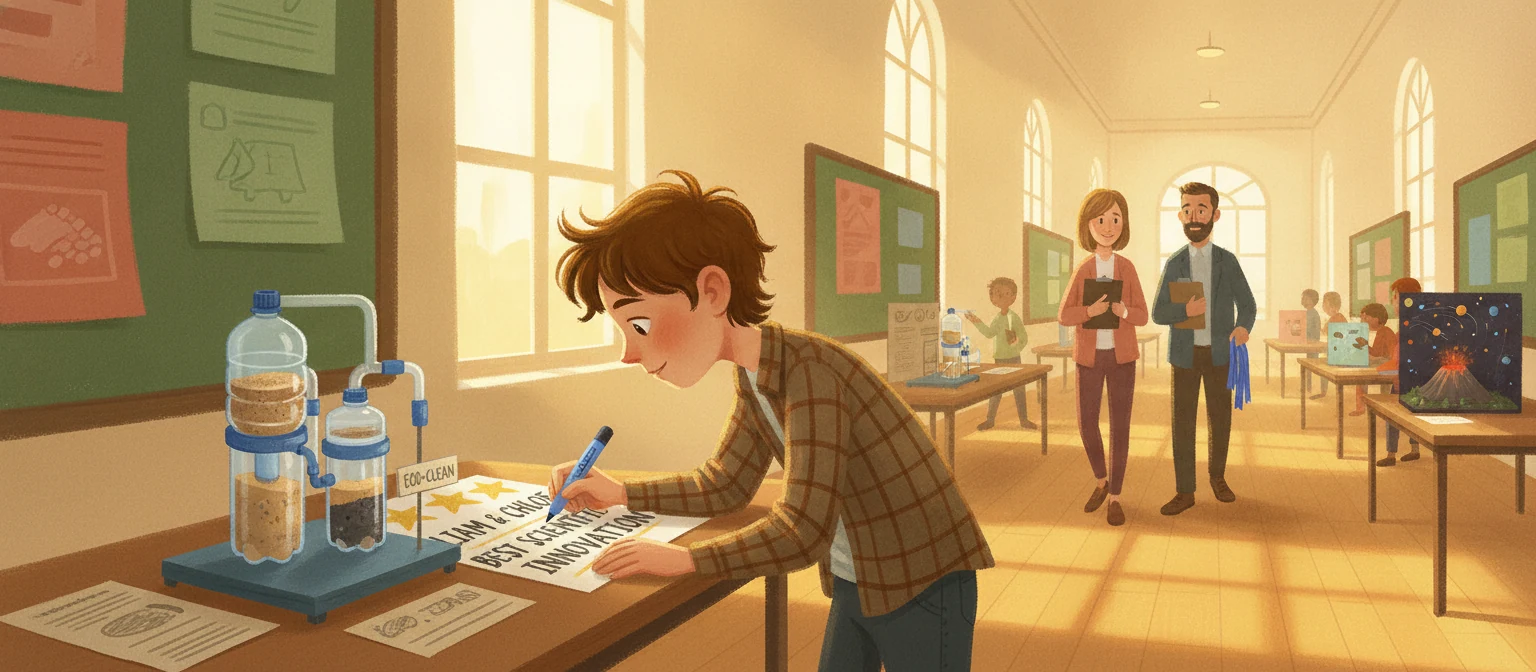
The science fair project was Advik's and Meher's — the idea hers, the polish his. But on judging day she's home with a fever, and all the applause lands on one person.
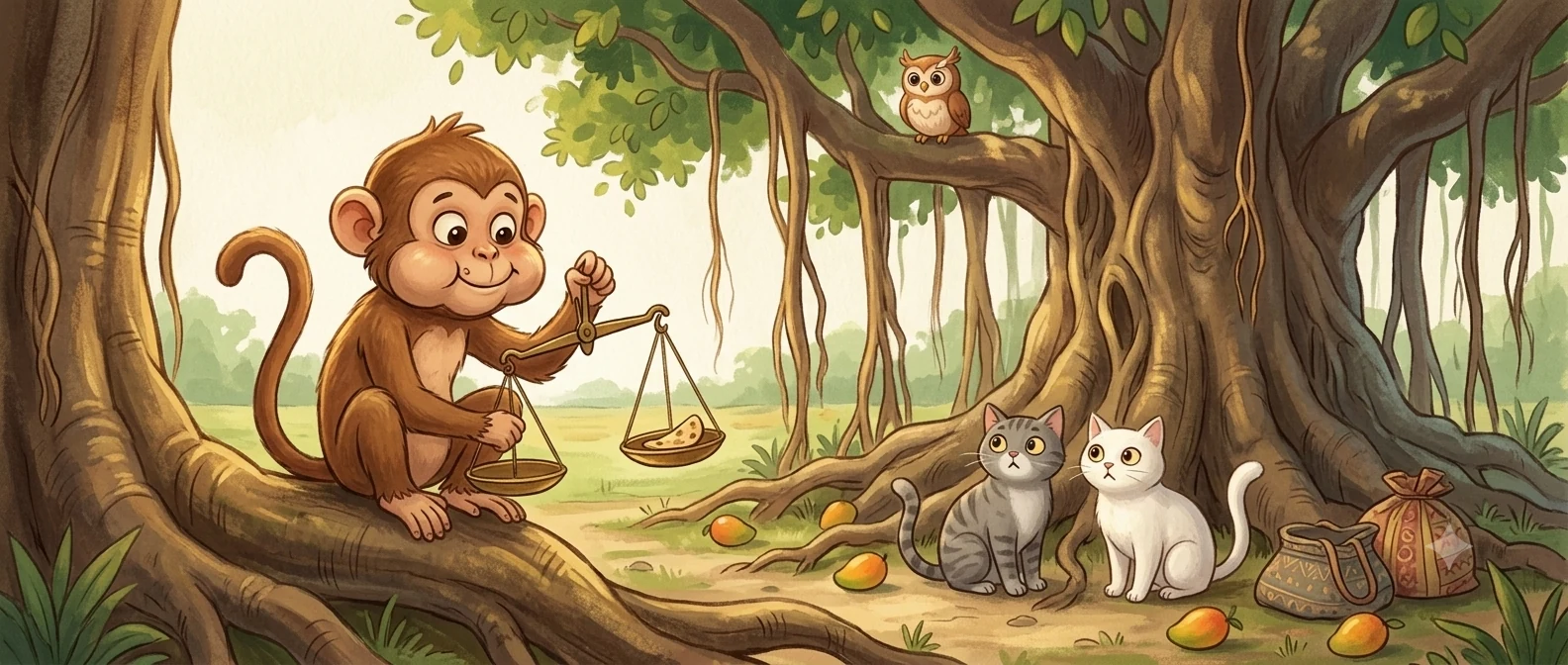
Two cats find one roti and cannot agree how to split it. Along comes a monkey with a weighing scale — and a very hungry sense of fairness. A Panchatantra classic, retold.

At the bottom of the world, where the wind is coldest, the penguins know a secret: the warm in the middle belongs to everyone — in turns.
Most child-development folk now lean no — forced sharing teaches that whoever cries loudest gets the toy, and that grown-ups may confiscate what's yours at any moment. Turn-taking with a clear finish ("when you're done, it's Veer's turn") builds the same social skill while respecting the grip. Stories then supply the missing piece: wanting to.
Later than the playground expects. Genuine, unprompted sharing typically emerges around ages 3.5–4 and strengthens through the early school years; before that, possession is how toddlers understand the world. Sharing stories work at every stage — as rhythm and pattern for the youngest, as felt experience of generosity for the older ones.
They won't referee Tuesday's laundry-basket dispute, but they shift the background. Siblings who've laughed together at two squirrels ruining a perfectly good acorn by fighting over it have a shared reference — sometimes a shared giggle — available in their own next standoff. The Talk About It questions let each child air their side through the characters first.