My Kid Never Says Thank You. Here's the Story for Tonight (and 3 Questions to Ask After)
It’s the day after the birthday party, and the presents are still in their wrapping-paper crater, and you’ve just said the sentence you say every year: “Did you thank Auntie Priya for the socks?” The answer is a shrug, or a “yeah” that clearly didn’t happen, or — if you’re the note-writing type of household — a groan loud enough to wake the dog.
You’ve probably already tried the two standard scripts. “Say thank you” fails because it produces the word without the feeling — a thank-you performed for you, the reminder-giver, not felt for the person who gave the gift. “Think how lucky you are” fails harder, because gratitude-by-guilt just teaches a child to perform relief on command, which is its own kind of hollow.
There’s a third option, and it doesn’t involve a single lecture: hand the feeling a story where a thank-you turns out to be worth something nobody expected.
Tonight’s story: “The Thank-You Letter”
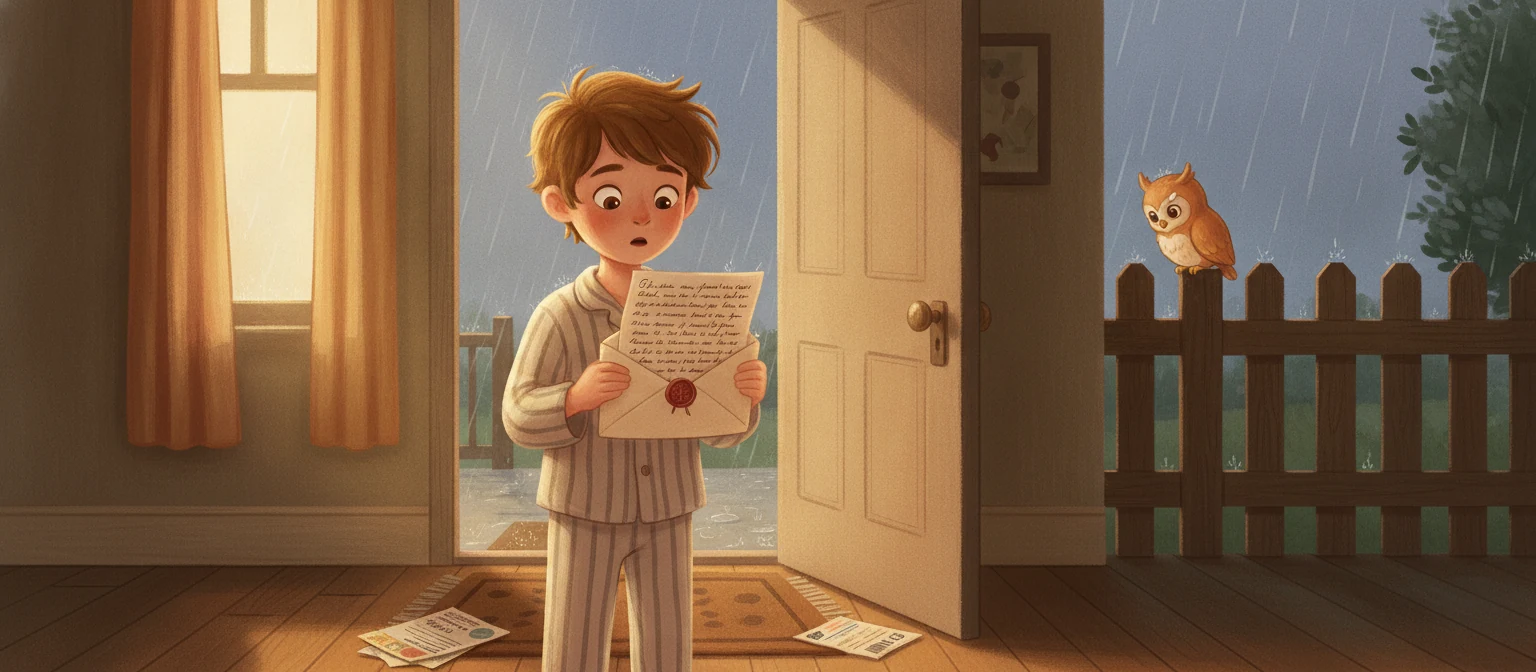
The Thank-You Letter (ages 7–9, 6 minutes) starts with the most relatable chore in the house: ten birthday presents, ten thank-you notes, Mum’s unbreakable rule. Nine of them are three sentences of homework. The tenth — to a great-uncle Sam barely knows — becomes something else entirely, once Sam gives up the formula and just tells the man what the ten-pound note actually became.
The reply that comes back nine days later is five pages long, and it’s the story’s whole quiet argument: you can never tell, sealing an envelope, which thank-you is about to open a door somebody’s been waiting years for someone to knock on.
Afterwards, ask one of these — one, not all, and not as a quiz:
- Nine notes were a chore and one became something else. What made the tenth one different?
- Who deserves a real thank-you from you — not for a present, but for anything?
Then stop. The story already did the work; the question just lets your child find their own answer instead of reciting one you handed them.
If your child is a different age
Gratitude looks different at two than it does at eleven — the library covers the spread:
- Thank You, Everything (ages 0–3, 2 min) is a bedtime ritual, not a lesson: a small walk through the day saying thank you to everything that helped, from the sun to the dal to the softest pillow. Perfect for a toddler who’s still learning that “thank you” is a thing you feel, not just a thing you say when prompted.
- The Elephant Who Remembered (ages 4–6, 5 min) is an Indian folk retelling about a small kindness a girl barely thinks twice about — and the elephant who never forgot it. Its quiet point: gratitude isn’t only something you owe, it’s something that comes looking for you, years later.
- The List of Invisible Things (ages 10–12, 8 min) is for the preteen who’s never had to notice what a house runs on. Ma goes away for two weeks, and Arnav starts a list of everything that quietly stops working without her — the preteen-register answer to “you don’t know what you’ve got till it’s gone.”
- Where Breakfast Comes From (ages 0–3, 3 min) traces warm bread on the plate all the way back to where it came from — a toddler-scale first lesson that nothing arrives out of nowhere.
Why none of these ends with a moral
Every story on NestOfValues ends with a Talk About It block — two or three open questions — instead of a stated lesson. A child who answers “who deserves a thank-you you haven’t said yet?” is doing something a child who’s told “you should be grateful” never gets to do: finding the person and the feeling themselves, out loud, with you in the room.
The full gratitude collection is free, original, and sorted by age — no login, no ads, one decision: which story tonight.