My Child Won't Tell Me What's Wrong. Here's the Story for Tonight (and 3 Questions to Ask After)
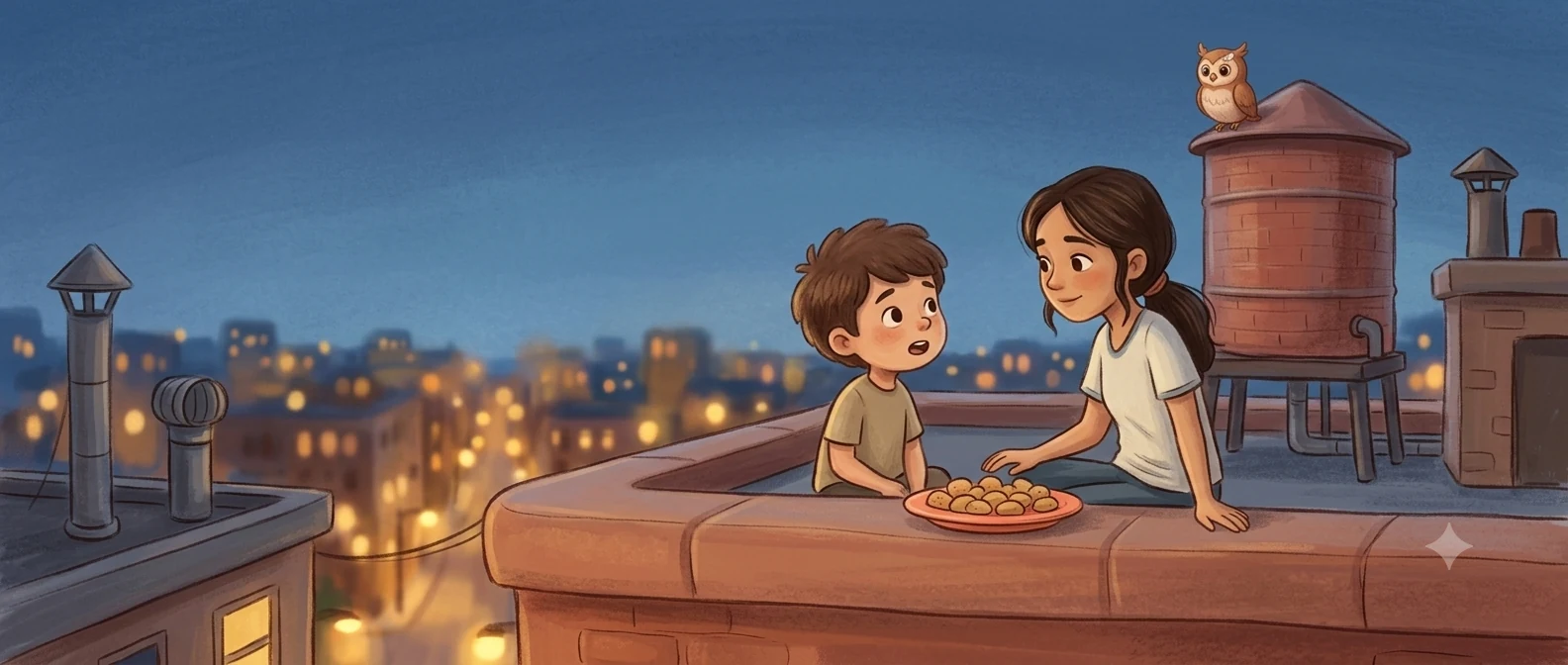
You’ve noticed the long look across the table, the bag that’s stopped living by the door, the Monday headache that’s shown up three weeks running. You’ve asked — “is everything okay at school?” — and gotten the shrug, the “fine,” the door closing a little further. The direct question, asked by the person he’s most afraid of disappointing, is often the hardest one for a kid to answer honestly, because answering it makes the thing real, and out loud, and someone else’s problem to fix.
A story doesn’t ask a child to explain himself out loud, in real time, to your face. It just goes first.
Tonight’s story: “Not Your Weather”
Not Your Weather (ages 10–12, 8 minutes) follows Aarav from July to October, carrying something he’s decided is his to carry alone — a joke about his new glasses that never stopped being a joke, four boys who go wherever the laughing is, a stone that moves into his stomach every Sunday evening. He has reasons for staying silent, and from the inside they look solid. It isn’t a parent who finally gets it out of him. It’s his seventeen-year-old cousin, home for Diwali, sharing a plate of chakli on the rooftop at dusk, who asks one question in a voice that isn’t checking up on him: “Who is making school bad for you?”
What happens next isn’t a scene of triumph. It’s four honest minutes at a kitchen table the next morning, and the specific, unglamorous relief of a weight coming off a back that had stopped noticing it was carrying one.
Afterwards, ask one of these — one, not all, and not as a quiz:
- Aarav thought telling someone would make things worse, and that it meant he couldn’t handle it himself. What actually happened when he told?
- Who are your people — the ones you could tell anything to? Let’s name them.
Then stop. This isn’t a story that hands you a script for extracting a confession. It’s a story that shows your child what it looks like when someone finally does tell — so that if tonight isn’t the night, the door is a little more open than it was yesterday.
If your child is a different age
Bullying shows up differently at five than it does at eleven — the library covers more of the spread:
- The Castle Builders (ages 4–6, 5 min) is the youngest-band version: a bigger boy keeps stomping Mia’s sandcastle flat, and hiding and building faster both fail before she learns the two things that actually work.
- Just a Nickname (ages 7–9, 6 min) takes on the kind of bullying that hides behind a joke — a nickname that started as fun and never stopped, and the test Sami’s sister offers for telling a good nickname from a bad one.
Why none of these ends with a moral
Every story on NestOfValues ends with a Talk About It block — two or three open questions — instead of a stated lesson. A child who answers “who are your people?” is doing something a child who’s told “you can always talk to me” doesn’t get to do: naming names, out loud, in a room where it’s safe to.
The full dealing with bullying collection is free, original, and sorted by age — no login, no ads, one decision: which story tonight.