The Well at the Edge of the Village
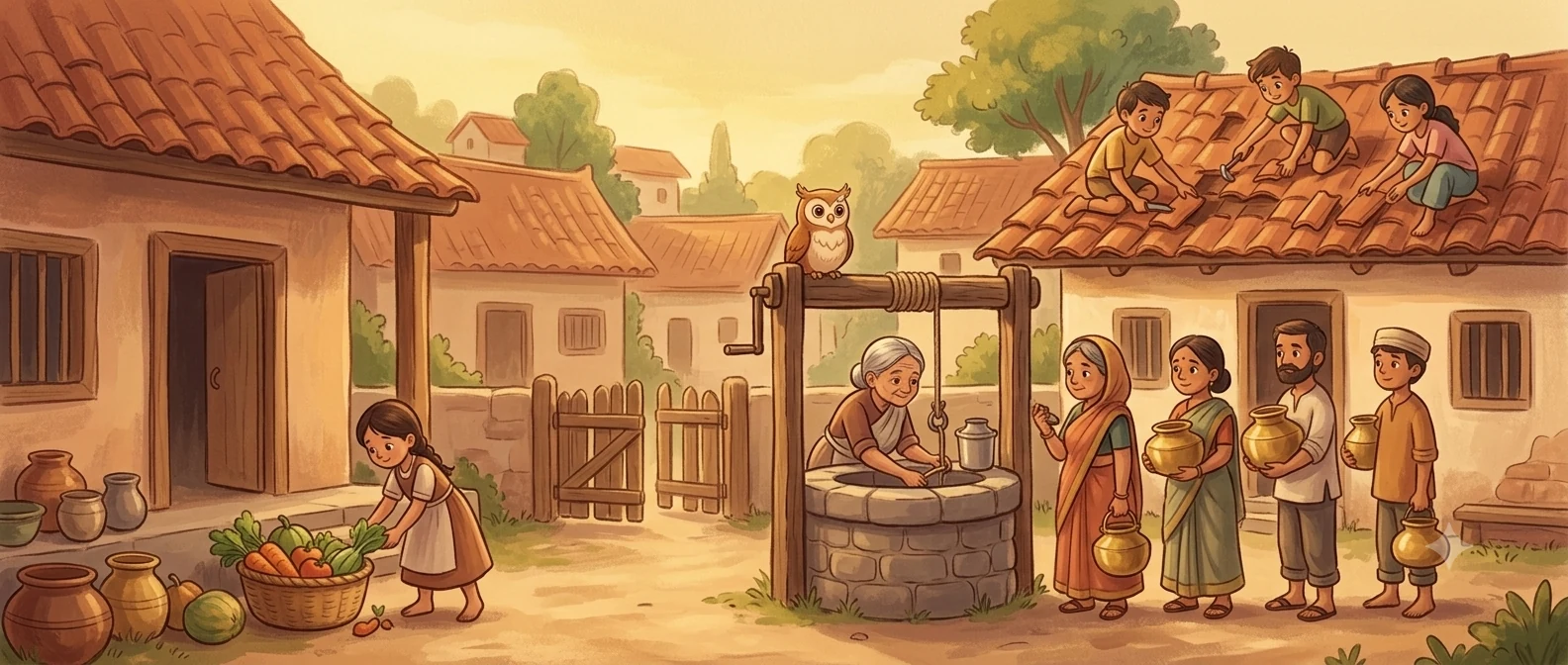
At the edge of the village, where the road turned to dust, lived old Amma — and in Amma’s courtyard was a well.
It was a small well. But it was a deep one, and the summer that dried every other well in the village, one by one, Amma’s little well kept its cool dark water all the way down.
The first to come was a boy with a brass pot and an embarrassed face. “Amma… our well has gone dry.”
“Then it’s good mine hasn’t,” said Amma, and drew him a full pot.
The next morning there were four people at her gate. Then ten. Then the whole hot, thirsty village, standing in a line that curled past the tamarind tree, holding pots and buckets and one optimistic bathtub jug.
Now — Amma was old, and the well was small, and a well is not a river. She could have said my well, my water. Nobody would have blamed her out loud.
Instead, Amma made rules, the kind kindness makes: two pots a family, drinking and cooking first, everyone waits their turn in the tamarind shade. And every single day, all summer long, the little well at the edge of the village kept the whole village alive.
“Won’t it run dry, Amma?” the children asked, peering into the dark.
“Maybe,” said Amma. “But I’d rather have an empty well than a full one with a line of thirsty neighbours outside it. An empty well fills again. Some things don’t.”
Here is what Amma had not planned for.
The boy with the brass pot noticed the broken tiles on her roof — and came back with his father to mend them before the rains. The aunties in the line noticed how alone she was at dinnertime, and pots of sabzi began appearing at her step, one house at a time, without discussion. Somebody’s grandfather fixed her crooked gate. The girls sweeping their own courtyards began sweeping hers on the way past, as if her courtyard had simply joined the village’s list of things everyone looked after.
Amma had given water. Water was the only thing she had extra of.
Back came roof tiles, dinners, a straight gate, swept stones, and company. All the things she’d quietly done without for years, arriving in a steady line at her door — the way the villagers had arrived at her well.
When the rains finally broke that June — big, drumming, generous rains — the whole village stood out in it cheering, and the wells everywhere began to fill.
“Now they won’t need me,” Amma said to the well, watering the rain-soaked tulsi out of pure habit.
But kindness doesn’t work like wells. The dinners kept coming. The courtyard stayed swept. And the boy with the brass pot came every evening anyway, all through the monsoon, all through the winter — not for water anymore.
Just to sit with Amma under the tamarind tree, where the line used to be.
Talk About It
- Amma shared her water even though she didn't have much. What made that special?
- How did the kindness come back to Amma in the end? Who brought it?
- What's something small you could share tomorrow?
Did this story land tonight?
One tap helps us write better ones. No login, nothing shared publicly.
Thank you — this genuinely helps. 🌙