The Photograph in the Toolbox
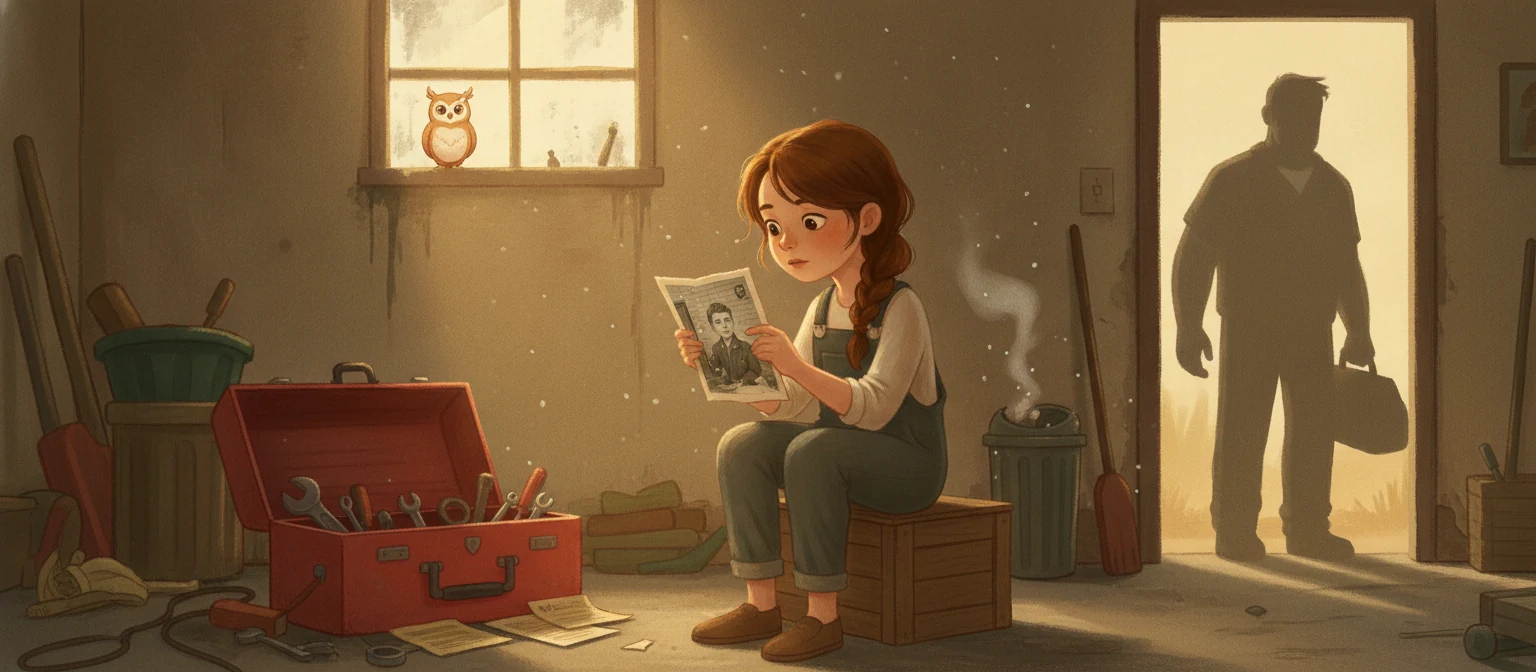
Maya’s dad was careful with money. At eleven, Maya had begun to find the carefulness embarrassing.
Other dads leased new SUVs. Hers drove a fourteen-year-old hatchback that he serviced himself in the garage on Saturdays. Other kids bought lunch. Maya’s dabba was packed nightly — rice and sabzi, “better than anything they sell.” His one grey jacket was older than she was. His answer to most requests was “we’ll see,” which meant no. His answer to why was “because we don’t waste,” which explained nothing. It was just a fact of him. Like his accent, which her friends sometimes imitated in a way that made her laugh along and feel sick at the same time.
She had never wondered where the carefulness came from. Parents were simply there, the way they were. It had never occurred to her that they got made.
Then, one Saturday, she was sent to the garage for the small screwdriver. She dug to the bottom layer of the old red toolbox — the layer of washers and fuses and mystery keys. There she found a small stack of papers, wrapped in a plastic bag and rubber-banded twice. A bus ticket, foreign and faded. A pay stub, hand-typed. And a photograph.
It was her father. It took her several seconds to accept this, because the man in the photo was about nineteen. Thin. Wide-eyed. Wearing a jacket far too light for the snow banked around him. He stood at the back door of a restaurant kitchen, in the country Maya had been born in and he hadn’t. On the back, in his careful handwriting, was a date from before her birth, and one line in Hindi she worked out slowly:
Pehli naukri. Pehli sardi. First job. First winter.
She brought it to him, because she was eleven and hadn’t yet learned to sit on discoveries. He wiped his hands on the rag for a long moment, looking at the photo like a door he hadn’t opened in years. Then he sat down on the crate beside her and, for the first time in her life, told it.
Nineteen. Two hundred dollars, borrowed — most of it gone on the flight. A cousin’s floor to sleep on for the first months. Then a room shared with three others, above the restaurant where he washed dishes. The photo was from a Sunday, his one afternoon off. A fellow dishwasher had taken it, because they wanted proof for the people back home that they were really here. That winter — his first — he did not own a proper coat. He walked forty minutes to the restaurant, because the bus fare, saved twice a day, added up to money for home. Money went home first, always. To his father’s farm debts. To his sister’s schooling. What stayed became, over fifteen years of double shifts and night classes, this: the house above them. The garage they were sitting in. The fourteen-year-old car — “bought new,” he said, patting it, “first new thing I ever owned.” And Maya’s entire ordinary, lunch-packed, we’ll-see life.
“Why didn’t you ever tell me?” she asked.
He thought about it honestly. “Because I didn’t do it to be thanked,” he said at last. “I did it so you would never need to know what it cost. A father builds the floor so the child never thinks about the ground.” He shrugged, and the shrug held the whole grey-jacket philosophy of him. “But maybe that’s its own mistake. You were starting to think floors just… happen.”
Maya looked at the boy in the photograph — younger than her older cousins, colder than she had ever once been allowed to be — and something rearranged itself permanently in her chest. Not guilt, exactly. It was more like suddenly seeing something that had surrounded her whole life, invisible because it was everywhere. Every packed dabba: better than anything they sell had never been a boast. It was a man who had eaten kitchen leftovers for years making sure, personally, nightly, that she never would. The “we’ll see.” The serviced car. The jacket. It wasn’t carefulness. It was the floor — still being built, plank by patient plank, by a nineteen-year-old who had simply never stopped.
Nothing outward changed after that Saturday. This is the part Maya would try hardest to explain when she was older. Same car. Same lunches. His answer to the new phone remained “we’ll see,” and it remained no.
But she never heard the accent imitation the same way again. The next time a friend did it, Maya said, evenly, “He learned it in a restaurant kitchen at nineteen. What were you doing?” The fourteen-year-old hatchback became, privately, a thing she was strangely fierce about. And on cold mornings, when her dad walked her to the bus stop in the good warm coat Mum had finally forced on him a decade ago, Maya sometimes fell back half a step and watched him. The boy from the photograph, thirty winters later, still walking. The floor holding under both of them.
She put the photo back exactly where she found it, in the plastic bag, under the fuses.
But first she took a picture of it on her phone — the boy, the snow, the thin jacket — and made it the thing she looks at, now, whenever “we’ll see” is the answer.
It always means no.
It has never once meant only no.
Talk About It
- Maya thought her dad was 'careful with money' because that's just how he was. What was the real story under the habit?
- Why do you think parents often don't tell children the hard parts of their own story? Should they?
- Gratitude changed nothing about Maya's life on the outside — same car, same lunches. What did it change?
Did this story land tonight?
One tap helps us write better ones. No login, nothing shared publicly.
Thank you — this genuinely helps. 🌙