Respecting Elders
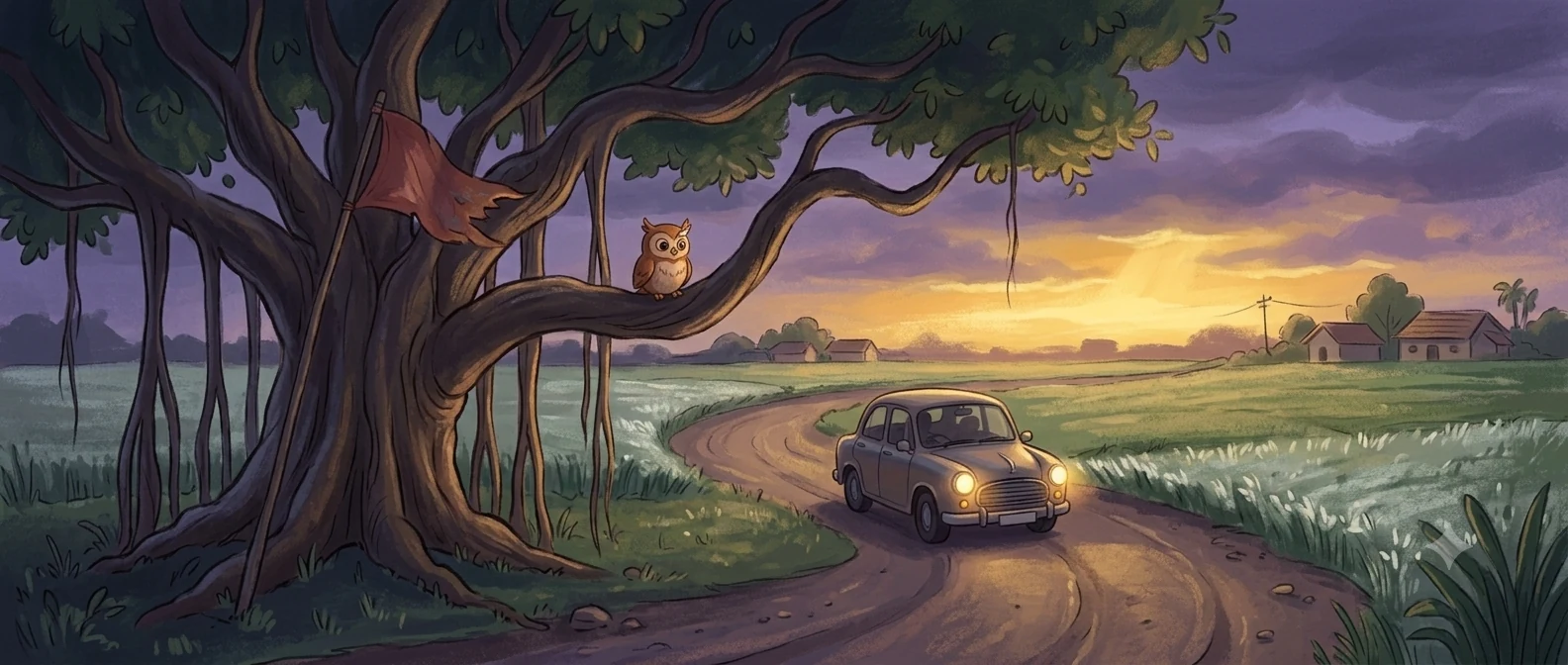
Dadi's Slow Road
The highway is flooded, the phone map shows red everywhere, and the wedding starts at seven. In the back seat, Dadi quietly mentions that there is another road.
There are two kinds of respect for elders, and they look identical at the dinner table. One is obedience — performed, supervised, and abandoned the moment supervision ends. The other is the real thing: a child's dawning discovery that the slow old man by the window contains seventy years of monsoons, remedies, shortcuts and stories, and is therefore one of the most interesting people in the house. Rules produce the first kind. Stories produce the second.
Storytelling traditions everywhere — and India's perhaps most of all — are full of tales where the grandmother's "old-fashioned" knowledge turns out to be the thing that saves the harvest, the journey or the day. We retell several here in our own words, alongside new stories of video calls with far-away grandparents and afternoons that begin bored and end enchanted. Each closes with a short Talk About It prompt — and, fair warning, a sudden appetite for phoning a grandparent.
The highway is flooded, the phone map shows red everywhere, and the wedding starts at seven. In the back seat, Dadi quietly mentions that there is another road.
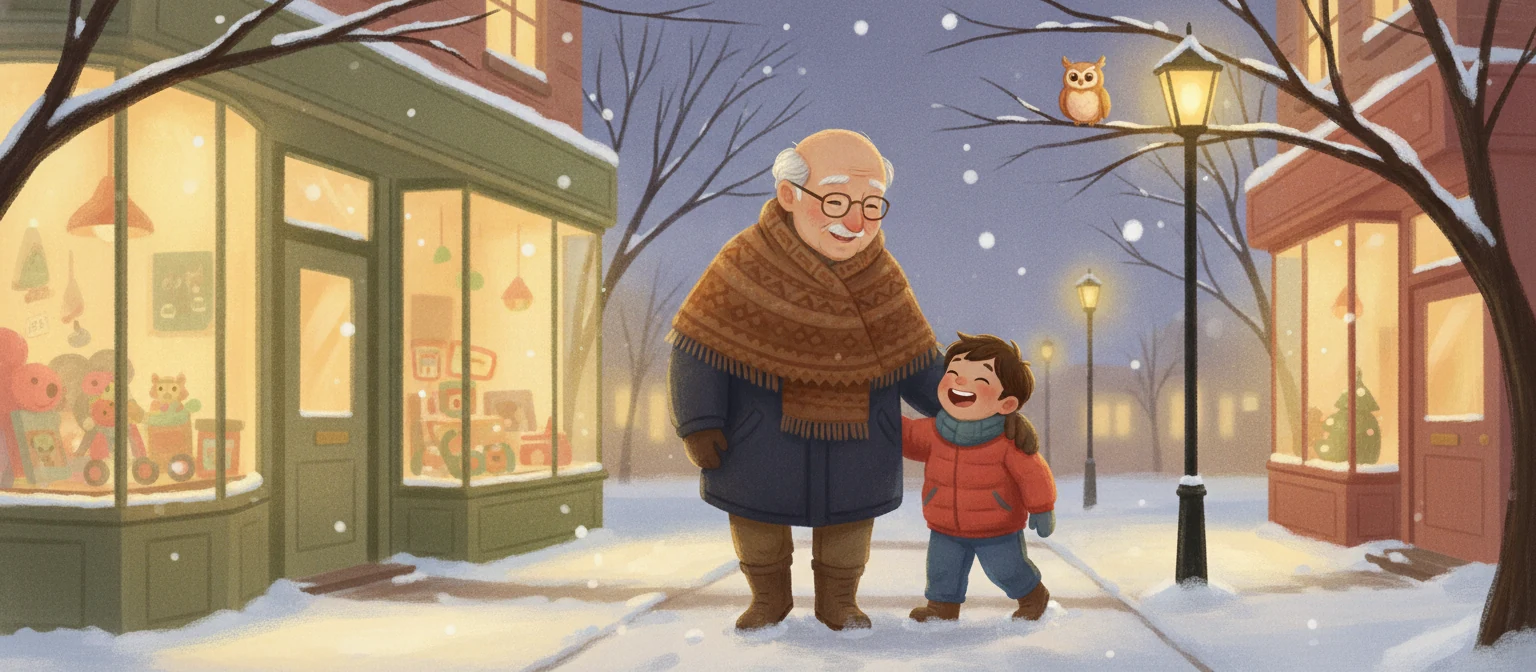
When Dadu moves from Delhi to Toronto to live with them, Aarav mostly notices what his grandfather gets wrong — the shawl in the snow, the loud Hindi at pickup. It takes one hard January evening to see what moving cost the old man.
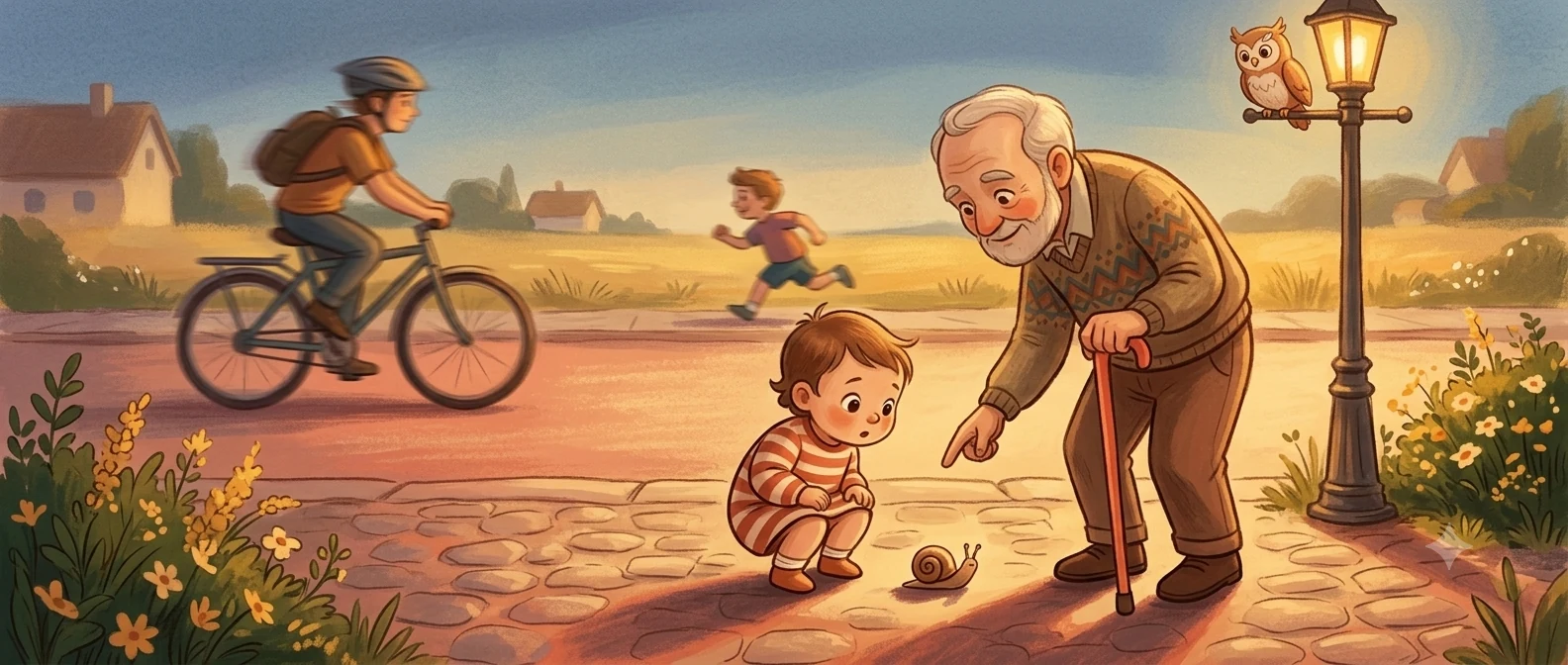
Dada walks slowly, slowly, one step at a time. And it turns out the slow way is where all the best things are hiding.
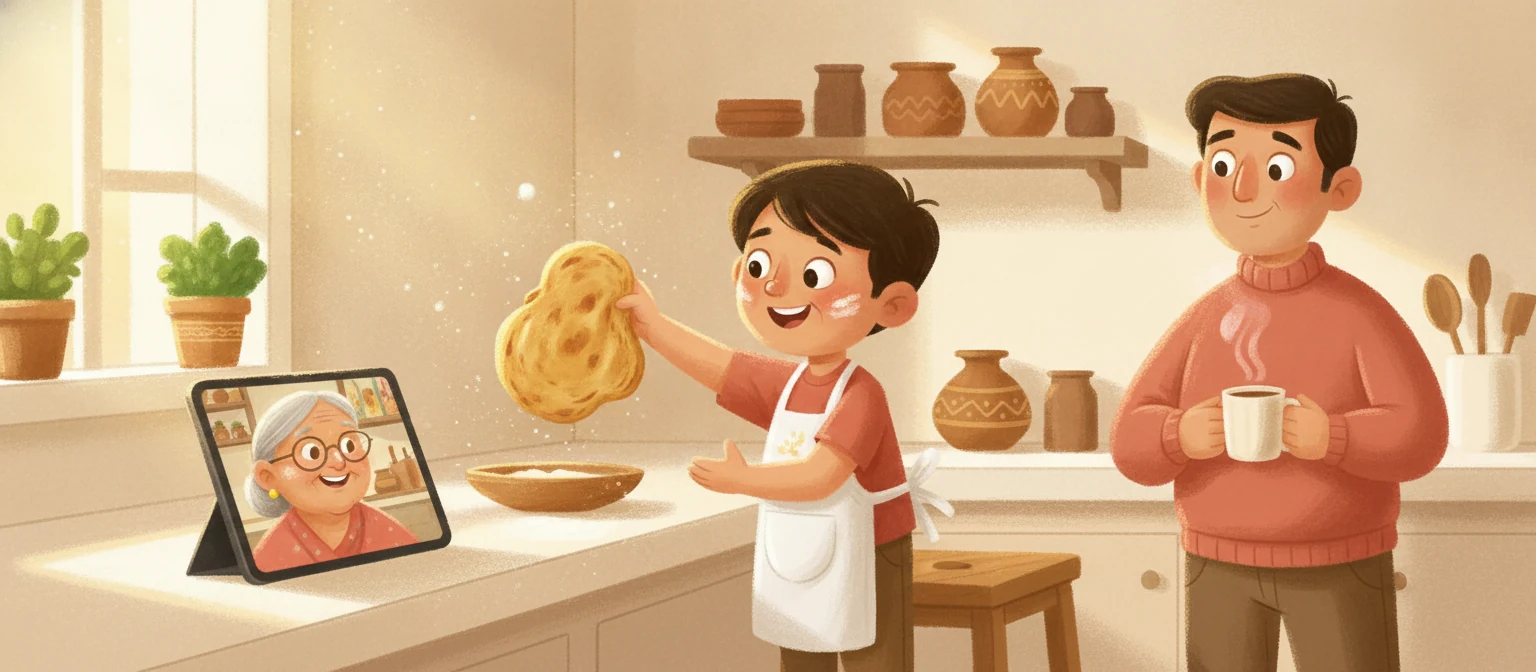
Every Sunday morning, Rohan's kitchen fills with flour and laughter — because every Sunday, Nani teaches cooking from seven thousand kilometres away.
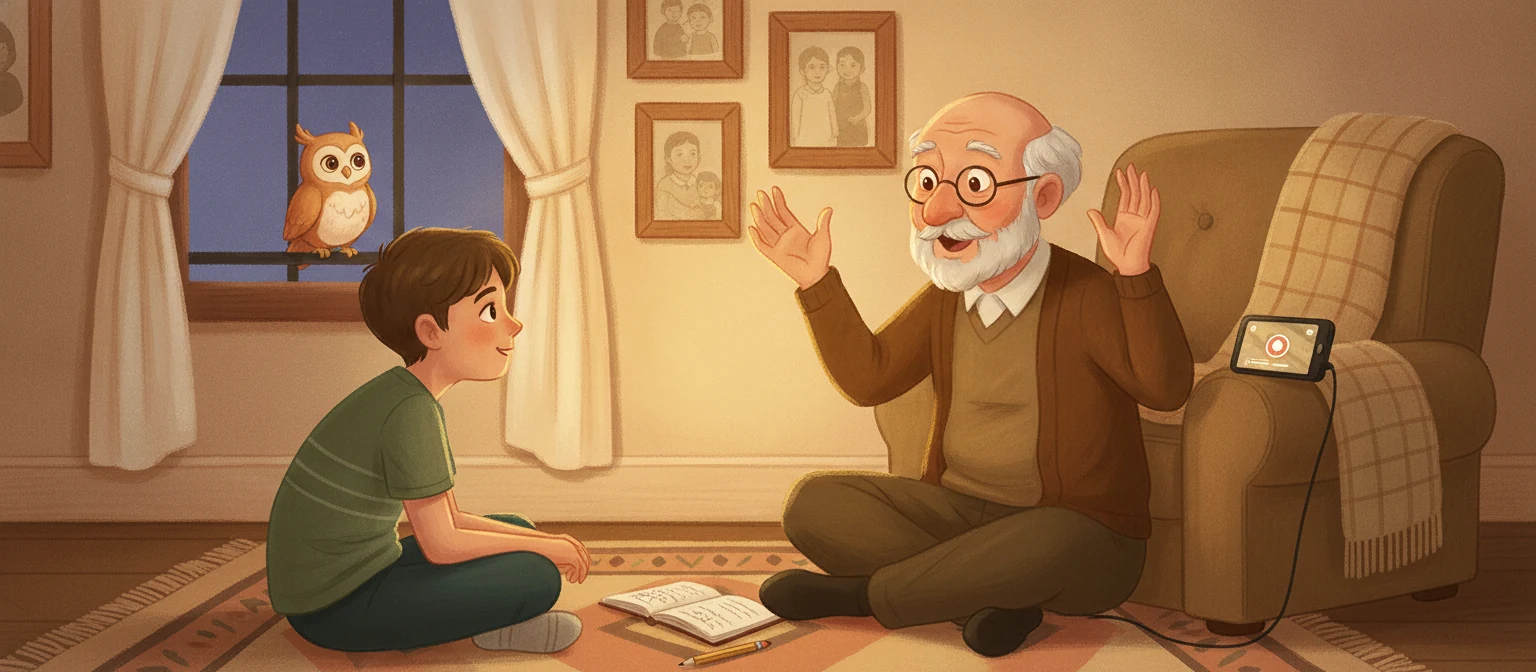
Dada tells the same stories over and over — the flood, the bicycle, the transfer order — and Reyansh has heard them all a hundred times. Then a school assignment makes him actually listen.
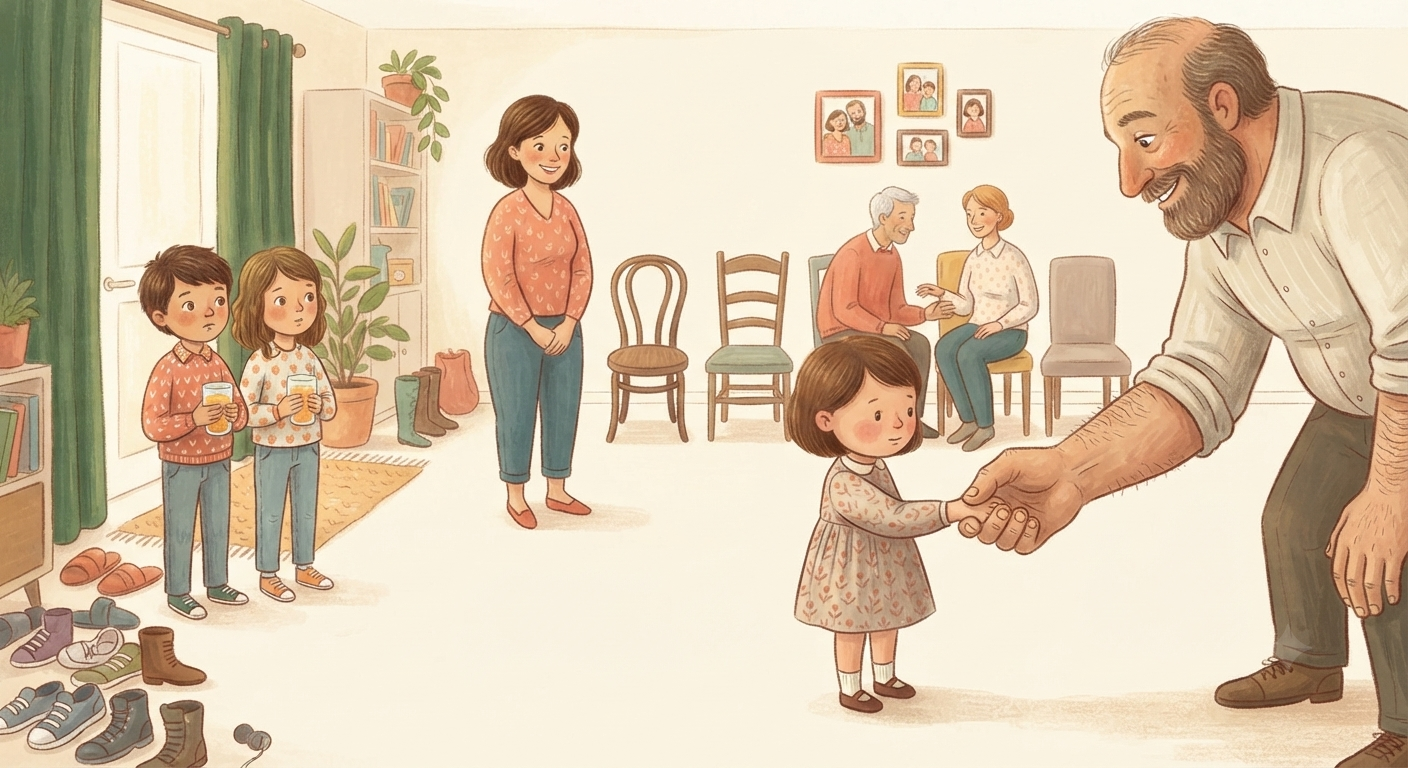
Uncle Prakash comes twice a year, brings orange sweets, and always wants a hug. Today the whole room is watching, and Ira does not want to give one.
Fear-based respect expires; fascination-based respect compounds. Alongside the courtesies (which are worth teaching plainly), engineer discoveries: let grandparents teach the child something real — a recipe, a card game, the name of the tree downstairs. Stories prime this by casting elders as the characters who know things nobody else does.
Strongly — for many NRI and nuclear families, stories are the bridge. Tales full of warm grandparent figures keep the category alive between visits, and they pair beautifully with ritual: a weekly video-call story time where a grandparent reads or tells one is respect-building at its most enjoyable. (It's also, not incidentally, where these stories came from.)
Correct the behaviour without shaming the child, ideally with a quiet repair afterwards — a sorry, a brought glass of water. Then play the long game: children are rude to categories and kind to people, so anything that turns "old people" into Nani-who-tells-the-cobra-story does more than ten scoldings. That conversion is this collection's whole project.