Dealing with Bullying
Just a Nickname
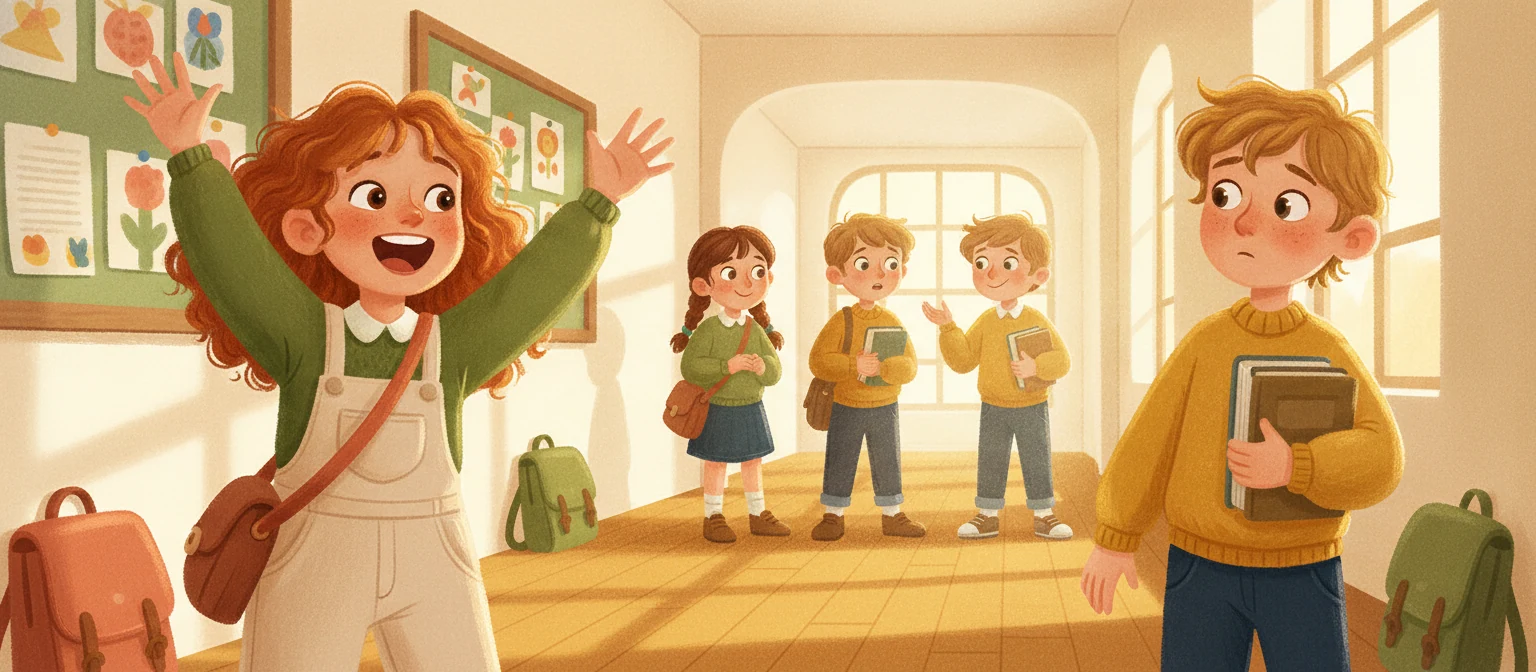
It started as a joke about Sami's voice, and now the whole class calls him Squeaky. 'It's just a nickname,' everyone says. His sister sees it differently.
A child being bullied is carrying two weights: the thing itself, and the loneliness of it — the sense that this happens only to them, and that it must somehow be their fault. Often the heaviest part is unspoken, because saying it out loud feels dangerous. This is where a story can reach a child that direct questions can't: a character on the page can go through it first, and be believed, and be blameless.
These stories are honest about how bullying feels, gentle in how they show it, and clear about the ways through — telling a trusted adult (that's courage, not weakness), finding the one friend who changes the arithmetic, and holding on to who you are while the weather is bad. One thing to say plainly, parent to parent: stories open the conversation, but ongoing bullying needs adults acting — teachers, schools, us. The Talk About It prompts here are written with extra care; sometimes they're the moment a child first tells their own story.
It started as a joke about Sami's voice, and now the whole class calls him Squeaky. 'It's just a nickname,' everyone says. His sister sees it differently.
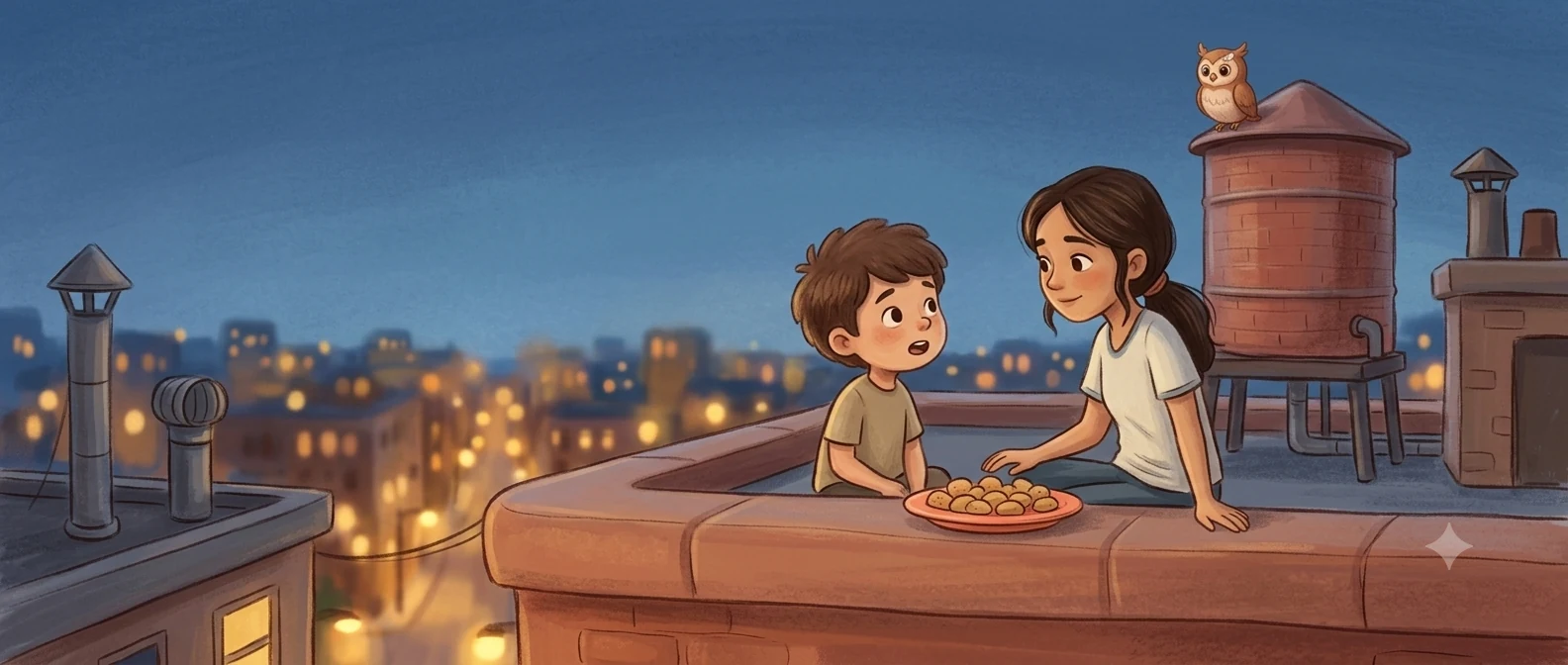
It started with the glasses, and then it did not stop. Aarav carried it from July to October without telling anybody — until his cousin took him up to the roof and asked one straight question.
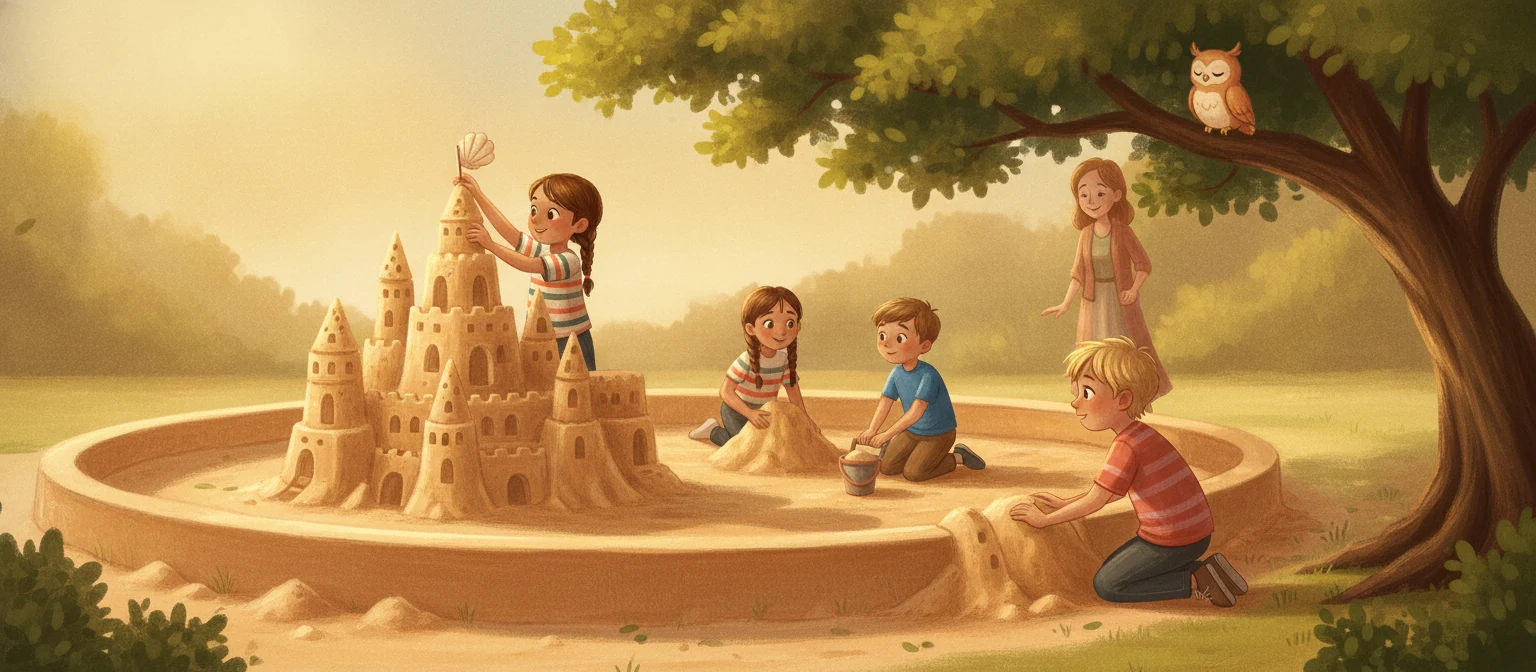
Every time Mia builds a sandcastle, the same big boy stomps it flat. She tries hiding, she tries building faster — until Omar teaches her the two things that actually work.
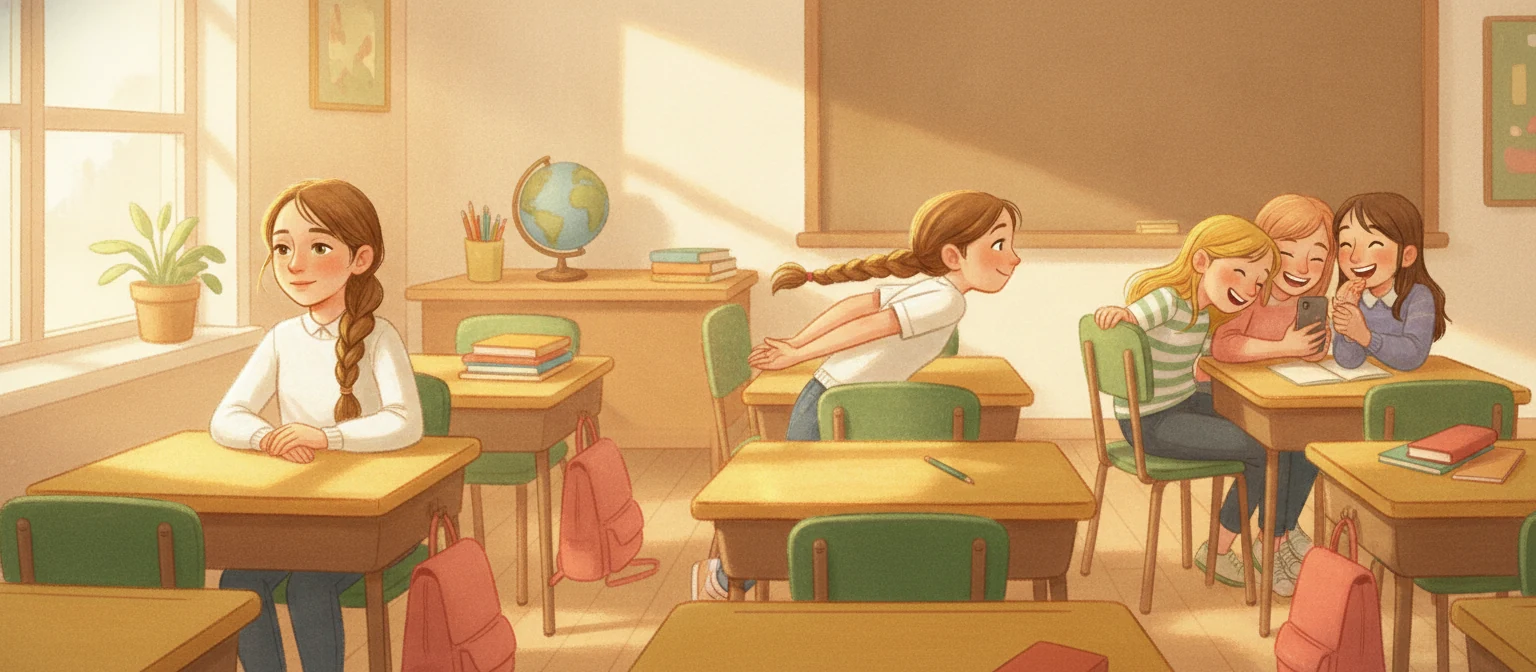
Nobody hit Sana or shouted at her. They only left the space on the wall one bag too small, every day, until she stopped opening her lunchbox at all.
Watch for changes more than events: reluctance about school or the bus, vanishing belongings or appetite, stomach aches on Sunday nights, a light going out around certain topics. Younger children often can't name it; the story route ("has anything like this ever happened at your school?") frequently opens doors that direct questioning closes.
Three things, in this order: it is not your fault; you must tell an adult you trust, every time, and that is strength not snitching; and where possible, stay near friends — bullies work on isolated children. Avoid advising retaliation, which usually escalates. And take what your child tells you to the school; persistent bullying is an adult problem to solve.
Three ways: company (a character who knows exactly how it feels — the loneliness breaks first), language (a child who has the words can finally tell someone), and hope with a map (paths through that are believable, not magical). A story is a beginning, though — it works best as the opener to real conversations and real adult action.