Just a Nickname
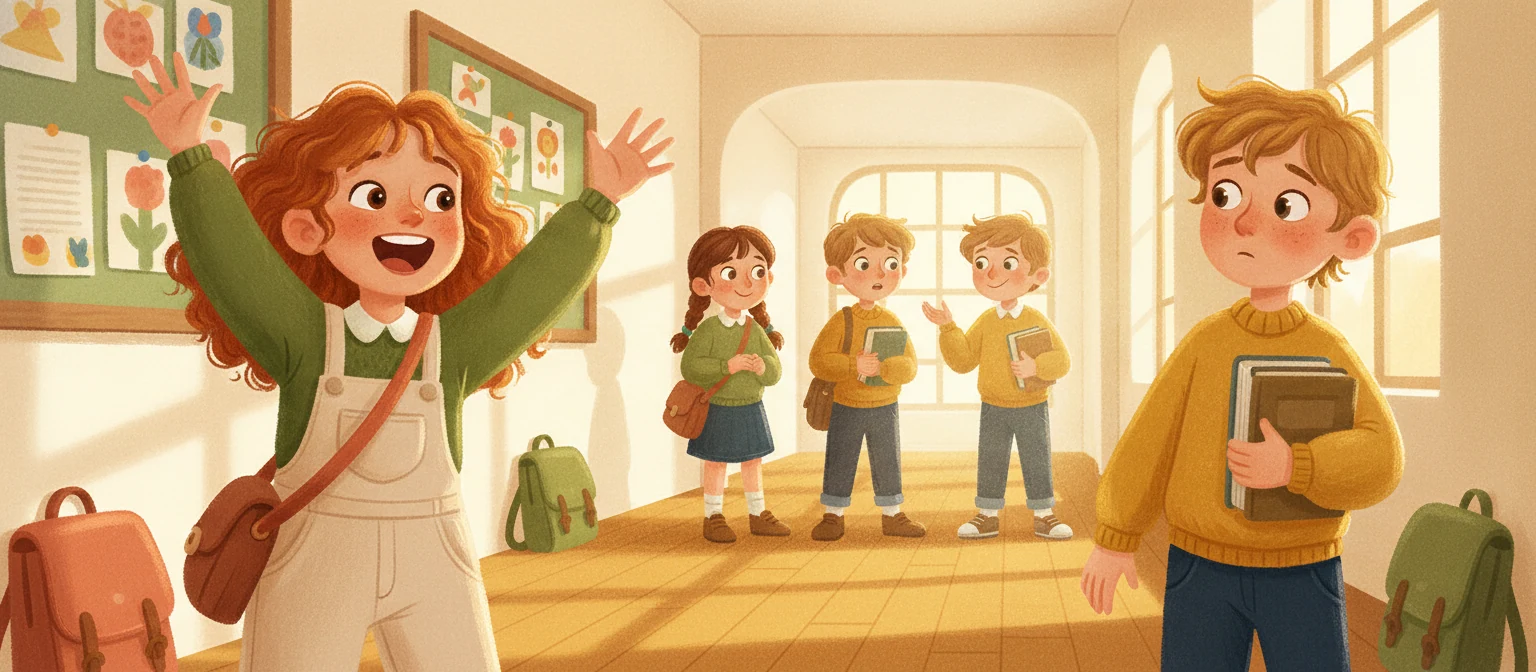
Sami’s voice cracked while he was reading out loud in class. One squeaky word, gone in a second. Dev, two rows back, whispered “Squeaky,” and the class laughed.
Even Sami laughed. It was funny, that first time.
But the name did not go away. By the next week, Dev’s friends were saying it instead of hello. “Oi, Squeaky!” By the week after, other kids were saying it too, kids who were not even trying to be mean. Squeaky’s on our team. Ask Squeaky. Every time someone smiled after that word, Sami felt they were laughing at him. It felt like the same embarrassing moment, happening again and again.
Sami asked Dev to stop. Just once, quietly.
“Relax,” said Dev. “It’s just a nickname.”
So Sami tried to look like it didn’t bother him. But inside, he did what people do when they hate a name: he got smaller. He stopped reading out loud if he could help it. He stopped putting his hand up. When people laugh at how you talk, staying quiet can feel like the only safe thing to do.
He was quiet like that for a whole month, at home too. His sister Aya noticed. One evening she got the whole story out of him, bit by bit.
“It’s just a nickname,” Sami said, using Dev’s words.
“Mm,” said Aya. “Here’s a test for that. A good nickname is a present. It’s made of something people like about you. Rohan is called Rocket because he’s fast, and he loves it.” She looked at Sami. “A bad nickname is more like a leash. It’s made of the worst half-second you ever had, and every time someone says it, it drags you back to that moment. Does yours feel like a present?”
It did not feel like a present.
“Then here’s the other thing,” said Aya. “A nickname is a name someone else sticks on you. If you don’t like it, you’re allowed to unstick it. And you don’t have to do that by yourself. You can ask an adult, or a friend, to help you.”
Help turned out to be two people. Sami took two days to get ready, and then he asked both.
The first was Miss Okafor. Before school, he told her everything: the name, how long it had gone on, how it felt. He expected her to say “boys will be boys,” or even “it’s just a nickname.” She did not. She listened all the way through and thanked him for telling her. Then she dealt with it quietly. No assembly. No pointing at anyone. Just a private word with Dev’s group, and after that, they knew they were being watched.
The second was Priya. She sat next to Sami in maths, and she had never once called him Squeaky. When Sami told her what was going on, she did not make a speech. She just did one small thing, every single time it came up.
Whenever anyone said “Squeaky,” Priya said “Sami” right back. Not angry. Just quick, like fixing a typo. “Squeaky, pass the—” “Sami.” “Oi, Squeak—” “Sami, though.”
A nickname needs people to keep using it, the same way a fire needs people to keep feeding it. Priya corrected it every time. A teacher was watching. A few other kids started copying Priya, because kids usually copy whoever sounds most sure of themselves. Fewer and fewer people laughed. By half term, almost nobody said it. By the end of the year, a new boy joined the class and never once heard the name at all.
Sami’s voice still cracked sometimes — he was ten, and that is what voices do. But the next time it happened during reading, in the middle of a poem, the class just kept listening. And Sami kept reading.
His hand goes up in class again now. He laughs properly again too, loud and easy, and his sister noticed that before he did.
“Told you,” said Aya. “Presents you keep.”
“Leashes you unstick,” said Sami. “With help.”
“With help,” she agreed. “That part’s not optional. That part’s the trick.”
Talk About It
- Everyone said 'it's just a nickname.' What test did Aya suggest for telling a good nickname from a bad one?
- What actually made the nickname fade — and why did it need both Priya AND the teacher?
- Are there nicknames at your school? Who gets to decide if a nickname is okay?
Did this story land tonight?
One tap helps us write better ones. No login, nothing shared publicly.
Thank you — this genuinely helps. 🌙