The Library Book
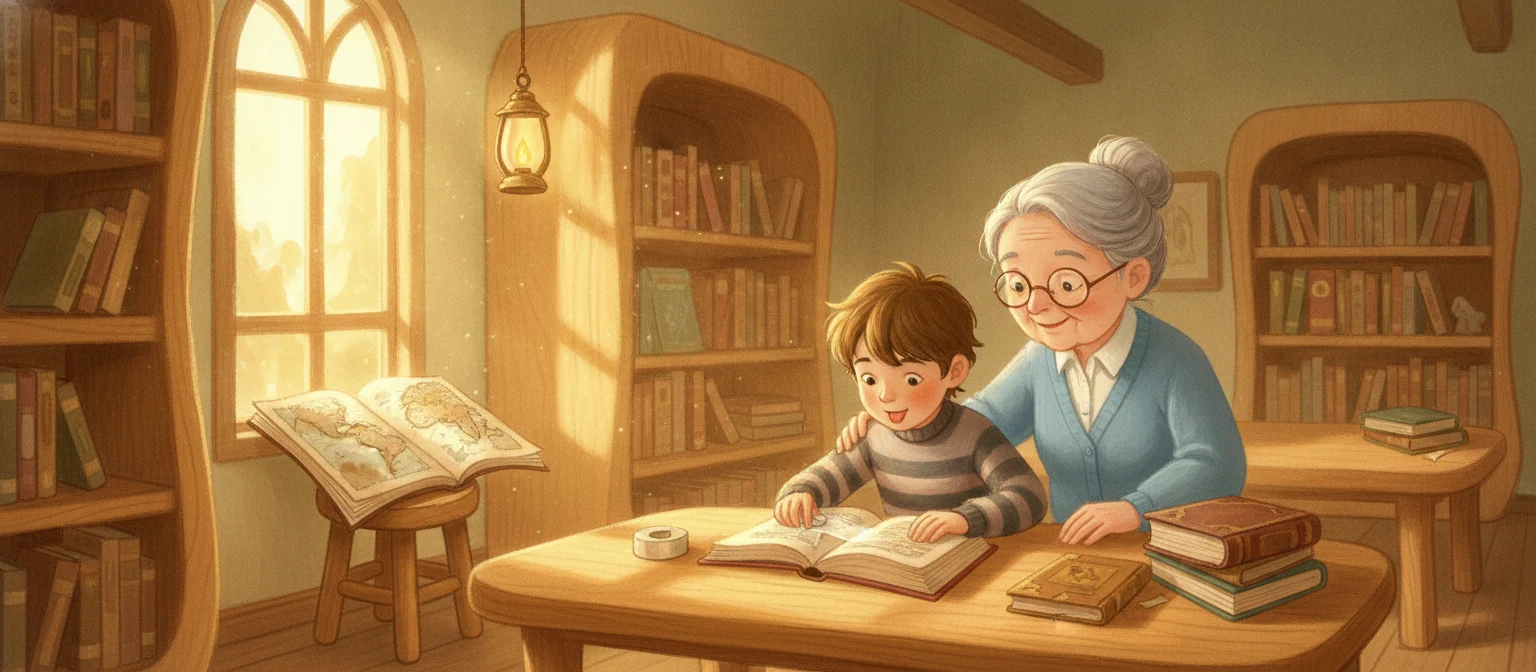
The book was called Rivers of the World, it was the best atlas in the school library, and Veer had waited three weeks for his turn at it.
He had it for ten days. On day two, he set a glass of rasna on his desk, opened the atlas to the Amazon — and reached for the glass without looking.
You know this part. Everyone has lived this part. The glass tipped. Time slowed down without becoming any more useful. And half a glass of orange rasna soaked into the Amazon, the Nile, and most of page thirty-one, before Veer’s hands even arrived at the scene.
He did everything fast and panicked — shirt-sleeve, tissue, the frantic waving of a book in air. The atlas dried overnight into a wavy, stiff, orange-tinted version of itself. The pages crackled. The Amazon had a permanent new tributary shaped exactly like a splash.
And here Veer’s real mistake began — because the rasna had been an accident, and what he did next was a choice.
He put the atlas under his bed.
Just for a day, he told himself, to think. But under-the-bed is a place where days multiply. The return date came; Veer told the librarian, Mrs. Pinto, that he was “still reading it.” A lie — his first about the atlas. And like all cover-up lies, it immediately needed helpers. He renewed the book he could no longer look at. He dodged the library corner where the atlas waiting-list kids hovered. He lay awake doing sums about replacement fines against a money box containing sixty-two rupees.
The strangest part, he thought later, was how the book grew heavier under the bed without gaining a gram. He could feel it down there while doing homework. During dinner. Especially at lights-out. A soaked atlas, it turns out, radiates.
It was his mother’s cleaning day that ended it. Nothing survives a mother’s cleaning day. She extracted the crackling orange atlas from under the bed and simply looked at him. And the whole story fell out of Veer like books from a badly packed bag.
What she said surprised him. “The rasna I’d have forgotten by tomorrow. The week under the bed — that’s the part to fix. Go tomorrow. Go before school, when it’s quiet. Take it in your own hands, and say the whole thing, accident and hiding both.”
The library at 7:40 a.m. was empty and smelled of paper and floor polish. Mrs. Pinto took in the atlas, the wavy pages, the orange Amazon, and Veer’s rehearsed and crumbling confession — spill, panic, bed, renewal, all of it. Not once did she make the face he’d spent a week dreading.
“Well,” she said finally. “Let me tell you what happens in a library, Veer. Books get dropped in buckets. Books meet dogs, small brothers, and monsoons. I have been at this desk twenty-two years and I have never once been angry about an accident.” She tapped the cover. “Accidents need reporting, not hiding. Hidden, this book helped nobody for two weeks — there are four children on their waiting list, did you know? Reported, it becomes a job. Libraries are good at jobs.”
The job had rules, fair ones. Veer paid a mending fee that took half the money box, which stung honestly and briefly — very different, he noticed, from the under-the-bed feeling, which had been bottomless. And because mending fees don’t actually mend anything, Mrs. Pinto assigned the real repayment: Thursday afternoons at the mending table, where wounded books waited — loose spines, torn maps, one geography reader a puppy had reviewed harshly.
Something unexpected happened at that table. Veer got good at it. There is a right way to tape a spine — along the grain, tension even, corners squared — and a wrong way. Veer turned out to have the hands and the patience for the right way. Mrs. Pinto taught him paste-and-tissue work for torn pages. The waiting-list kids got their atlas back (wavy, orange-tinged, fully readable, honestly more interesting with its splash-shaped tributary, which Veer had labelled in pencil: R. Rasna, 2026). And Thursday afternoons quietly stopped being a punishment somewhere in their third week, the way real repairs do.
By the year’s end, teachers sent damaged books to “the mending boy” as a matter of routine, and Veer had a title he’d earned out of the worst week of his year.
He kept one private rule from it all, taped inside his pencil box where the money for the fee had come from:
The accident costs one second. The hiding costs a week. Report the accident. It’s cheaper.
Talk About It
- The accident took one second. The hiding took a week. Which one made Veer feel worse, and why?
- Mrs. Pinto said 'accidents need reporting, not hiding.' What's the difference between the two?
- Veer became the best book-mender in the school. How did that grow out of the worst week of his year?
Did this story land tonight?
One tap helps us write better ones. No login, nothing shared publicly.
Thank you — this genuinely helps. 🌙