The Big Brother Manual
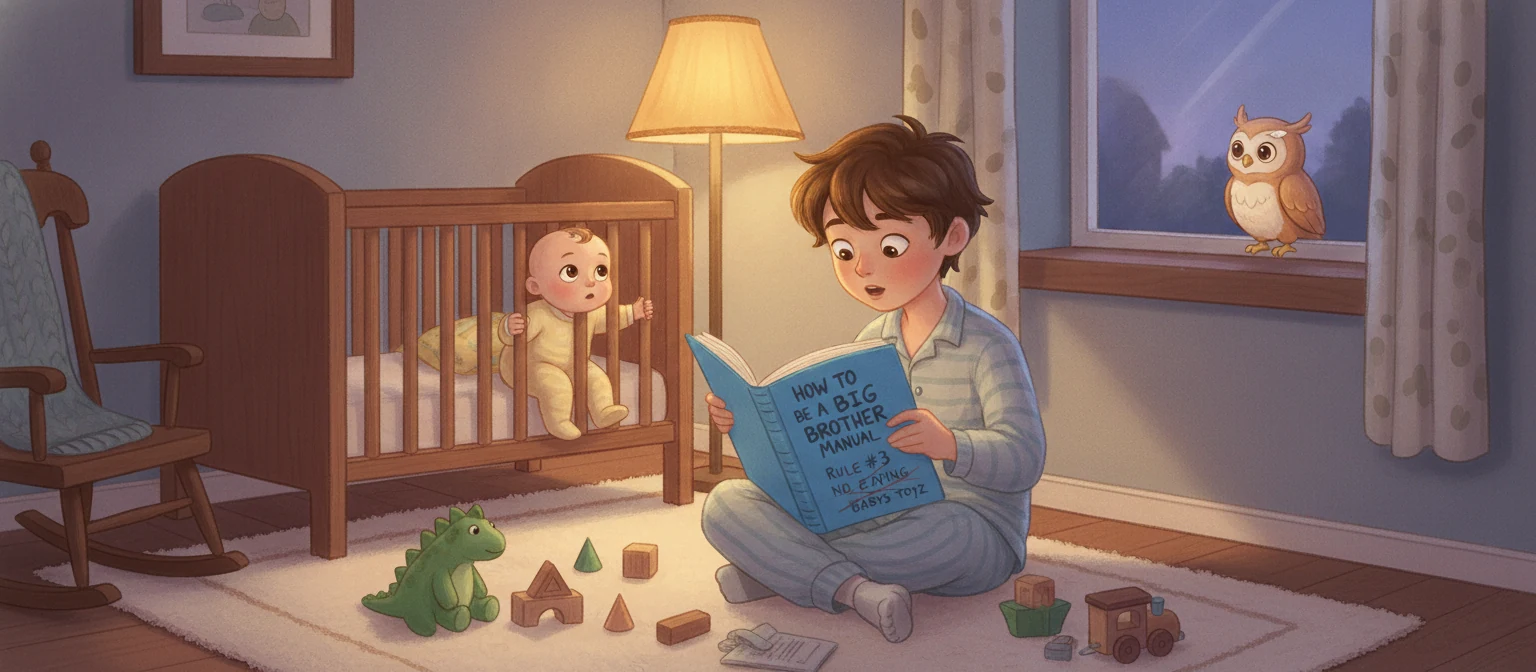
Milo was the sort of boy who liked things to be done properly.
His socks lived in the second drawer, rolled into pairs. His books stood in a neat row on his desk. When he built something with Lego, he followed the instructions carefully, even when he was quite sure he could build it faster without them.
His favourite books were the ones that told him exactly what to do.
So when Mum told him that there was going to be a baby in the family, Milo had only one question.
“Is there a book?”
Mum looked up from her cup of tea. “A book?”
“About the baby. You know. What to do.”
Dad smiled. “I’m afraid babies don’t come with instruction manuals.”
“They should.”
“Why?”
“Because if you get something wrong, you can’t just put a baby back in the box.”
Dad laughed so loudly that Mum nearly spilled her cup of tea.
A few days later, Milo found a blue notebook in the cupboard and decided to write the manual himself.
He called it The Big Brother Manual.
On the first page he wrote:
Rule One: Feed the baby at the correct time.
On the next page:
Rule Two: Baby sleeps in her cot at nine in the morning and two in the afternoon.
Then came Rule Three.
If Baby cries, check: hungry, sleepy or wet.
“What if it’s none of those?”
Milo added a line underneath:
Or something else.
Before closing the notebook, Milo added one final rule.
Rule Four: Big brothers must know what they are doing.
He drew a small picture of himself wearing a cape, in the margin of the page.
Then he took the notebook to Dad.
Dad read every page carefully.
“Very good,” he said.
“Is it correct?”
Dad looked at the picture on the page, Milo in his cape.
“Definitely.”
Milo put the notebook on the shelf above his bed, cover facing out, and felt much better.
Baby June arrived on a Tuesday morning, rain streaking the window.
Milo had imagined a baby would be a little like a doll. You would feed her when she was hungry, put her to sleep in her cot when she was tired, and everything would happen according to schedule.
Instead, June yawned when she was supposed to be awake, and cried in her cot when she was supposed to be sleeping. She fell asleep just when everyone had finally decided it was time for her feed.
On her first morning at home, Milo stood beside her cot with his notebook.
“Seven o’clock,” he said. “Time for breakfast.”
Mum smiled and picked June up from the cot.
June drank her milk from the bottle and fell asleep.
“Good,” said Milo.
Twenty minutes later, June woke up in her cot.
Milo checked the clock.
“That was a very short nap.”
June stared at him, then began to cry.
Milo opened his notebook, one thumb holding his place on Rule Three.
“Hungry? Sleepy? Wet?”
Mum shook her head at each one. June had only just woken; there was nothing in her nappy; the milk was still warm in the bottle on the shelf.
Milo looked at the last line on the page.
“Something else?”
June cried louder.
Milo closed the notebook.
“That rule needs some work.”
June refused to sleep at nine, and pushed the yellow blanket off the cot every time, though she was perfectly happy under the blue one.
She would cry in the kitchen and become completely silent when someone carried her past the washing machine.
One afternoon, Dad was doing the laundry, a basket of clothes at his feet, when June suddenly stopped crying.
She was staring at the round glass door of the washing machine. Inside, a red sock was going round and round in the soapy water.
“Why does she like that?” Milo asked.
“I don’t know,” Dad said.
“Does the manual say anything?”
Dad glanced at the blue notebook.
“Not yet.”
Milo watched the round window of the machine for another minute.
Then he wrote:
June likes watching the washing machine.
He added a small drawing of the red sock going around in circles.
He noticed that June liked looking out of the window when it rained. He noticed that she pulled gently at her left ear when she was sleepy. He noticed that she smiled whenever Dad sang, although Dad was not a very good singer.
Most surprising of all, June liked Dad’s sneeze.
The first time it happened, Dad sneezed so loudly that Milo jumped in his chair.
“AAACHOO!”
June stopped crying and stared at Dad. Dad stared back. Then June smiled.
Milo burst out laughing.
“Do it again!”
“I can’t sneeze on command.”
“Try.”
Dad tried. Nothing happened, and Milo waited by the cot rail with his pencil ready.
Then, just as Dad was turning away, he sneezed again.
“AAACHOO!”
June laughed.
Mum came into the room.
“What is going on?”
Milo pointed at Dad.
“June likes his sneeze.”
Dad looked offended.
“I have spent forty years trying to get rid of that sneeze.”
“Don’t,” said Milo. “She likes it.”
That evening, Milo added another line to his notebook.
June likes Dad’s sneeze.
Underneath, he wrote:
Nobody knows why.
A few weeks passed.
The blue notebook changed too.
It still had the rules Milo had written before June arrived, but now there were pages filled with little discoveries.
There was a page about the washing machine.
A page about the blue blanket.
A page about rain.
A page about Dad’s sneeze.
There was even a page titled Things That Make June Smile, though Milo had not yet worked out how to make her smile on purpose.
The notebook no longer looked like an instruction manual.
It looked more like a map of a person nobody had known before.
Then, one night at three in the morning, Milo woke in his bed to the sound of crying.
For a moment, he lay still under the blanket and listened.
The house was dark and quiet. Rain was tapping softly against his window.
Then he heard Mum’s footsteps in the hallway.
Milo got out of bed. The hallway floor was cold under his bare feet.
When he reached the baby’s room, Mum was already holding June.
“She won’t settle,” Mum whispered.
Dad came in and tried singing to her, but June only cried harder.
Mum walked slowly around the room, June still crying.
Milo stood by the door with his blue notebook in his hands.
He opened it.
Hungry.
No.
Sleepy.
Probably.
Wet.
No.
Something else.
He looked at those words on the page for a long moment, then remembered something he had written later, almost as an afterthought — not really a rule at all.
It was something Dad had said one afternoon, in the kitchen, when Milo had been watching June cry.
Sometimes, Dad had told him, you don’t know what someone needs. You can’t always fix it.
But you can stay.
Milo put the notebook down.
“Can I hold her?”
Mum looked at him.
“It’s very late.”
“I know.”
She handed June into his arms.
Milo sat in the chair beside the window.
For once, he didn’t look at the clock.
He didn’t try to work out whether June was hungry or sleepy. He didn’t check the notebook.
He simply held her.
For a while, she cried.
Milo looked out at the rain.
“There might be frogs in the garden,” he whispered.
June sniffed.
“Probably quite a few.”
She quieted for a moment, then Milo continued.
“And worms. Lots of worms.”
June looked up at him.
“And maybe that orange cat that sits on the wall.”
A tiny smile appeared on her face, and Milo smiled too.
After a while, June’s eyes closed. Her fingers curled around one of his.
Milo sat very still in the chair, afraid that if he moved, she might wake up.
So he stayed.
The next morning, Milo opened his blue notebook.
He turned through the old pages.
Feed the baby at the correct time.
Baby sleeps at nine.
Check if she is hungry, sleepy or wet.
He smiled.
None of those rules had worked very well.
On the last page, Milo wrote:
June is June.
He thought about adding something else.
Then he wrote:
Still learning.
Mum came into the room and saw the notebook.
“Are you still writing your manual?”
Milo shook his head.
“No.”
“What is it now?”
Milo looked at the pages filled with little drawings and strange facts about his baby sister.
“I think it’s a book about June.”
Mum sat beside him on the bed.
“Then I suppose it will take a long time.”
Milo nodded, because June was changing every day.
Tomorrow she might like something she didn’t like today. She might discover a new sound, a new game, a new corner of the house.
There would always be something else to learn.
Milo closed the notebook and put it carefully beside his bed.
There had never been a June before, and there would never be another one.
Some people, Milo was beginning to understand, did not come with instructions.
You simply spent time with them.
You watched for the pull at her ear, and the sock going round in the machine, and the sound of a sneeze that made someone laugh.
And, when you didn’t know what to do, you stayed.
Milo looked at his sleeping sister.
Then he smiled.
Perhaps that was the first rule worth keeping.
Talk About It
- Why do you think Milo wanted a manual so badly? What was the manual really for?
- Rule 7 was the only rule the baby followed. Why do you think that one worked when the others didn't?
- If you wrote a manual for someone joining your family, what would rule one be?
Did this story land tonight?
One tap helps us write better ones. No login, nothing shared publicly.
Thank you — this genuinely helps. 🌙