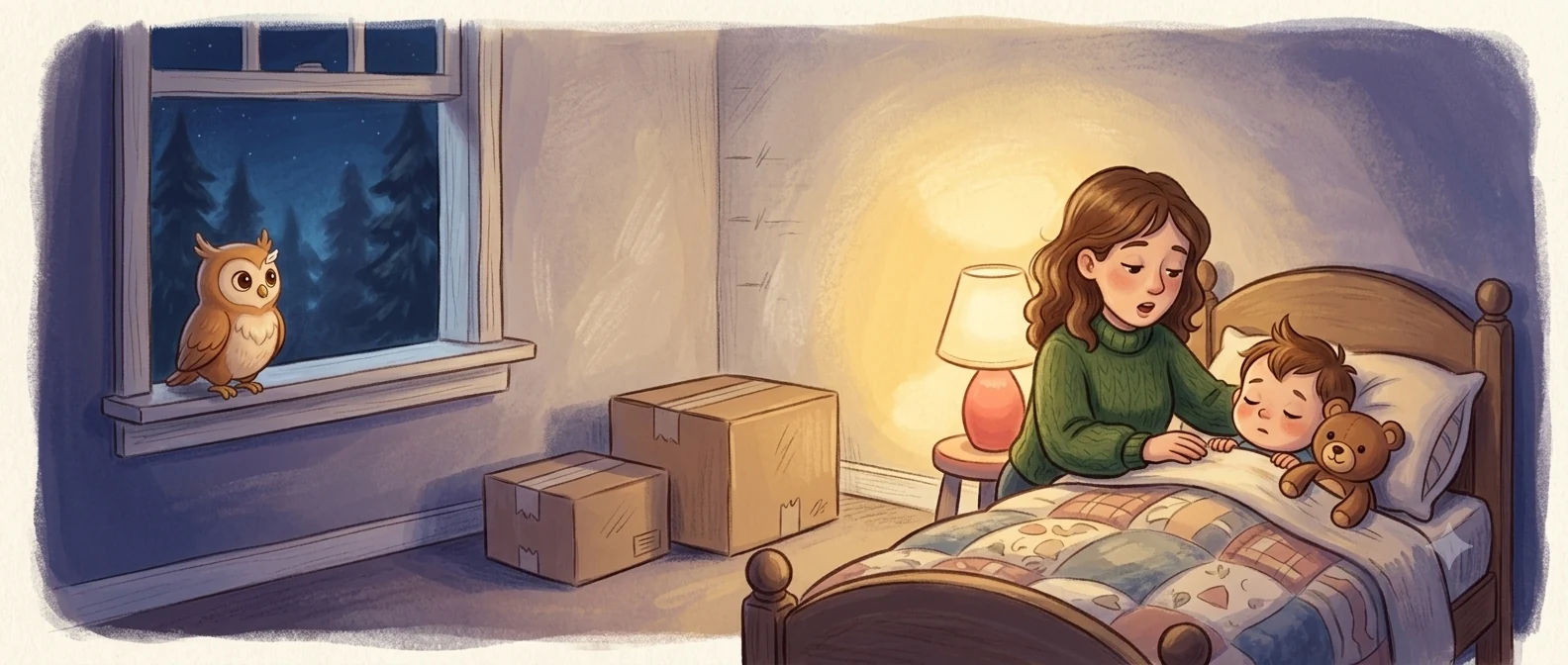
Moving House
Teddy Comes Too
Everything is going into boxes — the cups, the books, even the curtains. But some travellers are too important for boxes.
Adults move house; children lose a world. The crack in the ceiling that looked like a rabbit, the exact sound of that doorbell, the friend two floors down — for a child, these weren't features of a place, they were the place, and it was the only one they'd known. So the sadness of moving deserves to be taken seriously, even when the move is a happy one. Especially then, because a child's grief can feel like ingratitude and go underground.
These stories give the goodbye its full weight and then walk honestly into the hello: new rooms that echo strangely at first, new streets that slowly grow landmarks, and the discovery every mover eventually makes — that home turned out to be portable, because it was mostly made of people. The Talk About It prompts help your child name both what they'll miss and what they're curious about. Read them before the move if you can — and again from the new bed.
Everything is going into boxes — the cups, the books, even the curtains. But some travellers are too important for boxes.
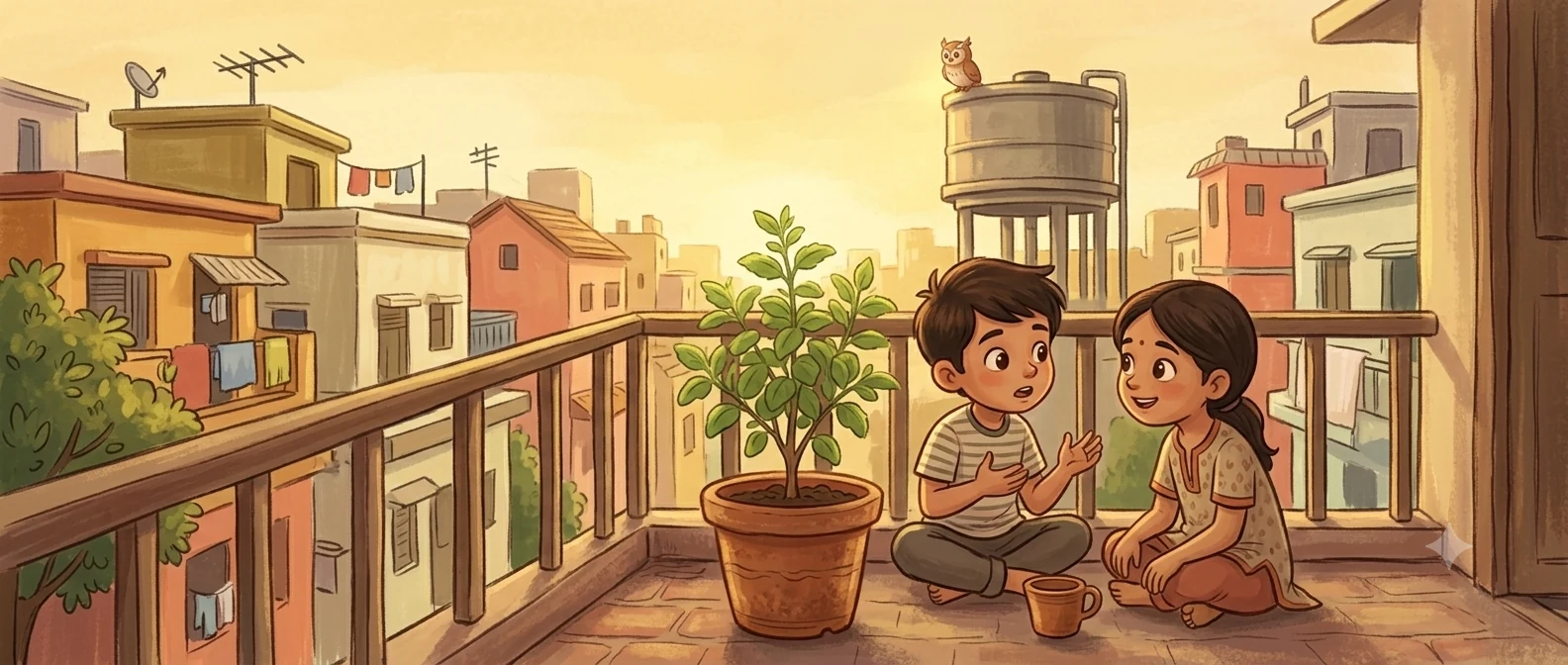
Ishan has to say goodbye to his whole world — the lane, the neem tree, his best friend two floors down. All Nani gives him for the journey is a plant cutting in a plastic bag.
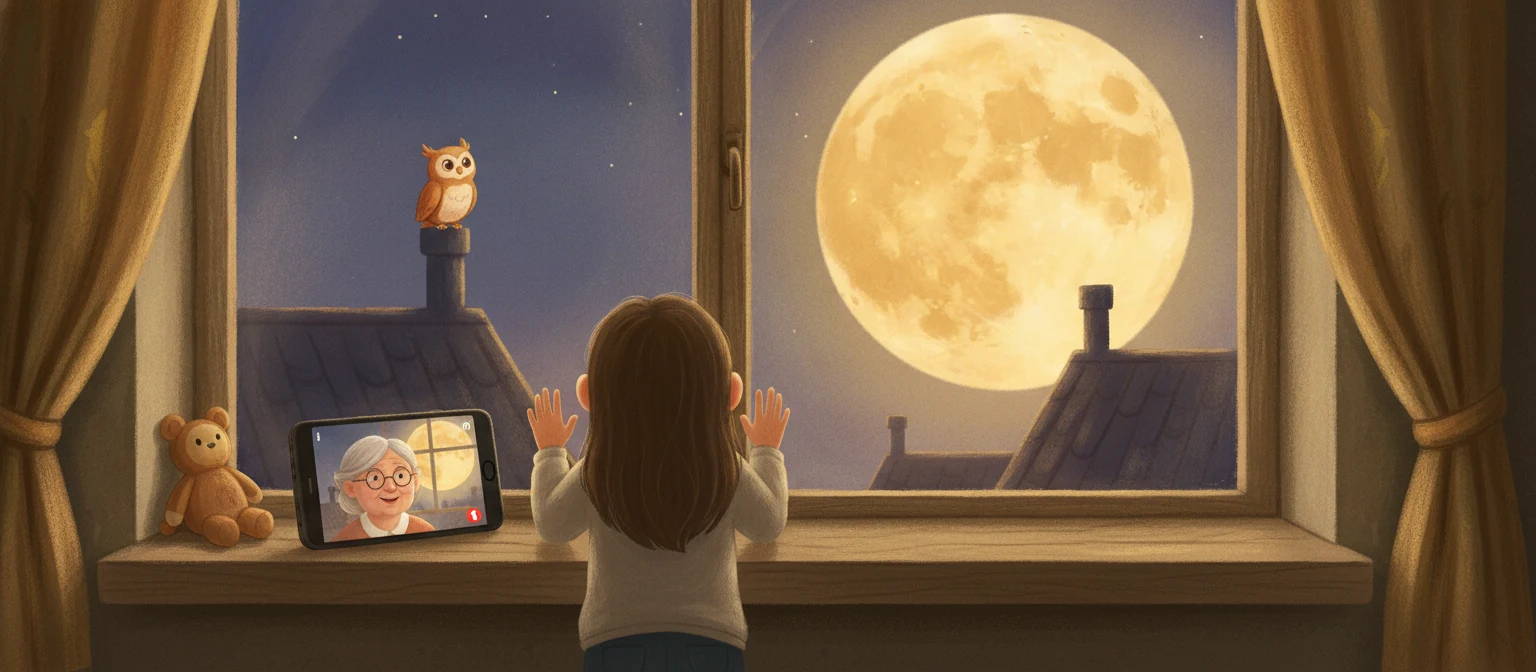
Kia's new home is across a whole ocean from Nani — new street, new school, new everything. Then Nani tells her what to look for in the night sky.

Zoya's new life in Singapore runs two and a half hours ahead of her old one in Mumbai — close enough to video call, far enough that everything is different. Then she catches herself laughing with someone new, and it feels like a betrayal.
Tell them early, in concrete child-sized terms — what stays the same (your bed, your books, us) and what changes. Let them do real goodbyes: to rooms, to people, even to the mango tree. Stories help by rehearsing the whole arc in advance, so moving day isn't the first time they've imagined it.
Longer than the boxes take, shorter than you fear — commonly a few weeks to a few months, with wobbles around milestones like the first day at a new school. Keep bedtime routines identical from night one; a familiar story in an unfamiliar room is one of the fastest ways a space starts becoming home.
Anger is grief with its coat on — it's the feeling children can reach when sadness feels too big or too disloyal to the excitement everyone expects of them. Let it be spoken without arguing the move's merits. Stories where a character hates the new house on night one, honestly, give that anger company and a believable path through.