Two and a Half Hours
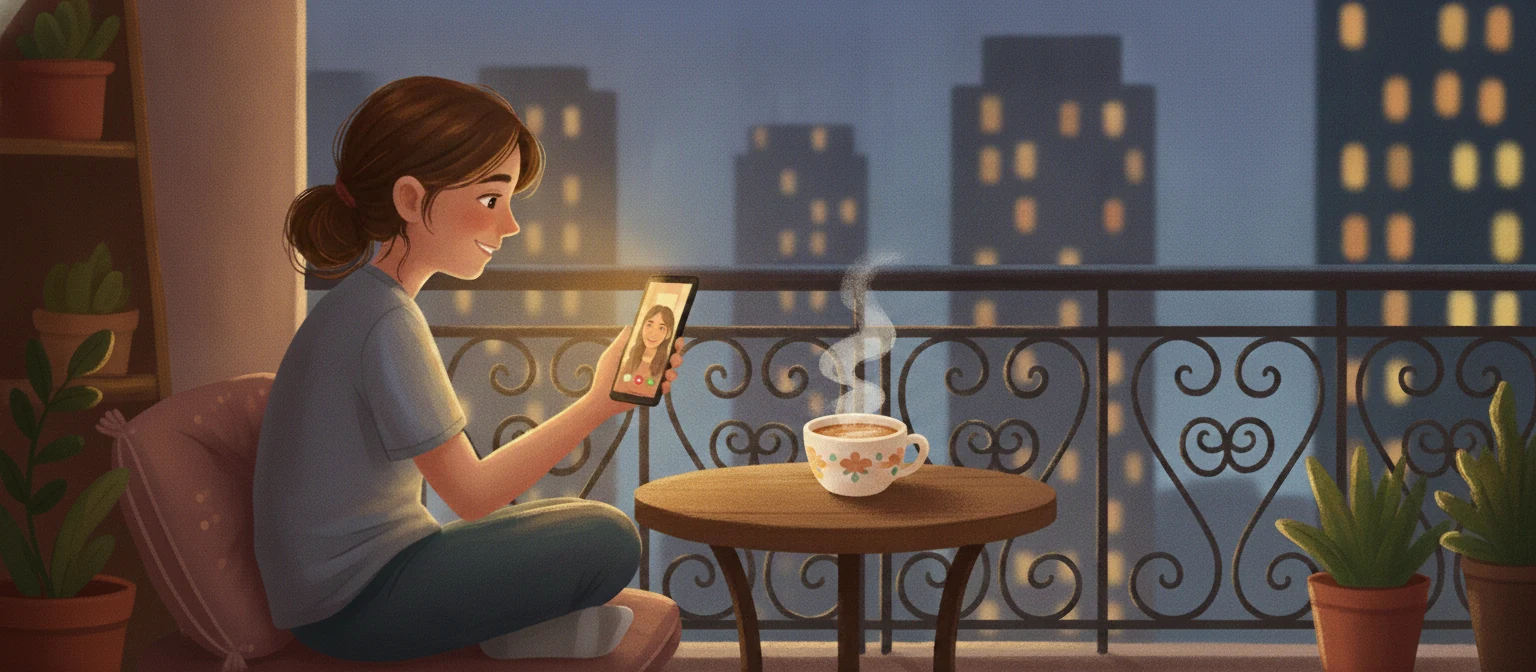
The time difference was the first thing Zoya truly understood about the move, because it was the only part with numbers.
Singapore ran two and a half hours ahead of Mumbai. When Zoya ate dinner, Aliya was still at tuition. When Aliya was finally free, sprawled on the same old bedroom floor Zoya could picture down to the mango-shaped stain on the mattress, it was nearly Zoya’s bedtime. Their friendship was eight years old. Den-sharing, tiffin-swapping, a shared history of every school scandal since kindergarten. Now it lived inside a sliding window of about forty usable minutes a day.
For the first month, they defended that window like soldiers. Video call at 9:15 Singapore time, 6:45 Mumbai time. Daily. No exceptions. Aliya performed the class gossip with sound effects and acting. Zoya reported on Singapore like a news correspondent in a strange country. The school where nobody yelled. The trains that apologised for being two minutes late. The flat so high up that weather happened below her.
What she did not report: the loneliness. It had a strange flavour she had no words for yet. Not sadness, exactly. At school she understood every English word and missed every third joke. Her name came out different in other mouths. And nobody here knew eight years of Zoya-and-Aliya stories — the mango stain, the great birthday disaster of Class 3. None of it could be mentioned, because nobody would know what it meant.
Then, in week six, the girl at the next desk passed her a note. Wen Li, who drew on the sides of her shoes. The note said your handwriting looks like a font, and Zoya laughed before she could decide to.
They ate lunch together that day. Then most days. Wen Li was funny in a dry, sideways way that snuck up on you. She introduced Zoya to kaya toast, and to her grandmother, who pinched Zoya’s cheek and called her skinny in Hokkien — which needed no translation, because grandmothers are a single global country. And one Thursday, walking to the MRT, laughing so hard about their PE teacher that she had to stop and hold the railing, Zoya caught herself mid-laugh. Caught herself being happy. And the happiness curdled instantly into something that felt exactly like guilt.
Because it was 4:40 in Mumbai. Aliya was at tuition. And Zoya was here, laughing this hard, with someone Aliya had never met.
That night’s call was the first one Zoya almost cancelled. She didn’t — but she edited. She trimmed Wen Li out of the day’s report completely, the way you’d hide a new friend from a jealous old one. Except Aliya had never been jealous of anything in eight years. Zoya was protecting her from a crime that existed only in Zoya’s own head: the crime of the new life becoming real.
It was her father who caught her at it. He found her flat and quiet on the balcony after the call. He was fighting his own version of the same thing — she’d seen him on Sunday calls with his Mumbai colleagues, laughing too loudly, keeping his own window open.
“Beta, when I left Nagpur for Bombay at twenty-two,” he said, settling into the other chair, “I once didn’t phone my mother for three weeks. You know why? I was ashamed that I’d stopped being sad.” He let that sit. “Homesickness is proof the old place was real. But the new place becoming real too? That’s not a betrayal of anywhere. That’s just you, working. Hearts don’t have a fixed number of rooms, Zoya. You build on.”
“It feels like Aliya’s getting a smaller room.”
“Then tell her that,” he said. “Eight years deserves the real report, not the edited one.”
So the next evening, at 9:15 and 6:45, Zoya filed the full story. Wen Li. The shoe drawings. The kaya toast. The laughing at the railing. And — hardest — the guilt, said out loud: some days I’m happy here, and then I feel terrible about it.
There was a pause on the Mumbai end. Then Aliya spoke, with the authority of eight years:
“You absolute idiot. I’ve been sitting here every day hoping you’d find someone. Every day you reported zero friends, I felt worse. You think I want you eating lunch alone for my sake?” A snort. “Also, I need her Instagram, if she draws that well. And tell her about the birthday disaster. You can’t be friends properly without the birthday disaster.”
The daily call relaxed after that. This is the part that would have frightened Zoya in month one: it became twice a week, then Sundays — long and unhurried — plus a running chat of memes and outrages in between. The friendship changed shape. It did not change size. And when Aliya finally visited the next summer, two and a half hours of time difference dissolved into zero at the airport gate. She and Wen Li sized each other up for about one minute. Then they united permanently against Zoya on the subject of her handwriting.
Standing in the food court, watching her two worlds share one plate of kaya toast, Zoya understood the last of it. She had spent months guarding a door between the old life and the new one, terrified of the draft.
Nobody had ever needed the door shut. They’d all just been waiting to be introduced.
Talk About It
- Why did making a new friend feel like cheating on the old one? Was it?
- Aliya and Zoya's friendship changed shape instead of ending. What's the difference?
- Zoya's father said homesickness proves 'the old place was real.' What do you think he meant?
Did this story land tonight?
One tap helps us write better ones. No login, nothing shared publicly.
Thank you — this genuinely helps. 🌙