Caring for Nature
A Bowl of Water for Summer
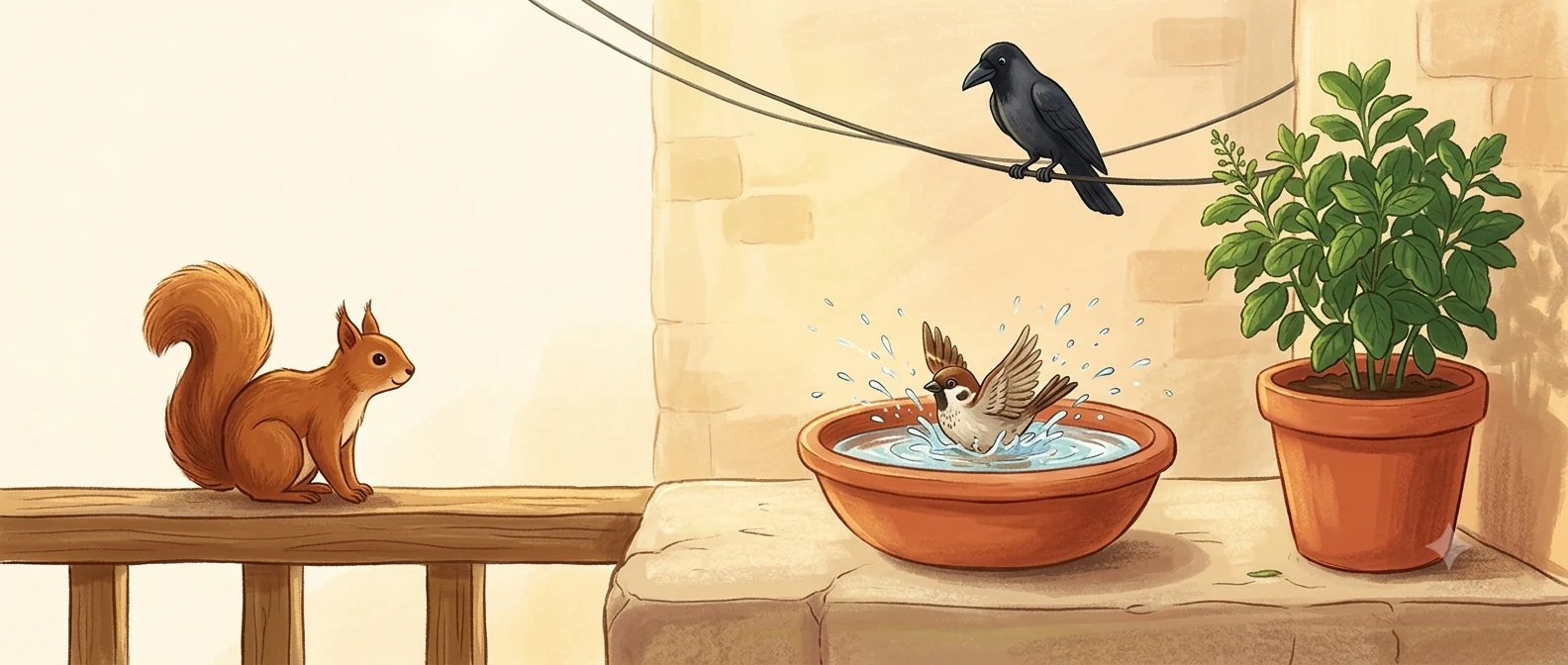
The summer is so hot that even the sparrows are panting. Then Anya puts one small bowl of water on the balcony — and the whole neighbourhood finds out.
Children arrive already on nature's side — devoted to puddles, in serious negotiations with ants, convinced the moon follows the car. The task isn't to install a love of the natural world; it's to keep the love alive and, as they grow, gently add its second half: care. Wonder first, responsibility after — a child protects what they love, not what they've been warned about.
So the stories here lead with enchantment: banyan trees old enough to remember everyone's grandparents, rivers with opinions, sparrows running neighbourhood economies — a way of seeing the world as inhabited and worth tending that runs deep in the old tale traditions we retell. And they stay hopeful on principle; these are bedtime stories, and small hands planting one seed is the right size of ending. The Talk About It prompts often lead outdoors — some are best answered by going outside and looking up.
The summer is so hot that even the sparrows are panting. Then Anya puts one small bowl of water on the balcony — and the whole neighbourhood finds out.
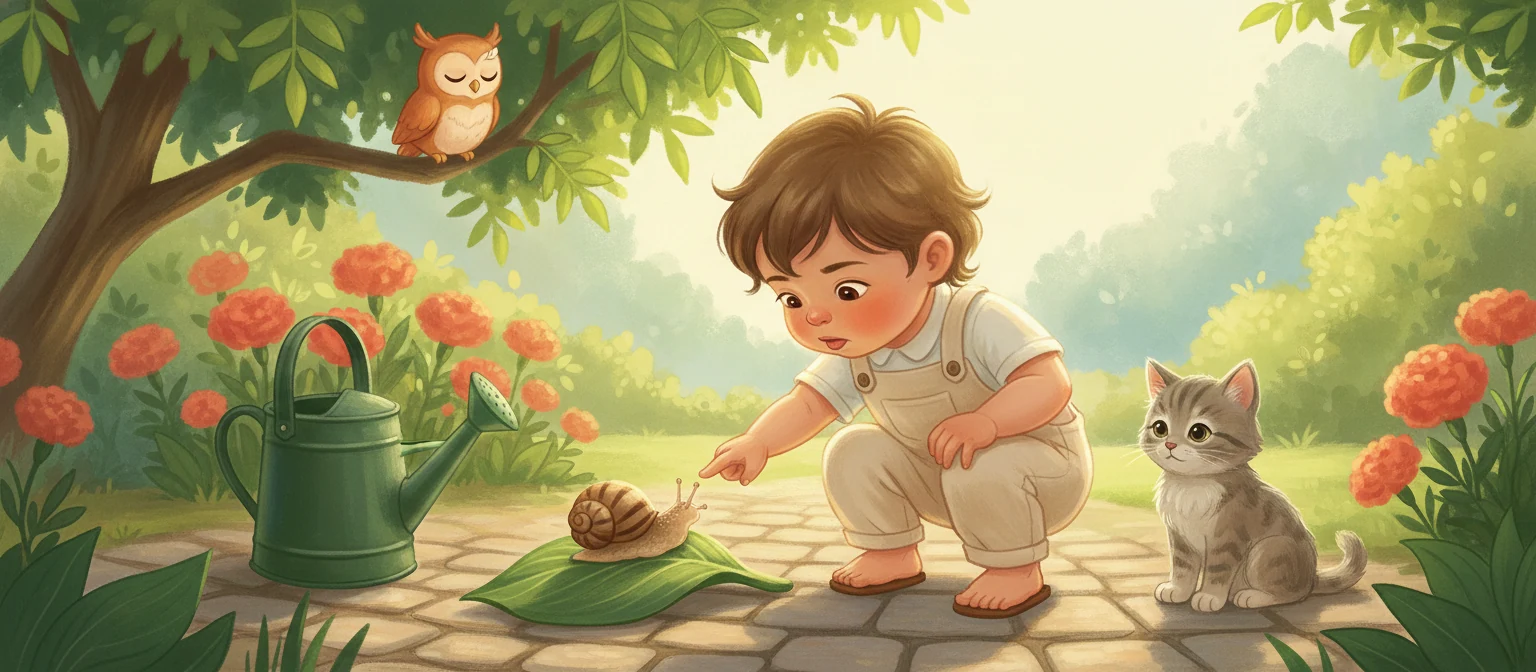
The garden is full of small soft things — a leaf, a snail, a sleepy cat. And little hands are learning the garden's one big rule.
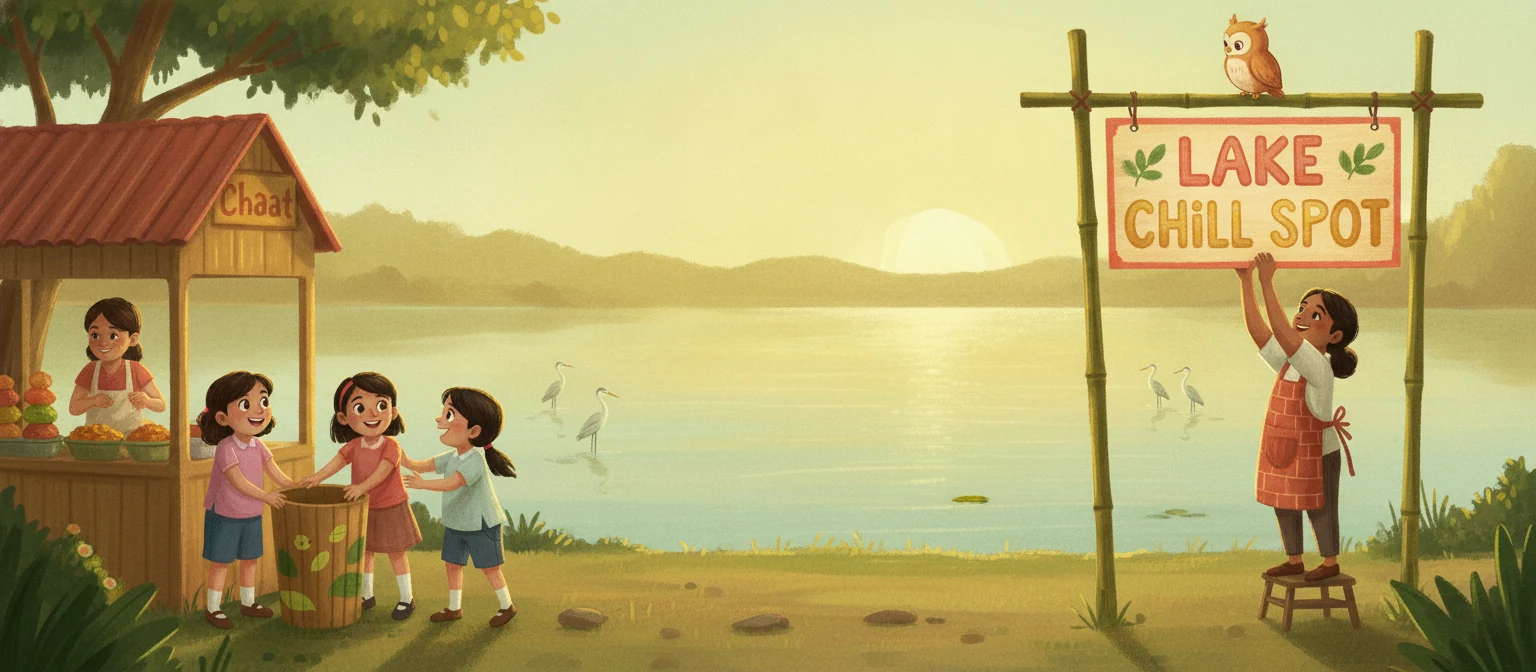
The cleanup drive collects forty bags of trash from the lake. Two weeks later, it's all back. Anika learns the difference between cleaning a problem and solving one.
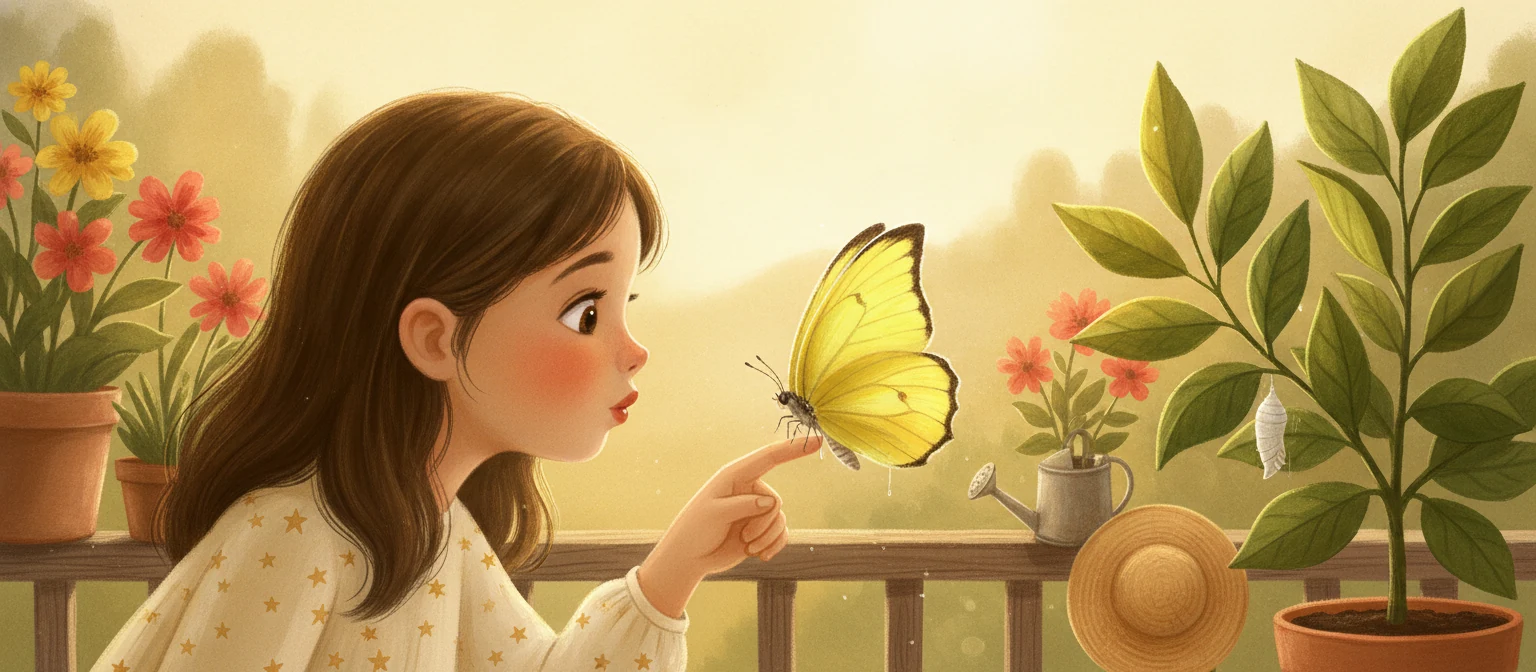
The fat green caterpillar on Tara's lemon plant has wrapped itself up in a tiny green sleeping bag — and now comes the hardest part of all. The waiting.
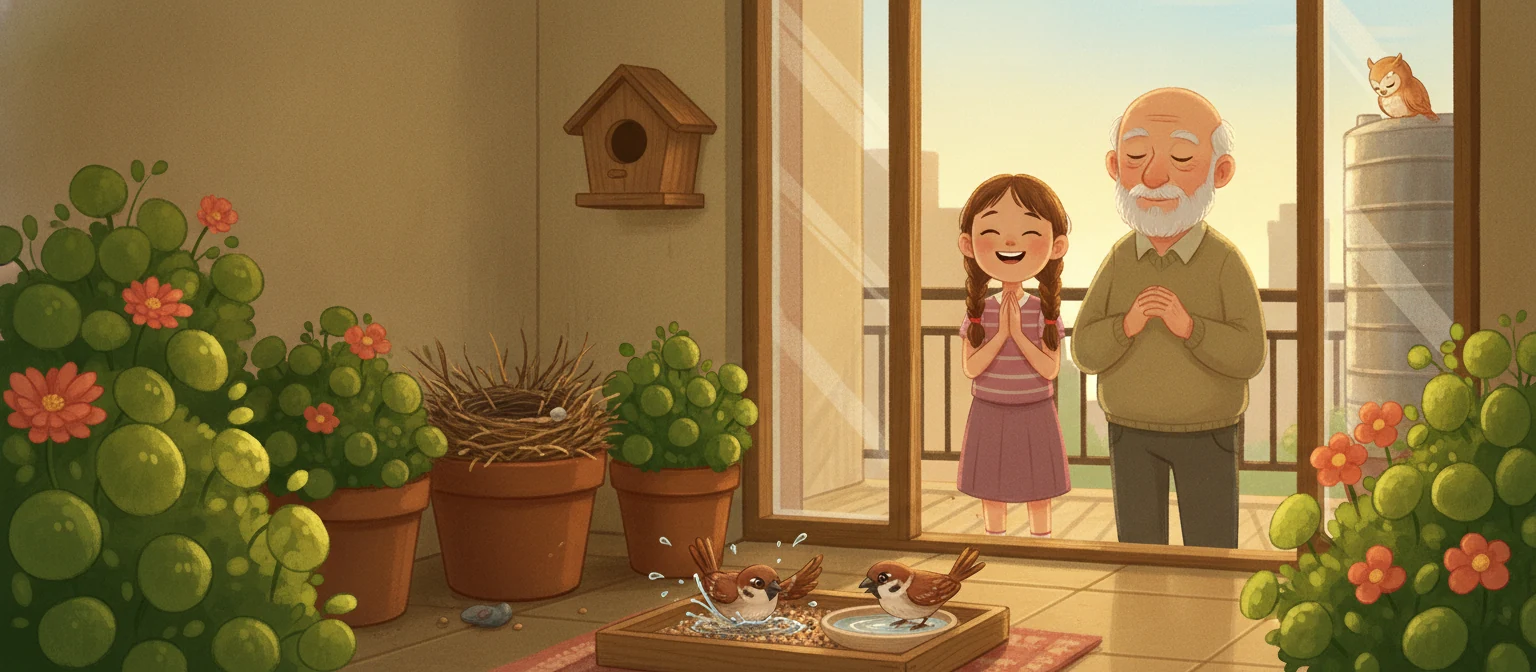
Dadu says the mornings used to be full of sparrows — a hundred small arguments in every hedge. Riya has never really noticed them at all. So where did they go?
From the beginning — but as love, not duty. For ages 0–3 it's simply naming and noticing: this leaf, that bird, the rain's sound. Responsibility scales up with age: a preschooler waters one plant, a nine-year-old runs the balcony garden or the building's waste-sorting. The stories follow the same arc, wonder shading gradually into stewardship.
Keep the problem child-sized and the child powerful. "The lake needs help, and people are helping — want to be one of them?" lands well; planetary doom at bedtime does not. Our nature stories are hopeful by editorial policy: children who feel effective become adults who act, while frightened children mostly learn to look away.
Give the child real, visible charge of something alive or ongoing: a tulsi plant, a bird-water bowl in summer, the compost bin, one square metre of anything green. Pair it with regular unstructured outdoor time — care grows out of contact. After a nature story, the Talk About It questions will often hand you tonight's candidate.